A B2B order portal approval workflow should make authority clear before a quote becomes an order. Can sales prepare a quote without approving its own exceptional discount? Can finance approve without taking over the sale? And when a buyer leaves a company, does the portal stop showing that company’s history? Use those questions to test a proposal before deciding whether to configure, integrate or build.
B2B order portal approval workflow: two recent boundaries
On 18 November 2026, Shopify documented a draft-order discount permission change across supported API versions. An app acting for staff without the relevant permission cannot add a new discount code or enable automatic discounts; the draft does not save. Retaining or removing an existing discount still works. Requests not acting as staff, such as offline-token requests, are outside that change’s stated scope.
Separately, Shopify’s 17 November customer-account update says a buyer removed from a company cannot read that company’s orders through the affected API, while personal orders remain available. These are distinct boundaries: changing a commercial term and reading company records. Neither announcement means a business needs to leave Shopify or commission a new portal.
For a buyer, the useful task is to turn those boundaries into demonstrations. Ask the supplier to show the actual accounts and business cases you need. A polished sales screen does not establish that an unauthorised discount is rejected or that a former buyer has lost company access. Keep the expected result separate from the result you observed.
Give each role a specific decision
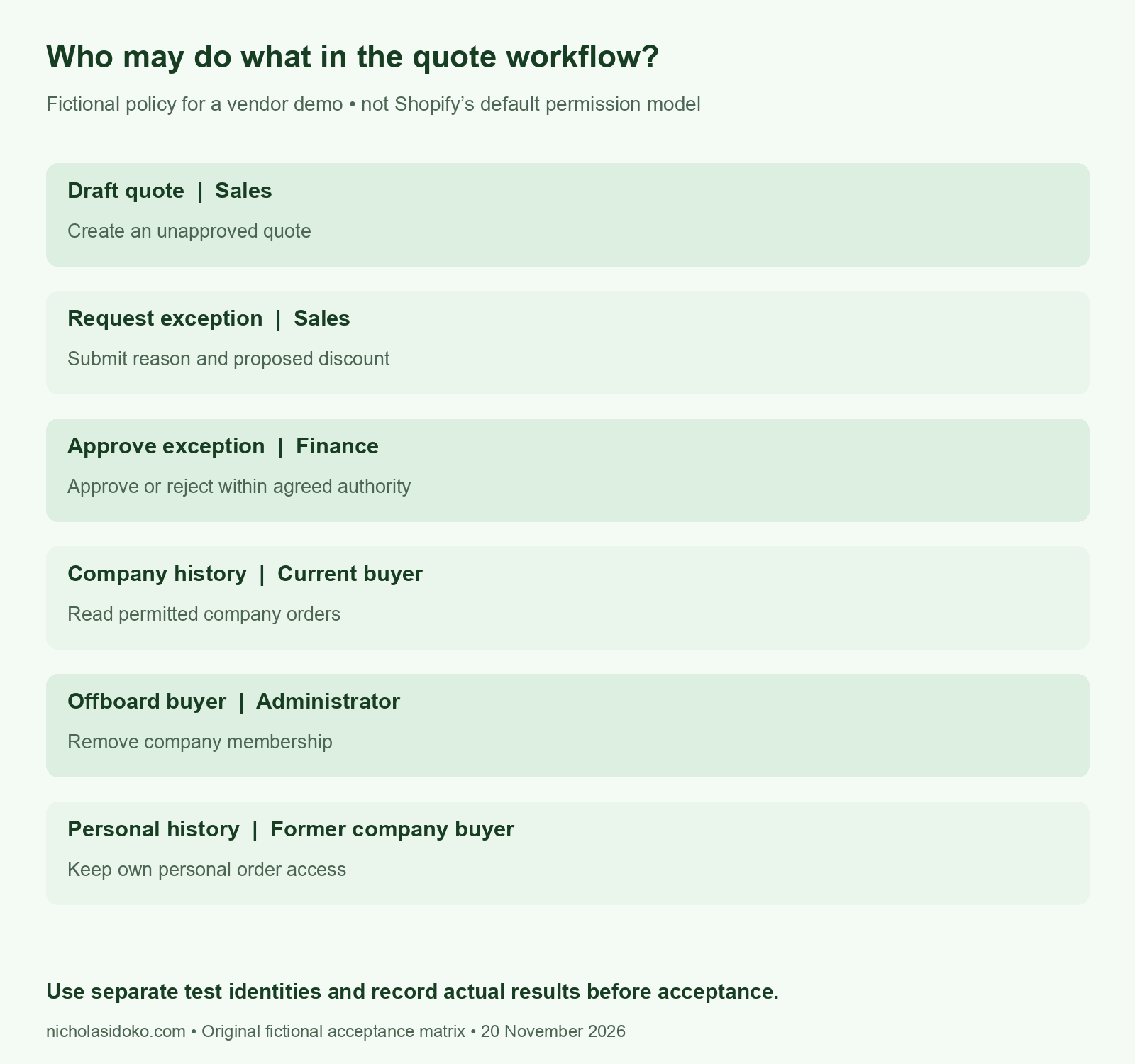
In our fictional example, North Branch sales can prepare a quote and request an exception. Finance can approve or reject that exception, with a recorded reason. South Branch has its own buyer access. These names are invented; they show how to ask for a decision without claiming that any client uses this arrangement.
First, ask sales to submit the exceptional quote under its own test identity. Then ask the finance reviewer to approve it through the intended process. Compare the approved value with the final order. Keep the actor, decision time and reason together so the evidence does not disappear when someone edits the quote later.
Next, try the same approval action under the sales identity. The agreed policy should determine whether it is allowed. A button being hidden is not enough if another route can still change the commercial term. Ask the technical team to demonstrate the supported protection, including what happens when a request fails.
Do not solve every exception by granting broad administrator rights. Instead, agree the business authority, then configure the access needed to support it. If the workflow involves an integration, identify which role the integration actually uses. A test under one identity cannot establish the behaviour of a different permission model.
Use a simple calculation to explain why approval matters
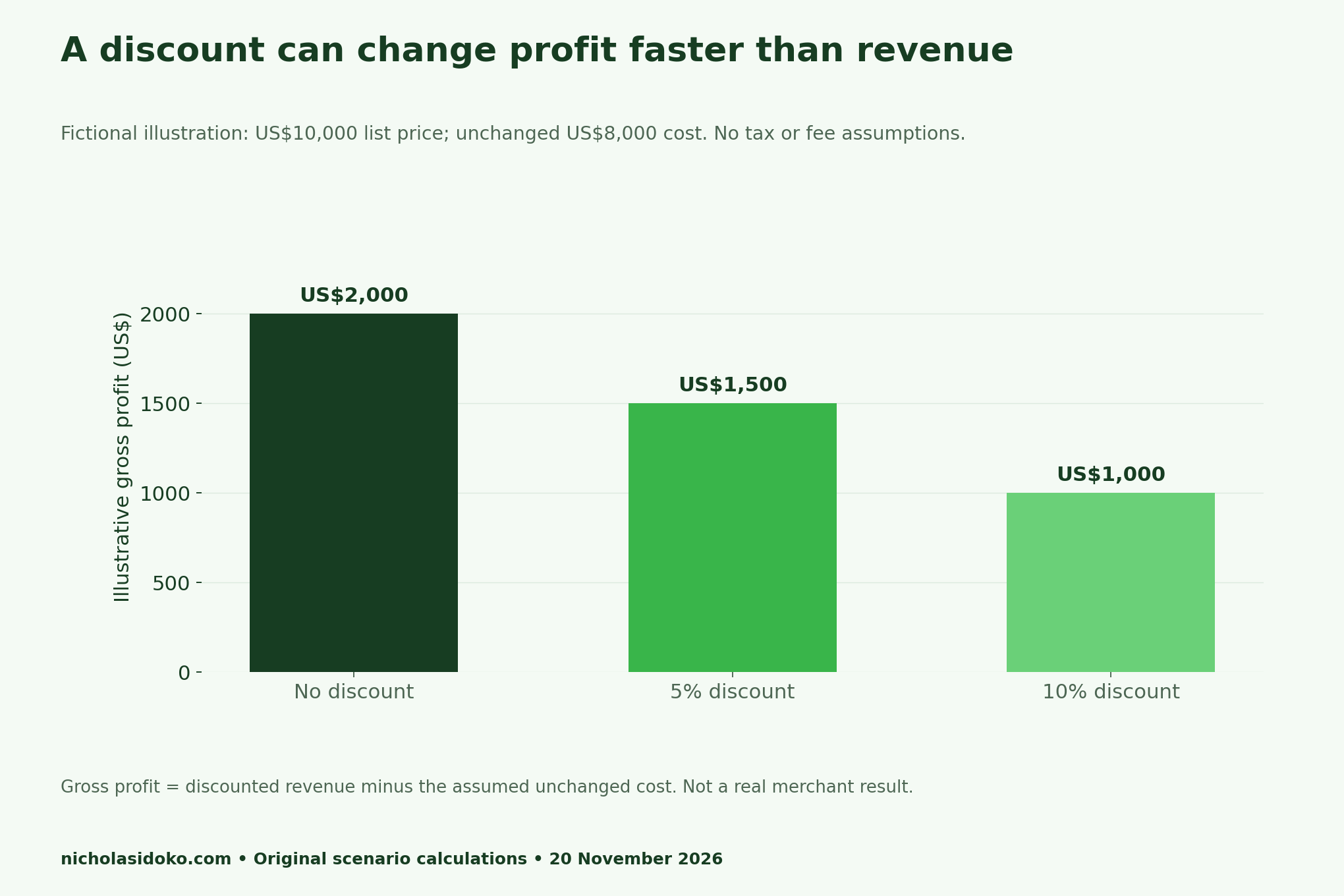
A discount percentage alone can hide its effect on a quote. In this fictional calculation, a US$10,000 sale has US$8,000 of unchanged cost. Gross profit is therefore US$2,000 before a discount. A 10% discount reduces revenue to US$9,000 and gross profit to US$1,000. The profit reduction is 50%, despite the 10% revenue discount.
This example does not recommend a discount limit or describe any business’s margin. It simply shows why a commercial exception may need a named reviewer. Use your own cost definitions and finance process before setting a rule. The downloadable calculation file keeps every assumption visible.
Test the buyer’s departure as well as their first login
Add a current company buyer and confirm the permitted history is visible. Then remove that buyer through the agreed process and repeat the check. Company history and personal history should be treated according to the relevant platform rules and your documented business policy. Do not confuse losing company access with deleting a person’s whole account.
Also agree what staff should see when access is refused or a record is unavailable. A useful message should avoid exposing another company’s information. Retain a redacted test record; keep genuine customer records, passwords and access tokens out of the public worksheet.
Choose configuration, integration or a new build from the gap
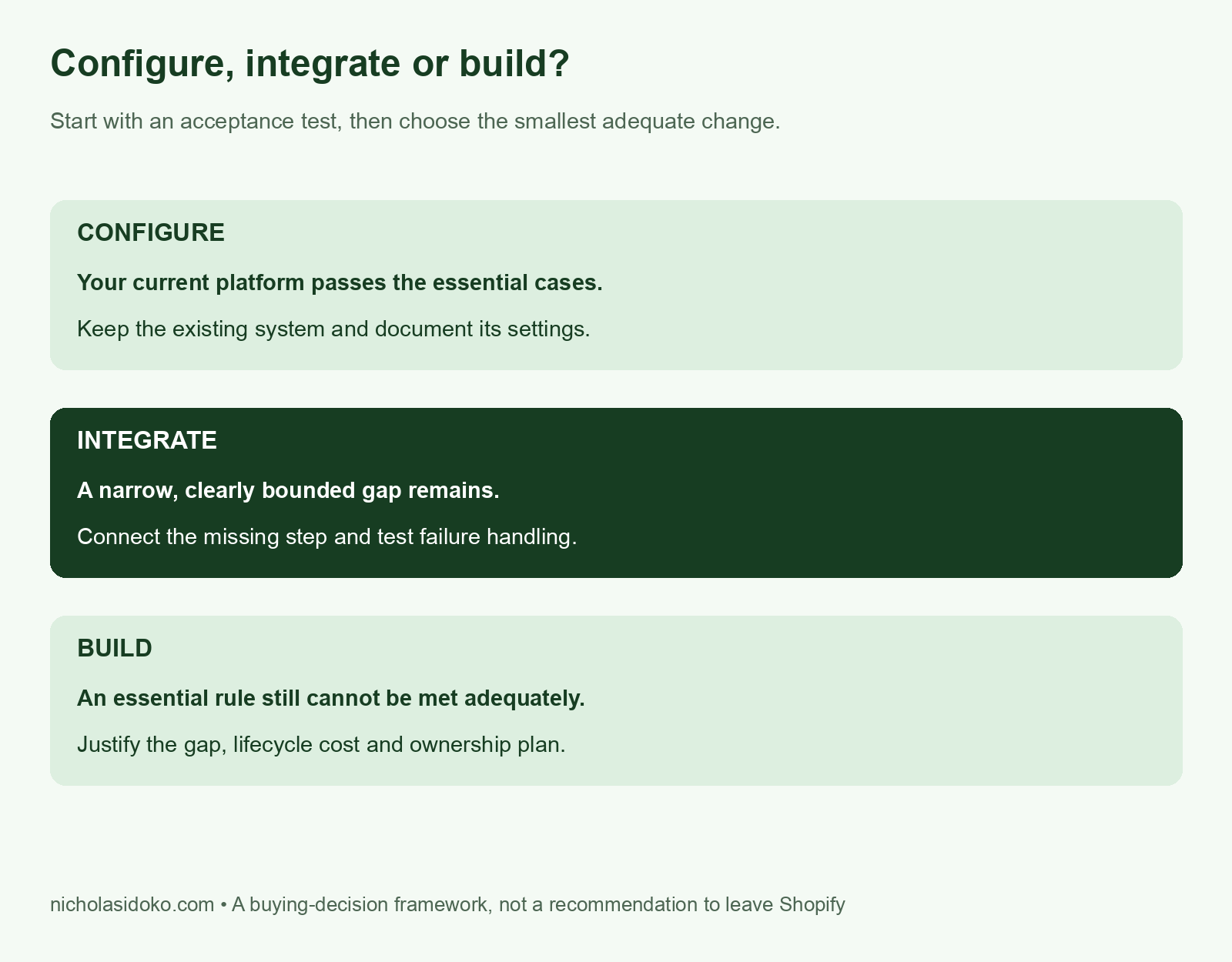
Start by testing your current platform’s native options. If it can meet the essential cases, document the configuration and handover. If a narrow gap remains, ask whether an integration can close it with clear error handling and ownership. Finally, consider bespoke software when an essential requirement still cannot be met adequately, with lifecycle cost and maintenance included in the decision.
Our custom software services start with the business process. The checkout migration checklist offers a related example of testing outcomes rather than accepting a visible button as proof.
Download the B2B order portal approval workflow tools
- Fictional role and approval matrix (CSV)
- Vendor-demo acceptance worksheet (CSV)
- Fictional discount and gross-profit calculations (CSV)
- Configure, integrate or build decision register (CSV)
Methodology and next step
We checked both Shopify release notes on 20 November 2026. The role matrix, branch examples and discount calculation are original fictional scenarios. We have not tested a client portal or measured approval failures. The worksheets keep expected outcomes and actual evidence separate so readers can run their own agreed acceptance process.
Send us one example of a quote that needs manual approval. We’ll start by checking whether your current tools can handle it. Share a redacted example rather than customer details or account credentials.
Support our research
Found this report useful? Your contribution helps us produce carefully sourced research, clear charts and practical resources, freely available to everyone. Choose a one-time amount that works for you.


