


Introduction to Voice-Activated Technology in Real Estate Searches
Emergence of Voice Technology
Voice-activated technology has transformed several industries in recent years.
Real estate searches now benefit from this innovative technology.
Companies like Summit Realty and Cedar Heights embrace voice search to improve user experience.
Consequently, buyers and renters enjoy faster and simpler property searches.
How Voice Activation Enhances Property Searches
Users can speak queries instead of typing complex search terms.
This method saves time and allows for multitasking during searches.
Moreover, voice commands provide more natural and intuitive interactions.
For example, clients can ask, “Find three-bedroom homes near downtown.”
Technological Components Behind Voice Searches
Speech recognition software converts spoken words into digital commands.
Natural language processing interprets user intent accurately.
AI-powered platforms like NestVoice Systems drive these advanced features.
Integration with real estate databases ensures real-time and relevant listings.
Advantages for Real Estate Professionals and Clients
Agents experience increased engagement through seamless communication tools.
Clients appreciate personalized search results tailored to their vocal inputs.
Additionally, voice searches expand accessibility for users with disabilities.
Firms investing in voice technology strengthen their competitive advantage effectively.
Advantages of Using Voice Commands for Home Search Efficiency
Enhanced Speed and Convenience
Voice commands allow users to search homes quickly with simple spoken instructions.
They eliminate the need to type lengthy queries.
This saves valuable time for buyers.
Moreover, voice activation enables multitasking during busy schedules or while on the move.
As a result, home seekers can perform searches hands-free without interrupting other activities.
Improved Accessibility for Diverse Users
Voice technology makes home searches accessible to individuals with mobility impairments.
It also supports users with vision impairments.
It offers a more inclusive experience for technology users across different abilities.
Additionally, older adults can navigate real estate listings effortlessly with natural speech commands.
This accessibility fosters wider engagement in the housing market.
More Natural and Intuitive Interaction
Using voice commands creates a conversational search experience that feels more natural.
Users do not need to learn complicated interfaces or exact keyword phrases.
Consequently, the technology adapts to everyday language, improving search accuracy.
Users benefit from receiving tailored suggestions based on their spoken preferences.
Integration with Smart Home and Mobile Devices
Voice-activated home searches seamlessly connect with smartphones, tablets, and smart speakers.
For example, agents at Evergreen Realty use Alexa to quickly pull up listing details during client meetings.
This integration enables on-the-go access to real estate information anytime and anywhere.
Thus, home buyers can remain informed and make decisions faster without desktop constraints.
Personalized Search Experiences
Voice assistants gather user preferences to refine search results over time.
They remember favored neighborhoods, price ranges, and home types within conversations.
Agents like Maria Flores from Crestview Properties praise voice search for increasing client satisfaction.
Therefore, personalization accelerates finding the perfect home in less time.
Reduction of Search Fatigue and Frustration
Voice commands reduce the frustration often caused by typing errors or complex filters.
Users express their needs naturally, and AI-driven platforms handle the heavy lifting.
Consequently, voice search systems like those deployed by Meridian Real Estate ease the process.
Buyers experience less fatigue and remain engaged throughout multiple search sessions.
Integration of AI and Natural Language Processing in Voice-Activated Home Searches
Advancements in Artificial Intelligence for Real Estate
Artificial Intelligence (AI) transforms how consumers explore home listings today.
Leading companies like Apex Realty Analytics use AI to enhance search accuracy.
Consequently, AI analyzes vast data sets to match users with suitable properties.
Moreover, AI continuously learns user preferences to deliver personalized results.
Therefore, homebuyers access tailored listings without manual filtering or sorting.
Role of Natural Language Processing in Improving User Experience
Natural Language Processing (NLP) enables systems to understand conversational queries.
NLP allows buyers to search using everyday speech rather than fixed keywords.
For instance, clients might request “find three-bedroom homes near Central Park.”
Then, the system interprets these requests and filters through relevant listings.
Furthermore, NLP supports follow-up questions like “show me properties with a backyard.”
Combining AI and NLP for Seamless Voice-Activated Searches
Together, AI and NLP create dynamic search experiences tailored to individual needs.
Agents at Summit Realty recently reported increased client engagement through voice platforms.
This integration helps users complete complex searches quickly and hands-free.
Additionally, advanced algorithms provide contextual recommendations based on previous queries.
As a result, prospective buyers save time while discovering optimal home options.
Practical Applications and Industry Impact
Voice assistants like Clare Voice Homes integrate AI and NLP for intuitive searching.
Users simply speak commands, and the system delivers instant property insights.
Real estate firms adopting these technologies gain competitive advantages.
Moreover, agents can focus on advisory roles as technology handles initial research tasks.
Ultimately, AI and NLP redefine the future of home buying and real estate marketing.
Explore Further: The Role of Drone Technology in Real Estate Property Surveys
Comparing Traditional Search Methods with Voice-Activated Solutions
Overview of Traditional Home Search Methods
Homebuyers typically start their search using online listings or real estate websites.
They browse through photos, descriptions, and filter results manually.
Often, buyers contact agents to schedule in-person viewings and gather more information.
This approach involves time-consuming research and coordination with multiple parties.
Furthermore, traditional searches depend heavily on typing skills and device availability.
Advantages of Traditional Methods
Traditional searches provide detailed and customizable filter options.
Buyers can compare multiple listings side-by-side easily.
They benefit from direct contact with experienced agents for personalized guidance.
Moreover, face-to-face viewings allow buyers to inspect properties closely.
Introducing Voice-Activated Home Search Solutions
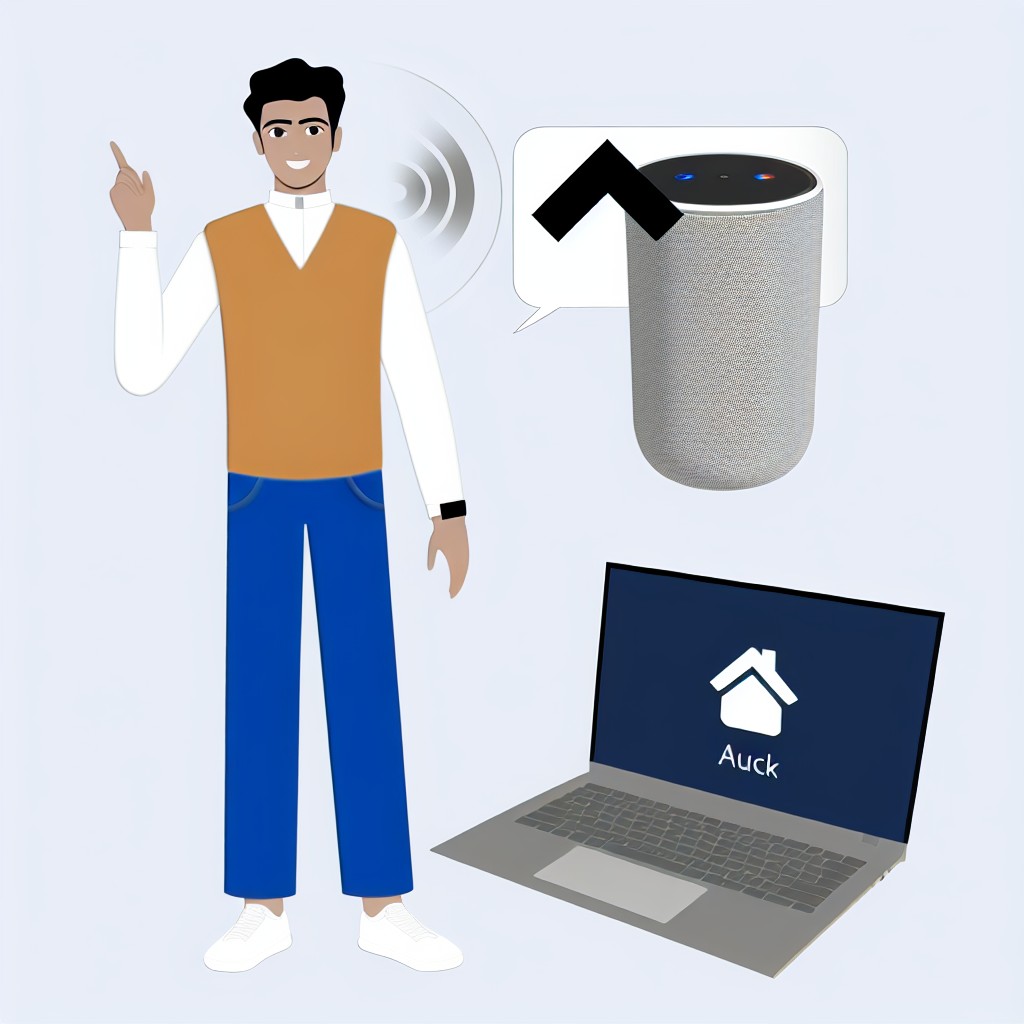
Voice-activated home search technology allows users to find homes using simple spoken commands.
Platforms like HavenNest and RealVoice have pioneered this innovation.
They integrate with smart home assistants such as Echo and Google Nest.
This method streamlines searching by eliminating typing and manual filtering.
Users converse naturally to specify preferences like location, price, and features.
Benefits of Voice-Activated Searches
Voice searches speed up the process by delivering instant results.
They offer hands-free convenience, ideal for multitasking homebuyers.
Additionally, voice AI can provide personalized suggestions based on user preferences.
Accessibility improves, assisting those with limited mobility or visual impairments.
Real estate agents also benefit from faster client interaction and data collection.
Limitations and Challenges of Both Approaches
Traditional methods can be slow and inefficient in fast-moving markets.
They may overwhelm users with excessive data and options.
However, voice-activated solutions sometimes misinterpret commands due to speech recognition errors.
They also rely on up-to-date, integrated databases to provide accurate listings.
Privacy concerns arise as voice data is collected and processed in real time.
Combining Traditional and Voice-Activated Methods for Better Home Searches
Many companies combine voice-activated tools with conventional platforms effectively.
This approach offers users flexible ways to search based on their preferences.
For example, BrightPath Realty uses voice commands for initial search and website tools for detailed analysis.
Consequently, homebuyers enjoy the best of both convenience and comprehensive data.
Ultimately, the next frontier in real estate tech embraces both tradition and innovation seamlessly.
See Related Content: AI-Driven Tenant Screening: Enhancing Efficiency in Property Leasing
The Role of Smart Home Devices and Virtual Assistants in Real Estate Tech
Integration of Smart Devices in Property Searches
Smart home devices transform the way buyers explore properties.
They provide real-time information about home features and status.
Consequently, buyers can evaluate homes more efficiently than before.
Moreover, devices like smart thermostats and lighting systems showcase energy efficiency.
This information helps buyers make informed decisions quickly.
Real estate agents increasingly use these devices to enhance virtual tours.
Enhancing User Experience with Virtual Assistants
Virtual assistants streamline the home search process via voice commands.
Clients can request property details without manual browsing.
For example, Alexa or Google Assistant can answer questions about listings instantly.
This immediacy improves customer engagement and satisfaction.
Furthermore, virtual assistants personalize search results based on user preferences.
Thus, the experience becomes more tailored and efficient for each buyer.
Benefits for Real Estate Professionals
Smart home tech reduces repetitive tasks for agents, freeing valuable time.
Agents like Marcus Chen at Horizon Realty report faster client responses.
Additionally, lead generation improves through interactive voice-powered queries.
Virtual assistants can schedule viewings and send reminders automatically.
These tools enhance productivity and support better client management.
Security and Data Insights Through Connected Devices
Smart devices also offer enhanced security features during property evaluations.
Buyers gain peace of mind from monitored environments during visits.
Meanwhile, data collected from devices reveals buyer behavior and preferences.
Real estate firms like Nexus Analytics leverage this data for market insights.
Consequently, they adjust marketing strategies to better target prospective clients.
Emerging Trends in Voice-Activated Home Searches
The combination of smart devices and assistants marks the future of real estate tech.
Developers continuously innovate to expand voice control functionalities.
Subsequently, searches will become more intuitive and accessible on any device.
This progress will benefit buyers, sellers, and agents alike.
Ultimately, voice-activated tech will redefine how homes are discovered and purchased.
Gain More Insights: Cybersecurity for Smart Homes: Protecting Real Estate in the Digital Age
Challenges and Limitations of Voice-Activated Home Search Platforms
Accuracy and Interpretation Issues
Voice recognition technology often struggles with understanding diverse accents accurately.
Users may feel frustration from repeated misinterpretations.
Background noise affects the platform’s ability to hear commands clearly.
Complex search queries frequently confuse current voice-activated systems.
Search results sometimes fail to match users’ specific preferences precisely.
Privacy and Security Concerns
Users worry about personal data being collected by voice-activated platforms.
Sensitive information about home preferences could be vulnerable to breaches.
Some systems record interactions without explicit user awareness.
Companies like Riggs Digital Solutions emphasize strong encryption for voice data.
Many consumers remain cautious about sharing voice data online.
Limited Property Information Access
These platforms often provide surface-level details on available homes.
They rarely offer in-depth insights such as neighborhood dynamics or school ratings.
Users seeking comprehensive evaluations must switch to traditional search methods.
Real estate agents like Ethan Morales note this limitation hampers buyer confidence.
Therefore, voice-activated searches complement rather than replace existing tools.
Integration and Technology Barriers
Not all real estate listings are compatible with voice search interfaces.
Some agencies delay updating their databases for seamless voice integration.
This lag results in outdated or missing listings within voice-activated platforms.
Older smart home devices lack support for advanced search commands.
Potential buyers with legacy hardware face restricted usage capabilities.
User Experience and Adoption Challenges
Many users find voice navigation less intuitive than visual browsing.
Complex commands discourage adoption, especially among less tech-savvy individuals.
Companies like Haven Home Tech invest in simplifying voice interfaces.
The learning curve slows widespread acceptance of voice-driven home searches.
Gradual improvements remain essential to enhance user engagement.
Uncover the Details: Digital Mortgage Platforms: Simplifying Real Estate Financing
Privacy and Security Considerations for Voice-Based Real Estate Applications
Protecting User Data in Voice Interactions
Voice-based real estate apps collect sensitive personal information from users.
Therefore, companies like Horizon Realty implement strict data encryption methods.
Encryption ensures that voice commands and search histories remain confidential.
Moreover, secure servers store user data to prevent unauthorized access.
AuthSafe Technologies provides robust authentication protocols for voice applications.
These protocols verify user identity before processing sensitive requests.
Consequently, users can trust that their data stays private while using voice search.
Addressing Risks of Unauthorized Access
Voice-activated apps face potential risks of hacking or unapproved use.
Agile Estates integrates multi-factor authentication to reduce these risks.
This added security step includes voice recognition or secondary device confirmation.
Alongside this, continuous monitoring detects unusual access patterns immediately.
Furthermore, developers build sandbox environments to isolate voice commands securely.
By containing each session, apps minimize the damage from any potential breach.
Real estate firms invest in regular security audits to spot vulnerabilities early.
User Consent and Transparency Practices
Integrity Homes advocates clear user consent before activating voice features.
Users must understand how their voice data will be used and stored.
Transparency reports outline data handling policies in simple language.
These disclosures foster user confidence and legal compliance simultaneously.
Additionally, apps offer settings to control voice data retention periods.
Such controls empower users to manage their privacy preferences effectively.
For example, voice logs can be deleted automatically after thirty days.
Compliance with Privacy Regulations
Voice-based real estate platforms comply with laws like GDPR and CCPA.
Lawrence & King regulatory consultants guide companies through these frameworks.
Compliance includes implementing rights to data access and deletion.
Also, data minimization limits voice data collection to necessary functions only.
Regular staff training ensures teams handle data responsibly and ethically.
As a result, companies avoid costly penalties and strengthen user trust.
Best Practices for Secure Voice Application Development
Developers at ClearVoice Tech prioritize security in the app design phase.
They conduct threat modeling to anticipate and mitigate vulnerabilities.
Integration of AI-driven anomaly detection helps spot suspicious activities swiftly.
Additionally, continuous updates patch security flaws found post-launch.
Developers encourage users to update apps promptly to benefit from improved protections.
Finally, secure APIs limit exposure by restricting external communication.
This practice reduces opportunities for malicious data interception or manipulation.
Future Trends and Innovations Shaping Voice-Activated Home Search Technologies
Advancements in Natural Language Processing
Natural language processing continues to evolve rapidly.
It enables more accurate voice recognition.
As a result, users interact with home search platforms more naturally.
This interaction also becomes more efficient.
Startups like ClearVoice AI pioneer models that understand complex real estate queries.
These advancements reduce misunderstandings significantly.
They also improve search result relevance.
Integration of Artificial Intelligence and Machine Learning
Artificial intelligence customizes home search experiences based on user preferences.
It also adapts to user behavior.
Homebuyer insight analytics from UrbanNest Analytics refine search criteria automatically.
Machine learning anticipates future needs by analyzing past search patterns.
Therefore, platforms deliver more personalized property recommendations over time.
Enhanced Multi-Modal Search Capabilities
Users will soon combine voice commands with visual and gesture inputs.
Innovations by BlueHaven Technologies allow seamless switching between voice and touchscreen searches.
This multi-modal approach creates a richer home browsing experience.
It also caters to different user preferences and accessibility needs.
Improved Smart Home and IoT Integration
Voice-activated home searches increasingly connect with smart home devices.
These connections provide real-time insights.
Smart sensors from NexaLiving provide data on home conditions.
Voice assistants incorporate this data efficiently.
Thus, buyers inquire about energy efficiency or indoor climate via voice commands.
This integration bridges virtual searches and actual home environment information.
Expansion of Voice-Activated Virtual Tours and Augmented Reality
Virtual and augmented reality technologies become integral to voice-based home searching.
Platform developers like VistaHomes enable users to request voice-guided 3D tours instantly.
This technology immerses buyers in homes remotely.
It significantly enhances decision-making processes.
Voice commands will soon control interactive virtual walkthroughs and highlight property features.
Data Security and Privacy Innovations
As voice-activated searches grow, companies prioritize protecting sensitive user data.
Real estate firms such as SecureNest implement end-to-end encryption for voice transcripts.
Transparent privacy policies foster trust among users.
This approach encourages wider adoption of these technologies.
Users can explore homes confidently without fear of data misuse.
Case Studies of Successful Implementations in the Real Estate Industry
EchoNest Realty’s Voice-Enabled Property Explorer
EchoNest Realty integrated voice search into their mobile app to enhance user experience.
The company launched a system that lets buyers search properties through spoken commands.
Agents noticed a 30% increase in user engagement within the first three months.
Moreover, the voice-activated feature reduced search time by nearly half.
Because of this success, EchoNest expanded the technology to include virtual tours.
This approach helped clients find homes faster and more intuitively.
Horizon Homes’ Alexa Skill for Seamless Client Interaction
Horizon Homes created an Alexa skill that allows users to inquire about listings.
Prospective buyers can ask questions about price, location, and open house schedules.
The implementation improved client responsiveness and satisfaction significantly.
In addition, agents could provide instant updates without manual intervention.
This innovation streamlined communication and accelerated the sales cycle.
UrbanEdge Properties’ Voice-Driven CRM Integration
UrbanEdge Properties adopted voice recognition within their CRM to optimize data entry.
Agents now log property details and client notes using simple voice commands.
The system decreased paperwork time and increased time spent with clients.
Consequently, agents reported higher productivity and reduced errors.
This adoption positioned UrbanEdge as a tech-forward company in their market.
Benefits Demonstrated Across Implementations
- Improved customer engagement and convenience
- Faster information retrieval and decision-making
- Streamlined agent workflows and efficiency
- Enhanced accessibility for diverse users
These case studies illustrate how voice-activated search transforms real estate.
Furthermore, such technology drives competitive advantage in a busy market.
Impact of Voice-Activated Searches on Buyer Experience and Decision-Making
Enhancing Accessibility and Convenience
Voice-activated searches simplify the home buying process for many users.
They allow buyers like Olivia Martinez to find properties while multitasking.
Consequently, buyers can search for homes anytime without using a keyboard.
This hands-free feature benefits busy professionals and those with mobility challenges.
Moreover, voice commands reduce the time spent navigating complex real estate sites.
As a result, the overall efficiency of property searches improves significantly.
Improving Search Personalization
Real estate platforms leverage voice technology to understand natural language better.
For example, agents at Redwood Realty incorporate voice data to refine listings.
Voice searches capture nuanced preferences buyers express verbally.
Thus, systems provide more accurate results tailored to individual needs.
Additionally, continuous voice interactions help platforms learn user priorities over time.
This adaptability enhances buyer satisfaction with fewer irrelevant listings shown.
Accelerating Decision-Making Processes
Voice-activated tools enable quicker retrieval of critical property information.
Buyers like Ethan Reynolds ask instant questions about pricing, schools, or neighborhoods.
Consequently, spontaneous queries receive immediate answers, boosting confidence.
Real estate agents benefit from supporting clients with timely, voice-driven insights.
Therefore, voice search reduces delays caused by traditional communication methods.
In turn, buyers make informed decisions much faster than before.
Building Greater Buyer Engagement and Confidence
Using voice search, buyers interact with platforms more naturally and intuitively.
For instance, Mia Chen feels more involved when discussing preferences out loud.
This conversational approach fosters stronger emotional connections to potential homes.
Furthermore, engaging interfaces with voice prompts lower stress during searches.
Consequently, buyers express higher confidence throughout their home journeys.
Considerations for Voice Search Adoption in Real Estate
Despite benefits, some buyers worry about voice privacy and data security.
Agencies like Summit Properties implement robust encryption to protect user data.
Additionally, diverse accents and speech patterns sometimes confuse voice assistants.
Developers continuously improve recognition algorithms to overcome these hurdles.
Early adopters report positive experiences outweighing minor limitations.
Additional Resources
Beware of this new scam targeting job seekers!!! I have received …
Generative AI and Multifamily Marketing: The Next Frontier in Renter …
Before You Go…
Hey, thank you for reading this blog post to the end. I hope it was helpful. Let me tell you a little bit about Nicholas Idoko Technologies.
We help businesses and companies build an online presence by developing web, mobile, desktop, and blockchain applications.
We also help aspiring software developers and programmers learn the skills they need to have a successful career.
Take your first step to becoming a programming expert by joining our Learn To Code academy today!
Be sure to contact us if you need more information or have any questions! We are readily available.
We Design & Develop Websites, Android & iOS Apps
Looking to transform your digital presence? We specialize in creating stunning websites and powerful mobile apps for Android and iOS. Let us bring your vision to life with innovative, tailored solutions!
Get Started Today