


Why Gift Card Trading Grew and Why Safety Matters
Trading in gift cards drew many users into online exchanges.
Rising usage highlighted vulnerabilities in how transfers occurred.
Consequently, stakeholders elevated safety to preserve consumer value.
Factors Driving Widespread Adoption
- People sought new ways to exchange digital value for cash or services.
- Gift card trading offered accessible and flexible options for many users.
- Online platforms and informal networks enabled broader participation over time.
Why Safety Became a National Priority
Unsafe practices threatened personal finances and public trust.
Protecting consumers supports broader economic stability and confidence.
Ensuring secure exchanges reduces fraud and transactional loss risks.
Key Areas of Concern
- Fraudulent listings and dishonest counterparty behavior undermined trust.
- Users often lacked clear recourse after disputed transactions.
- Insecure transaction methods exposed value to loss or theft.
- Low transparency hindered informed decision making among traders.
Why Addressing Safety Benefits the Nation
Stronger safety standards protect individual livelihoods and savings.
Moreover, safer markets attract wider participation and legitimate commerce.
Thus, safety measures can support economic resilience and consumer confidence.
Paths Toward Safer Trading
- Educating users on safe trading practices reduces avoidable risks.
- Platforms can implement stronger verification and secure transaction processes.
- Stakeholders may develop clear dispute resolution pathways for affected users.
- Collaborative efforts can raise awareness and promote shared standards.
Unique Fraud and Cybersecurity Risks
Earlier section explained why trading spread nationwide.
This section describes unique fraud and cybersecurity risks.
Stakeholders must prioritize safer practices to reduce these risks.
Common Fraud Techniques
For buyers and sellers the techniques vary in sophistication.
Scammers often impersonate buyers or sellers to mislead counterparts.
They commonly present fake proof of payment to induce transfers.
- Fraudsters impersonate buyers or sellers to mislead counterparts.
- They present fake proof of payment to induce transfers.
- They ask for gift card codes before releasing agreed funds.
Platform and Payment Vulnerabilities
Unsecured platforms can expose transaction details and account data.
Weak authentication increases the risk of unauthorized account access.
Informal payment methods complicate recovery in disputes.
Social Engineering and Identity Risks
Scammers exploit trust by creating urgency or false guarantees.
Then they request verification details or card codes.
Identity reuse increases susceptibility to account impersonation.
Technical Cybersecurity Threats
Malware can harvest credentials from user devices.
Intercepted communications may expose transaction information.
Weak device security increases the chance of unauthorized transactions.
Consequences for Buyers and Sellers
Victims can lose funds with little recourse available.
Sellers may suffer reputational damage among trading communities.
Disputes can consume time and resources for all parties.
Practical Risk Mitigation Steps
Verify counterparties through multiple independent channels.
Use platforms with clear dispute resolution processes.
Protect account credentials and enable strong authentication.
- Verify counterparties through multiple independent channels.
- Use platforms with clear dispute resolution processes.
- Protect account credentials and enable strong authentication.
- Keep detailed transaction records and screenshots.
- Use secure devices and avoid public networks for transactions.
How Unsafe Gift Card Markets Harm Consumers, Informal Traders and Household Livelihoods
Unsafe gift card markets harm consumers, informal traders, and households.
They cause financial losses and increase uncertainty in trades.
Therefore, people may avoid gift card options and lose trust.
Consumer Financial and Practical Harms
Unsafe markets cause direct financial losses for consumers.
Additionally, they increase uncertainty when making purchases or trades.
Consequently, consumers may avoid gift card options altogether.
Moreover, reduced trust raises the perceived cost of digital exchanges.
Effects on Informal Traders
Informal traders rely on repeat customers for steady income.
Therefore, loss of trust lowers repeat business and sales volume.
Furthermore, traders face higher transaction frictions and delays.
Build The Software Your Business Needs To Grow
The next stage of your business will need better systems, smarter automation, and stronger digital tools. We help businesses turn ideas into websites, apps, and software platforms built for growth, revenue, and long-term scale.
Build For Growth- Reduced sales undermine day to day cash flow for traders.
- Time spent resolving problems decreases productive selling hours.
- Higher informal costs emerge from workarounds and risk mitigation.
As a result, traders spend more time resolving disputes than selling.
Impacts on Household Livelihoods and Daily Life
Households may depend on gift card trading for short term cash needs.
When markets are unsafe, households face income volatility and stress.
Consequently, families might cut essential spending to cover losses.
Additionally, care responsibilities can suffer when income sources shrink.
Barriers to Formalization and Economic Mobility
Unsafe markets discourage traders from formalizing their businesses.
Moreover, informal status limits access to formal credit and services.
Therefore, economic mobility and business growth become harder to achieve.
In turn, communities miss opportunities for more stable livelihoods.
Community Trust and Social Relations
Trust underpins many local trading networks and social exchanges.
When markets feel unsafe, social tensions and suspicion can rise.
Consequently, cooperative behaviors and mutual support can weaken.
Therefore, social resilience against shocks may decline over time.
Practical Measures People Lose Without Safety
Safe markets provide predictable exchange terms and dispute mechanisms.
Without these, people lack straightforward ways to resolve problems.
Consequently, transactions shift toward cash or informal arrangements.
Meanwhile, reliance on informal channels can increase overall vulnerability.
Find Out More: Why Founders Are Building Gift Card Apps In Nigeria
Regulatory Gaps, Enforcement Challenges and Legal Protections
This section examines regulatory gaps and enforcement challenges.
It also outlines needs for stronger legal protections and policy options.
The content highlights practical steps for safer gift card trading.
Regulatory Gaps
In Nigeria legal frameworks often lack clear rules specific to gift card trading.
Consequently Nigerian regulators face uncertainty when applying existing consumer laws.
Furthermore definitions for digital intermediaries and responsibilities remain vague.
Additionally compliance standards for secure transactions rarely appear in law.
Enforcement Challenges
Nigerian enforcement agencies often face limited resources and technical capacity.
Moreover cross-border and online aspects complicate evidence gathering.
Also coordination among agencies can be inconsistent and slow.
Therefore investigations may not proceed swiftly or effectively.
Need for Stronger Legal Protections
Policymakers should create clear legal definitions and trader obligations.
Furthermore they should enable licensing or registration frameworks for platforms.
Additionally laws should mandate basic security and verification measures.
Consequently consumers would access clearer remedies and better safeguards.
Policy Options and Practical Steps
- Establish tailored licensing rules for entities facilitating card trades.
- Define liability for intermediaries and sellers in trading processes.
- Set minimum security standards for transaction and voucher handling.
- Introduce accessible complaint procedures and efficient dispute resolution.
- Promote interagency coordination and information sharing mechanisms.
- Support public education on legal rights and safe trading practices.
- Encourage use of technology to report incidents and preserve evidence.
Discover More: Why Facility Management Software Matters In Nigeria
Platform Trust and Transaction Safety
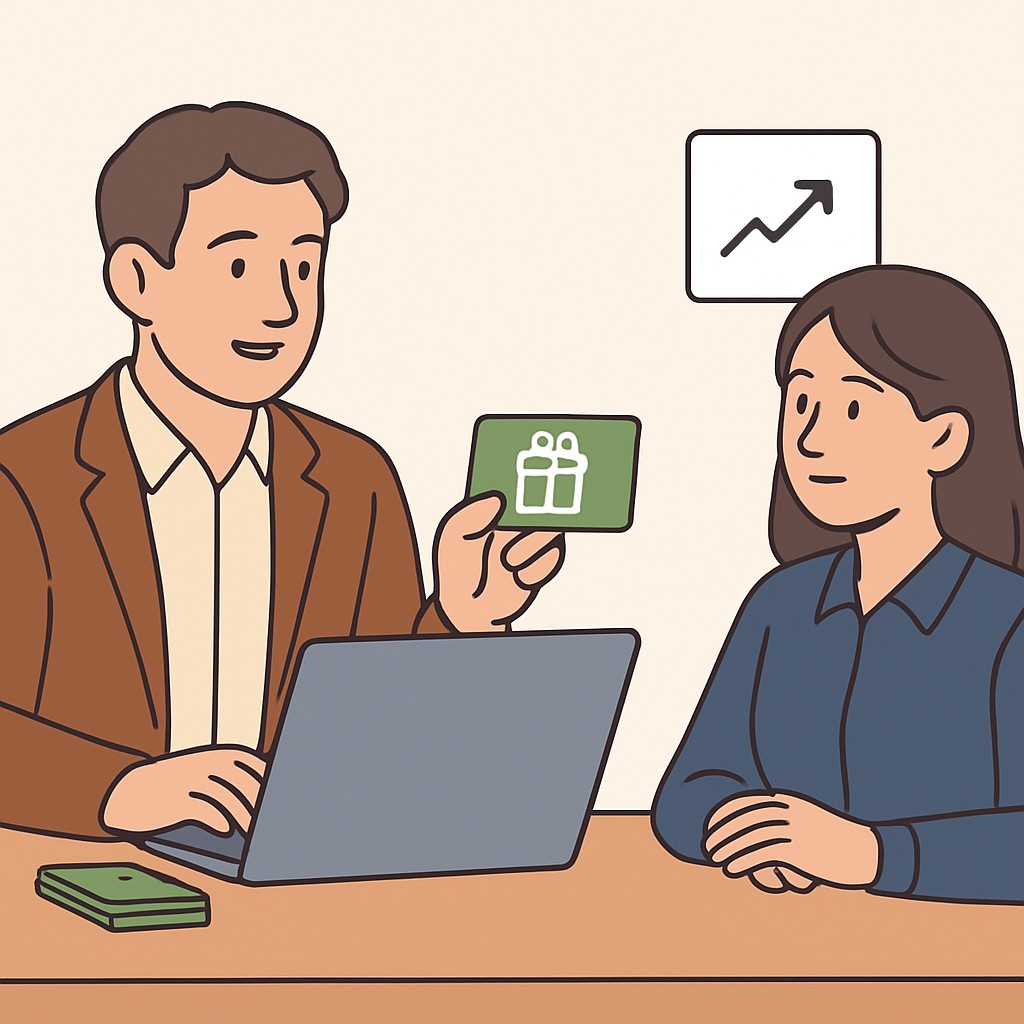
KYC processes verify user identities during onboarding.
Escrow holds funds or codes until both parties confirm completion.
Platforms should combine KYC, escrow, and monitoring into an integrated workflow.
Platform Trust as a Cornerstone
Trust shapes user decisions on where to trade safely.
Furthermore, platforms that demonstrate reliable processes attract steady participation.
Consequently, trust reduces friction and increases repeat transactions.
Build The Software Your Business Needs To Grow
The next stage of your business will need better systems, smarter automation, and stronger digital tools. We help businesses turn ideas into websites, apps, and software platforms built for growth, revenue, and long-term scale.
Build For GrowthKnow Your Customer Mechanisms
Moreover, layered verification limits anonymous accounts on marketplaces.
Therefore, verification reduces opportunities for bad actors to exploit the market.
- Document checks provide initial identity confirmation.
- Behavioral monitoring flags unusual trading patterns.
- Risk scoring helps prioritize review of suspicious accounts.
Escrow Mechanisms and Transaction Confidence
As a result, escrow limits immediate losses from fraud.
Additionally, escrow clarifies obligations during each transaction stage.
- Automated release rules reduce manual intervention and human error.
- Clear timelines set expectations for delivery and confirmation.
- Neutral custody protects both buyers and sellers during exchange.
Operational Practices for Platforms
Moreover, platforms must maintain audit logs for every critical action.
Therefore, regular internal reviews improve process integrity over time.
User Practices to Support Safety
Users should follow verification steps and keep account details secure.
Additionally, users should report suspicious activity through platform channels.
Consequently, active user participation strengthens overall marketplace safety.
Balancing Privacy and Verification
Platforms should collect only necessary information for verification purposes.
Moreover, they should apply safeguards for stored personal data.
Therefore, platforms can verify identities while respecting user privacy.
Transparency and Dispute Resolution
Clear transaction records help resolve disputes efficiently.
Furthermore, predefined dispute paths reduce escalation and uncertainty.
Ultimately, transparency and fair resolution reinforce long term confidence.
Discover More: Why E-commerce Platforms Keep Growing In Nigeria
Technical and Infrastructure Constraints
This section addresses technical and infrastructure constraints affecting platform trading.
It focuses on payments, verification, connectivity, and operational impacts.
Also, it highlights design considerations for building resilient platforms.
Mobile Payment Limitations
Mobile payments serve as the main transaction method for many traders.
However, intermittent failures in payment flows interrupt exchanges and raise risk.
Consequently, sellers may not receive confirmation before a trade completes.
Additionally, delayed settlements complicate conditional holds and dispute resolution.
Verification and Identity Challenges
Strong identity verification proves difficult to maintain consistently across platforms.
Moreover, frequent verification delays slow transactions and erode user confidence.
Also, limited verification options force manual checks that introduce human error.
Connectivity and Network Stability
Unstable network connections cause interrupted sessions during sensitive transaction steps.
Thus, users may face timeouts when delivering codes or confirming trades.
Meanwhile, repeated reconnection attempts can expose users to additional interception risks.
Operational Impacts on Secure Trading
Payment and connectivity failures increase failed trades and unresolved disputes.
Furthermore, friction in verification discourages use of formal trading channels.
Consequently, participants may revert to informal methods that reduce traceability and accountability.
Design Considerations for Resilient Platforms
Platforms should provide clear status messages during payment and verification steps.
Also, platforms should allow reliable retry paths for interrupted transactions.
In addition, platforms should reduce manual verification where secure automation can help.
Finally, user education on simple connectivity checks can lower the chance of failed trades.
Gain More Insights: Why Nigerian Customers Prefer Easy Online Shopping
Cross-Border Value Transfer and Exchange Dynamics
Uncertain pricing and rapid flows create incentives for transparent trading practices.
Consequently, secure processes reduce settlement risks and build participant confidence.
Additionally, transparent pricing narrows arbitrage that can destabilize informal exchange rates.
Build The Software Your Business Needs To Grow
The next stage of your business will need better systems, smarter automation, and stronger digital tools. We help businesses turn ideas into websites, apps, and software platforms built for growth, revenue, and long-term scale.
Build For GrowthGift Cards as Portable Value Instruments
Gift cards can function as portable stores of monetary value across borders.
Furthermore, they move value without requiring traditional bank transfers.
Next, they enable recipients to access goods or services linked to the card’s currency.
Interaction with Foreign Exchange Pressures
Gift card prices often relate indirectly to prevailing foreign exchange rates.
Consequently, they may respond quickly to shifts in currency demand.
Therefore traders adjust asking prices to reflect perceived currency scarcity.
Role within Informal Exchange Systems
Informal exchangers sometimes use gift cards as alternative settlement tools.
Moreover, these exchanges integrate cards into existing value chains and networks.
Thus cards can help move value where formal channels prove slow or costly.
Market Implications and Incentives for Safety
Stakeholders should consider several factors to improve cross-border safety.
- Ensure pricing reflects exchange conditions and fees transparently.
- Promote fast settlement to reduce exposure during transfers.
- Provide clear dispute resolution paths for cross-border trades.
- Encourage recordkeeping that supports tracing and accountability.
Therefore safe gift card trading helps stabilize informal exchange practices.
Practical Prevention and Response Measures
This section presents practical prevention and response measures.
It covers consumer education, dispute resolution, and industry best practices.
The guidance focuses on actionable steps for traders and industry participants.
Consumer Education
Consumer education helps consumers spot risky transactions early.
It equips informal traders with practical safety skills.
The program promotes basic recordkeeping habits after trades.
Goals
Help consumers detect risky transactions before they complete trades.
Equip informal traders to apply practical safety skills during exchanges.
Encourage traders to keep simple records after each trade for reference.
Core Topics
Core topics include identifying red flags in gift card offers.
They cover keeping clear transaction records for later reference.
They explain verification steps and protection of personal payment details.
- Identifying common red flags in gift card offers.
- Keeping clear transaction records for later reference.
- Following basic verification steps before completing trades.
- Protecting personal and payment details during exchanges.
Delivery Channels
Deliver education through community workshops that build practical skills.
Provide simple digital guides for users who access online resources.
Offer offline materials to support traders with limited internet access.
- Community workshops build practical skills through direct interaction.
- Simple digital guides reach users who access online resources.
- Offline materials support traders with limited internet connectivity.
- Marketplace prompts remind users at the point of transaction.
Evaluation
Gather user feedback to measure education effectiveness.
Update materials based on feedback and observed trends.
Revise content periodically to reflect changing needs and risks.
Dispute Resolution
Encourage users to report problems promptly.
Ask users to preserve transaction details and communications.
Centralize reports to a single accessible contact point.
Reporting and Evidence Preservation
Report issues quickly to increase resolution chances.
Preserve transaction details and communications for later review.
Provide a centralized contact point for submitting reports and evidence.
Resolution Pathways
Offer clear mediation steps that guide buyers and sellers.
Involve neutral reviewers for disputes that remain unresolved.
Set transparent timelines for each stage of resolution.
Accessibility and Timelines
Keep reporting channels simple and language accessible to all users.
Provide low cost or free options for resolving small disputes.
Build The Software Your Business Needs To Grow
The next stage of your business will need better systems, smarter automation, and stronger digital tools. We help businesses turn ideas into websites, apps, and software platforms built for growth, revenue, and long-term scale.
Build For GrowthPublish expected response times to build user trust.
Industry Best Practices
Industry best practices guide prevention and effective response.
They emphasize operational readiness and transparent communication.
Stakeholders should adopt collaborative approaches to safety improvements.
Operational Practices
Train staff regularly on secure transaction handling and support.
Maintain clear, auditable records for all gift card trades.
Prepare incident response plans for suspected fraudulent events.
- Train staff regularly on secure transaction handling and support.
- Maintain clear, auditable records for all gift card trades.
- Prepare incident response plans for suspected fraudulent events.
Transparency and Accountability
Publish plain language terms that explain user rights and responsibilities.
Provide clear receipts that show essential transaction details.
Make terms and receipts easy to access and understand.
Collaboration
Encourage information sharing among industry participants to spot trends.
Partner with community groups to amplify safety messages.
Share trends and insights to improve collective responses.
Continuous Improvement
Treat prevention and response as ongoing adaptive processes.
Review and refine practices regularly to address emerging risks.
Update training and materials based on monitoring and feedback.
Additional Resources
Google search results for Why Safe Gift Card Trading Matters More In Nigeria Insights
Bing search results for Why Safe Gift Card Trading Matters More In Nigeria Insights
Before You Go…
Hey, thank you for reading this blog post to the end. I hope it was helpful. Let me tell you a little bit about Nicholas Idoko Technologies.
We help ambitious businesses build the digital systems they need to grow, compete, and scale — including web platforms, mobile apps, desktop software, and blockchain solutions designed around real business goals.
We also help aspiring software developers and programmers learn the skills they need to have a successful career.
Take your first step to becoming a programming expert by joining our Learn To Code academy today!
Be sure to contact us if you need more information or have any questions! We are readily available.