
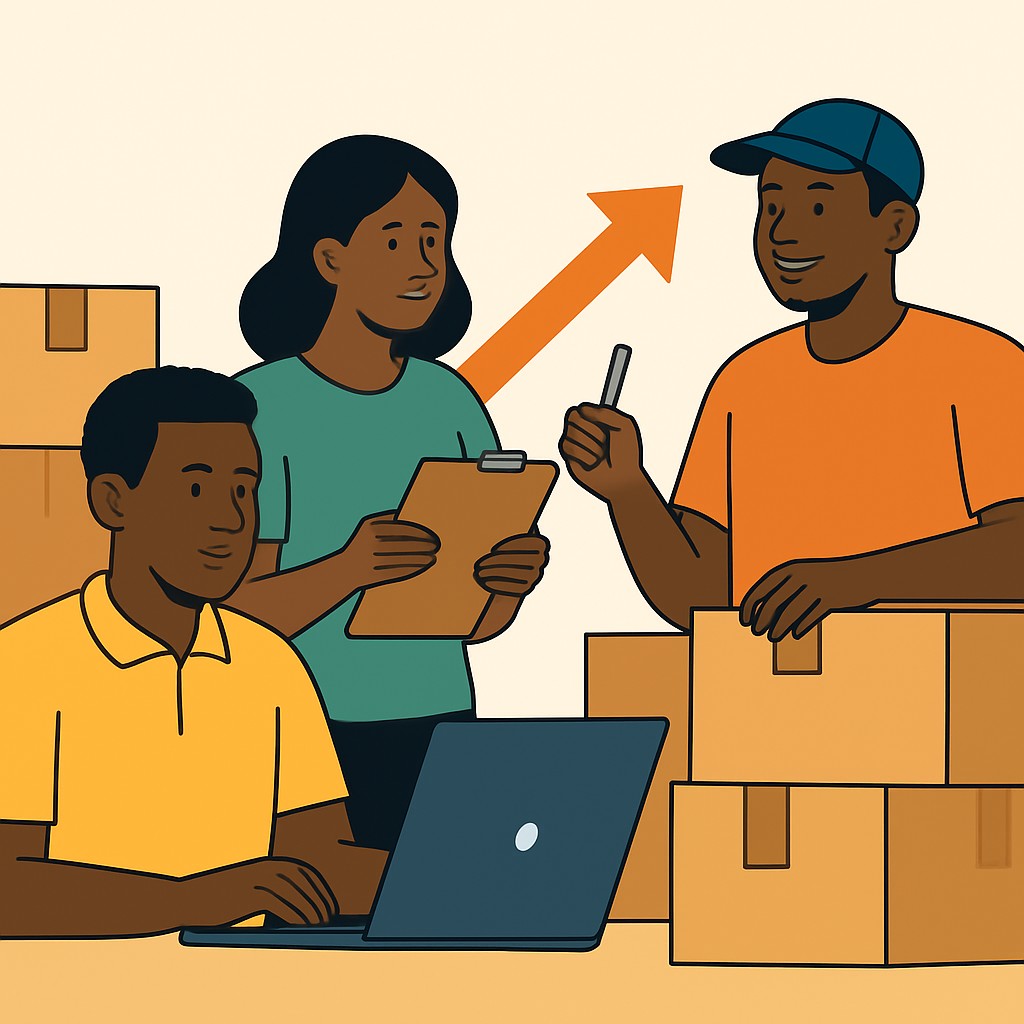

Overview of the Current Logistics Landscape in Nigeria
Infrastructure Challenges
Nigeria’s logistics infrastructure faces major challenges.
Poor road conditions and traffic congestion affect daily operations.
In addition, inadequate rail and port facilities limit efficient transportation.
These issues increase delivery times and business operating costs.
However, government efforts continue to improve infrastructure quality.
Fragmented Supply Chain Systems
Supply chain systems in Nigeria remain highly fragmented.
Many companies depend on informal networks for distribution and warehousing.
This fragmentation creates inconsistent service levels and higher risks.
Furthermore, limited data integration creates visibility problems across the supply chain.
As a result, businesses struggle to track shipments and optimize logistics operations.
Growing Demand for Efficient Logistics Services
Nigeria’s economic growth drives rising demand for efficient logistics.
E-commerce platforms like Konga and Jumia create new delivery challenges and opportunities.
Manufacturers and retailers need reliable transportation to meet customer expectations.
Additionally, international trade expansion increases demand for streamlined customs and freight services.
Therefore, logistics platforms are vital for coordinating complex supply routes.
Role of Technology in Transforming Logistics
Technology steadily transforms Nigeria’s logistics sector.
Platforms such as Lidya Logistics and QuickShift use mobile apps and GPS tracking.
These tools improve transparency, real-time monitoring, and shipment accuracy.
Moreover, digital payment systems simplify transactions between service providers and customers.
Thus, technology adoption improves efficiency and reduces bottlenecks across the industry.
Regulatory Environment and Its Impact
Government regulations shape logistics operations throughout Nigeria.
The National Automotive Design and Development Council influences vehicle standards in transport fleets.
Likewise, the Nigerian Maritime Administration enforces strict port regulations.
While regulations aim to improve safety and security, they sometimes complicate processes.
Therefore, logistics platforms help businesses navigate regulatory requirements more effectively.
Challenges Faced by Traditional Logistics Methods in Nigeria
Inadequate Infrastructure
Many Nigerian roads are poorly maintained and congested.
This condition slows delivery times significantly.
As a result, companies like Olumide Freight face delays daily.
In addition, limited warehousing facilities complicate storage and distribution.
These infrastructural gaps hinder seamless logistics operations across the country.
Poor Communication and Tracking Systems
Traditional logistics relies heavily on manual communication methods.
For instance, Lagos-based distributor Kemi Logistics struggles with shipment tracking.
Without real-time updates, customers feel uncertain about deliveries.
Moreover, documentation errors cause costly rescheduling and rerouting.
Therefore, inefficiencies reduce service quality and customer satisfaction.
High Operational Costs
Fuel prices in Nigeria are volatile and often expensive.
These costs directly increase transportation expenses for companies like Nwachukwu Movers.
In addition, inefficient routes raise fuel consumption and vehicle wear.
Consequently, small businesses struggle to maintain competitive pricing.
Ultimately, these costs reduce profitability and scalability in the logistics sector.
Security Risks and Theft
Logistics operators frequently encounter cargo theft on major routes.
For example, merchants transporting goods from Kano report frequent hijackings.
These risks force companies to invest heavily in security measures.
Additionally, stolen goods disrupt supply chains and damage brand reputations.
Therefore, insecurity remains a critical obstacle for traditional logistics methods.
Lack of Skilled Workforce
Many logistics firms struggle to find trained personnel.
Staff shortages affect warehouse management and delivery accuracy.
Furthermore, outdated skills hinder adoption of modern logistics practices.
For example, Adebola Transport faces challenges training drivers on digital tools.
As a result, operational inefficiencies and errors become more frequent.
Limited Integration and Coordination
Traditional logistics providers often work in silos without system integration.
This fragmentation causes delays and miscommunication among partners.
For example, warehouses and carriers rarely share real-time inventory data.
Therefore, coordinating shipments and deliveries becomes complicated and error-prone.
Efficient collaboration remains out of reach for many Nigerian logistics operators.
Environmental and Regulatory Challenges
Logistics companies face strict regulations that are hard to comply with.
Moreover, environmental concerns demand cleaner and more sustainable practices.
This situation increases operating costs and complicates compliance efforts.
For instance, Lagos Truckers Association struggles to meet emission standards.
Hence, traditional methods are often unsustainable in the long run.
How Logistics Platforms Streamline Supply Chain Management
Enhancing Real-Time Tracking and Visibility
Logistics platforms provide real-time tracking of shipments across Nigeria.
This capability lets businesses monitor deliveries closely.
For example, Lagos-based FreightWave Solutions can track shipments with greater precision.
As a result, companies identify delays quickly and take corrective action immediately.
Moreover, improved visibility keeps inventory levels optimized.
Therefore, customers receive timely updates and trust the service more.
Optimizing Route Planning and Resource Allocation
These platforms use data-driven algorithms to plan efficient delivery routes.
For example, Kaduna-based Verde Logistics uses these tools to cut transportation times.
Efficient route planning also reduces fuel consumption and operating costs.
In addition, platforms allocate vehicles and drivers dynamically to match demand shifts.
This flexibility improves fleet utilization and cuts idle time.
Automating Documentation and Compliance
Logistics platforms automate critical paperwork such as invoices and clearance documents.
This automation helps Abuja-based Strive Logistics reduce human errors.
It also speeds up customs clearance for cross-border shipments.
Furthermore, platforms maintain current compliance records and help avoid regulatory penalties.
So, businesses can focus more on growth than on administrative burdens.
Facilitating Collaboration Across the Supply Chain
These platforms create a centralized communication hub for all stakeholders.
Manufacturers, distributors, and retailers share real-time information on one system.
For instance, Enugu-based Ekene Transport coordinates better with suppliers through this feature.
Better collaboration reduces delays caused by miscommunication and misinformation.
Consequently, supply chain processes become more transparent and synchronized across Nigeria.
Providing Data Analytics for Informed Decisions
Logistics platforms collect and analyze vast amounts of supply chain data.
Companies like Port Harcourt’s Meridian Freight use analytics to identify performance bottlenecks.
These insights help managers optimize processes and predict future demand shifts.
Furthermore, data-driven decisions improve cost efficiency and service quality.
Ultimately, businesses gain a stronger competitive edge in Nigeria’s complex logistics environment.
Gain More Insights: How Media Buying Platforms Help Brands In Nigeria
Role of Technology in Enhancing Logistics Efficiency
Automation and Real-Time Tracking
Technology enables automation of routine logistics tasks.
Lagos Freight Solutions uses automated systems for order processing.
Real-time tracking allows accurate monitoring of shipments at all times.
Moreover, it improves transparency among suppliers, drivers, and customers.
Trove Logistics uses GPS tracking to reduce delays.
Data Analytics for Better Decisions
Data analytics transforms raw logistics data into actionable insights.
For instance, NairaLog uses data analysis to optimize delivery routes.
This process helps reduce fuel consumption and operational costs.
Additionally, it supports demand forecasting and inventory planning.
Therefore, logistics managers can make informed decisions quickly.
Mobile Technology and Communication
Mobile apps streamline communication among logistics stakeholders.
SwiftShip connects drivers with warehouse teams instantly.
These tools help resolve transportation problems quickly.
Furthermore, mobile alerts notify customers about shipment updates.
This improved communication boosts customer satisfaction significantly.
Digital Payments and Documentation
Technology integrates logistics with digital payment gateways seamlessly.
For example, ClearPath Logistics uses e-invoicing to reduce paperwork.
This integration speeds up transaction processing for clients and vendors.
It also improves security and accuracy in financial dealings.
Consequently, businesses experience smoother supply chain operations.
Improving Last-Mile Delivery
Technology optimizes last-mile delivery through route optimization software.
RapidFleet uses AI to plan efficient delivery paths.
This approach reduces delivery times and eases traffic congestion.
Additionally, customers benefit from timely and reliable service.
Ultimately, it strengthens the reliability of the logistics network.
You Might Also Like: How Custom Software Helps Nigerian Teams Work Better
Impact of Logistics Platforms on Delivery Times
Streamlining Order Management
Logistics platforms consolidate multiple orders into one system.
This integration helps companies like Lagos Express process requests quickly.
As a result, manual data entry causes fewer delays and errors.
Real-time updates also improve coordination between warehouse and delivery teams.
Therefore, customers receive more accurate estimated delivery times.
Optimizing Route Planning
Advanced algorithms analyze traffic and road conditions effectively.
For example, AfroCargo uses logistics platforms to identify faster routes.
Additionally, platforms adjust routes dynamically when unexpected obstacles arise.
This flexibility reduces travel time and fuel consumption simultaneously.
Drivers therefore complete deliveries faster and improve overall efficiency.
Enhancing Communication and Transparency
Logistics platforms enable seamless communication between all stakeholders.
Delivery drivers, warehouse staff, and customers stay informed throughout the process.
TransNiger Logistics reported 30% fewer missed delivery windows after implementing these systems.
Furthermore, instant notifications keep customers aware of delivery progress.
This transparency reduces uncertainty and helps customers plan accordingly.
Leveraging Data Analytics for Continuous Improvement
Data collected by logistics platforms reveals bottlenecks in delivery chains.
Businesses like EcoMove Nigeria use this data to refine operations continually.
They identify peak traffic hours and schedule deliveries during less congested times.
Consequently, these insights support faster turnaround and shorter delivery times.
Analytics help companies learn and adapt in real time.
Benefits for Nigerian Businesses and Consumers
Reduced delivery times enhance customer satisfaction significantly.
Retailers also gain more repeat business through reliable shipping schedules.
Small businesses, such as Olumide Farms, expand their reach with timely deliveries.
Ultimately, logistics platforms foster a competitive marketplace that benefits everyone.
Contribution of Logistics Platforms to Improving Transparency and Tracking
Enhancing Visibility Across the Supply Chain
Logistics platforms provide real-time visibility of shipments and deliveries.
This transparency lets businesses monitor goods at every stage of transit.
Consequently, companies like Eze Freight Systems can anticipate delays early.
Moreover, customers gain confidence when they track their orders directly.
Streamlining Communication Between Stakeholders
These platforms centralize communication among shippers, carriers, and clients.
For example, Adaora Cargo Links uses platforms to share shipment updates instantly.
Therefore, misunderstandings and miscommunications drop significantly.
Additionally, automated notifications keep everyone informed proactively.
Reducing Fraud and Theft Risks
Transparent tracking systems deter fraudulent activities in logistics operations.
Technology such as GPS and barcode scanning helps verify cargo authenticity.
For instance, Bayo Logistics integrates tracking to protect high-value shipments.
As a result, companies can detect and respond to suspicious activities quickly.
Improving Data Accuracy and Decision Making
Logistics platforms collect accurate data on shipment status and transit times.
Tunde Adeyemi Transport uses this data to optimize route planning effectively.
Consequently, managers make informed decisions that improve operational efficiency.
Furthermore, historical data analysis reveals patterns that drive continuous improvement.
Key Features Supporting Transparency and Tracking
- Real-time GPS tracking for live location updates
- Automated status notifications via SMS or email
- Digital proof of delivery with timestamped signatures
- Interactive dashboards displaying shipment metrics
- Integration with mobile apps for on-the-go access
These features help firms like Nkem Express Cargo maintain trustworthiness.

Economic Benefits of Adopting Logistics Platforms for Nigerian Businesses
Improving Operational Efficiency
Logistics platforms streamline supply chain processes effectively.
They automate order tracking and inventory management tasks.
As a result, Lagos trader Seun Adetayo reduces manual errors.
This efficiency lowers operational costs significantly.
Moreover, real-time data improves decision-making accuracy.
Lowering Transportation Expenses
These platforms optimize route planning for deliveries.
They help Abuja Cargo Services avoid unnecessary expenses.
As a result, fuel consumption decreases considerably.
Additionally, consolidated shipments reduce empty vehicle runs.
Therefore, businesses enjoy substantial transportation savings.
Reaching Wider Markets
Logistics platforms connect businesses to a broader customer base.
Lagos importer Kemi Okafor gains access to remote Nigerian regions.
She uses the platform’s vast network for timely deliveries.
This expanded reach creates more sales opportunities.
Furthermore, better delivery reliability improves customer satisfaction.
Helping Small and Medium Enterprises
Logistics platforms offer affordable solutions tailored to SMEs.
Chinedu Electronics benefits from scalable logistics services.
This access helps SMEs compete with larger companies.
Additionally, platforms provide analytics that support better planning.
Thus, SMEs grow through stronger logistics capabilities.
Building Transparency and Accountability
Platforms provide clear shipment tracking to all stakeholders.
For example, Enugu Agro-Processors monitor deliveries in real time.
Transparency reduces disputes and builds trust with clients.
Furthermore, accountability raises operational standards.
This openness supports long-term business partnerships.
Driving Investment and Innovation
The adoption of logistics platforms attracts local and foreign investment.
Innovative firms like Ojo Tech Solutions develop new logistics tools.
This growth fosters a thriving technology ecosystem within Nigeria.
As innovation spreads, the economy benefits from better services.
Consequently, logistics platforms support national economic development.
Successful Logistics Platform Implementations in Nigeria
Maximizing Efficiency with SwiftShip Solutions
SwiftShip Solutions transformed logistics for small businesses in Lagos.
The platform integrates real-time tracking and optimized route planning.
As a result, delivery times fell by 30%, improving customer satisfaction.
CEO Adebayo Adeyemi emphasized technology’s role in overcoming traffic challenges.
Moreover, local entrepreneurs gained access to affordable transportation options.
The platform’s success inspires adoption in other densely populated Nigerian cities.
Enhancing Agricultural Supply Chains Through AgroLink
AgroLink connects farmers directly with markets across northern Nigeria.
The platform provides timely data on demand forecasts and logistics availability.
Therefore, farmers reduce post-harvest losses and maximize profits.
Founder Mariam Bello highlighted how AgroLink improves storage and distribution systems.
Additionally, the platform encourages collaborative partnerships among transporters and agro-dealers.
This model boosts rural economies and strengthens food security nationwide.
Optimizing Fleet Management with DuraLogistics
DuraLogistics implemented smart fleet management for transport companies in Abuja.
The system monitors vehicle conditions and driver behavior in real time.
As a result, operational costs decreased by 25%, and safety improved significantly.
Operations manager Emeka Okonkwo stresses the importance of data-driven decisions.
Furthermore, DuraLogistics supports regulatory compliance with automated reporting features.
The platform helps companies scale their services across Nigeria efficiently.
Transforming E-commerce Deliveries with NaijaCargo
NaijaCargo revolutionized last-mile delivery for major online retailers in Nigeria.
The platform uses AI to predict demand surges and optimize delivery routes.
Hence, customers receive faster and more reliable shipments.
Chief Operating Officer Claire Nwosu noted how the platform adapts to urban traffic patterns.
Additionally, NaijaCargo partners with local couriers to expand reach into smaller towns.
This approach bridges infrastructure gaps while supporting Nigeria’s booming e-commerce sector.
Empowering SMEs with LogiConnect Platform
LogiConnect provides small and medium enterprises with customizable logistics solutions.
The platform integrates easily with existing supply chains and payment systems.
Therefore, SMEs experience improved inventory management and reduced transportation delays.
Co-founder Chinedu Amadi explained their focus on affordability and user-friendly design.
Moreover, training programs help businesses fully leverage the platform’s capabilities.
LogiConnect’s success demonstrates technology’s power to democratize logistics access.
The Role of Logistics Platforms in Supporting E-Commerce Growth
Enhancing Delivery Efficiency
Logistics platforms streamline order management and delivery processes.
They connect sellers, transporters, and customers seamlessly.
Moreover, platforms like Trove Technologies enable real-time tracking and faster deliveries.
Consequently, customers receive orders promptly, which increases satisfaction.
Many Nigerian online stores depend on these systems to meet growing demand.
Expanding Market Reach
Logistics platforms help small businesses access wider markets.
For example, Lagos seller Amaka Okafor reaches customers nationwide through GoMyWay.
Through efficient shipping, businesses can expand beyond local borders quickly.
Furthermore, platforms facilitate access to rural and underserved areas.
This inclusivity drives e-commerce growth across Nigeria.
Reducing Operational Costs
Platforms optimize route planning, reducing fuel and labor costs.
They also consolidate shipments for better economies of scale.
For instance, Kargo Online reduced transport expenses by 30 percent using platform tools.
As a result, sellers can offer competitive prices to customers.
Lower costs boost business sustainability and encourage more entrepreneurs to sell online.
Providing Data-Driven Insights
Logistics platforms collect valuable information on delivery trends and performance.
Owners can analyze this data to identify bottlenecks and areas for improvement.
For example, EkoLogistics uses analytics to enhance supply chain efficiency.
Additionally, customer feedback integrated into these systems improves service quality.
Therefore, businesses make informed decisions that promote growth and reliability.
Supporting Payment and Customer Service Integration
Many logistics platforms integrate payment gateways for seamless transactions.
This reduces payment delays and fraud risks for sellers like Femi Electronics.
Furthermore, built-in customer service tools handle inquiries and complaints promptly.
Such services enhance trust between buyers and sellers on e-commerce sites.
Hence, platforms build a cohesive ecosystem that supports sustained commerce expansion.
Future Prospects and Innovations for Logistics Platforms in Nigeria
Integration of Advanced Technologies
Logistics platforms in Nigeria will increasingly adopt artificial intelligence to optimize routes.
Additionally, blockchain technology will improve transparency and security across supply chains.
Meanwhile, Internet of Things devices will enable real-time shipment tracking.
Expansion of Digital Infrastructure
Better internet connectivity across Nigeria will support digital logistics growth.
As a result, rural and underserved regions will gain access to efficient delivery services.
In addition, investments from firms like Konga Logistics and GIG Logistics will drive infrastructure upgrades.
Focus on Green and Sustainable Practices
Sustainability is becoming a key priority for logistics providers in Nigeria.
Many platforms will adopt electric vehicles and eco-friendly packaging materials.
These measures will reduce environmental impact and attract eco-conscious consumers.
Enhancement of Customer Experience
Future platforms will provide personalized services tailored to business needs.
Also, user-friendly mobile apps will simplify order tracking and communication.
AI chatbots will deliver faster support and answer questions instantly.
Collaboration with Government and Private Sector
Public-private partnerships will help address regulatory challenges in logistics operations.
The Nigerian Shippers’ Council may introduce policies that encourage innovation and fair competition.
Furthermore, collaborations with fintech firms like Paystack will streamline payment processes.
Development of Cross-Border Logistics
Expanded logistics platforms will support trade between Nigeria and neighboring countries.
This growth aligns with the goals of the African Continental Free Trade Area agreement.
Innovations in customs clearance and documentation will reduce transit times significantly.
Additional Resources
Wishful thinking? Addressing the long-term implications of COVID …
The Current State of Public Transport as a Climate Solution
Before You Go…
Hey, thank you for reading this blog post to the end. I hope it was helpful. Let me tell you a little bit about Nicholas Idoko Technologies.
We help businesses and companies build an online presence by developing web, mobile, desktop, and blockchain applications.
We also help aspiring software developers and programmers learn the skills they need to have a successful career.
Take your first step to becoming a programming expert by joining our Learn To Code academy today!
Be sure to contact us if you need more information or have any questions! We are readily available.
We Design & Develop Websites, Android & iOS Apps
Looking to transform your digital presence? We specialize in creating stunning websites and powerful mobile apps for Android and iOS. Let us bring your vision to life with innovative, tailored solutions!
Get Started Today