
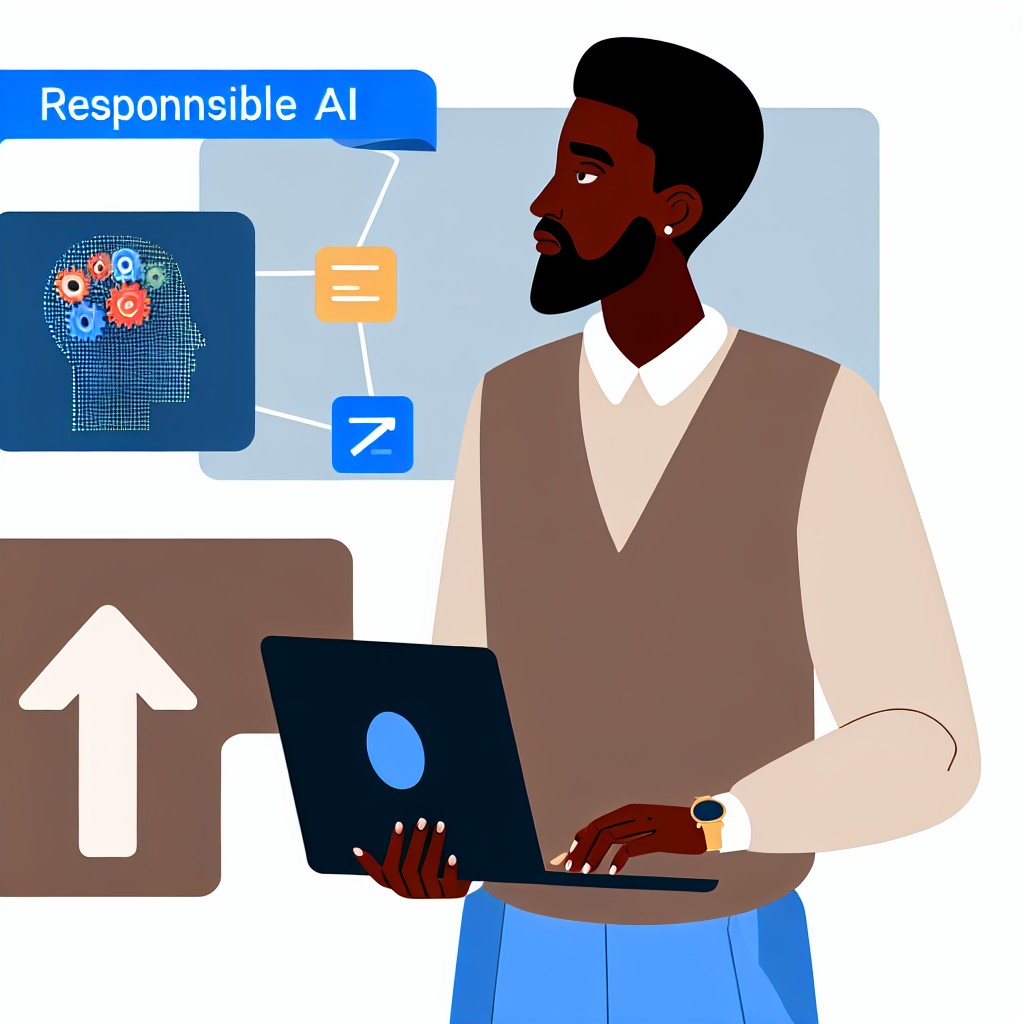

Introduction to Ethical AI in Education
Significance of Ethical AI in Learning Contexts
Artificial intelligence increasingly shapes educational experiences worldwide.
It offers personalized support and adaptive learning opportunities for students.
However, ethical concerns arise when AI impacts sensitive learning environments.
Therefore, building responsible AI systems remains a critical priority for educators.
Ethical AI helps prevent bias and ensures fairness in student assessments.
It safeguards privacy and fosters trustworthy interactions between learners and software.
Moreover, ethical AI promotes inclusivity by accommodating diverse learner needs.
Thus, adopting ethical standards strengthens education technology’s positive impact.
Background and Emerging Trends
Educational institutions increasingly integrate AI-powered tools into classrooms.
For instance, Luminary Learning developed a widely used intelligent tutoring system.
Additionally, InsightEd Analytics implements AI to analyze student engagement patterns.
These innovations support educators but also introduce accountability challenges.
Consequently, stakeholders emphasize transparency and explainability in AI algorithms.
The global community debates ethical frameworks that guide AI development.
Experts like Dr. Maya Lin highlight the importance of interdisciplinary collaboration.
In line with this, policy makers establish guidelines to manage AI’s educational use.
Ethical Priorities in AI Development for Education
Developers must prioritize data privacy and consent protection.
Next, ensuring algorithmic fairness prevents discrimination against marginalized groups.
Furthermore, creating explainable AI models helps educators understand system decisions.
Maintaining accountability requires continuous monitoring of AI performance and impacts.
Developers should also involve educators and learners in design processes.
By valuing diverse feedback, AI tools become more effective and ethical.
Finally, promoting digital literacy prepares all users to interact responsibly with AI.
Key Ethical Principles for AI in Learning Environments
Fairness and Bias Mitigation
AI systems must treat all learners equitably without discrimination.
Developers should actively identify and reduce biases in data and algorithms.
For example, Veritas Education uses diverse datasets to avoid cultural bias.
Moreover, ongoing audits help ensure fairness in adaptive learning tools.
Transparency and Explainability
Students and educators deserve clear explanations of AI decisions.
Transparent algorithms build trust and encourage responsible use.
NextGen Learning provides user-friendly dashboards showing AI assessment criteria.
Thus, transparency enables users to understand learning recommendations better.
Privacy and Data Protection
Protecting student data is fundamental in AI-powered education software.
Companies must comply with regulations like FERPA and GDPR rigorously.
SecurePath Academy encrypts all learner data and limits access to authorized personnel.
Consequently, learners feel secure sharing information necessary for personalization.
Accountability and Human Oversight
Human educators should oversee AI decisions affecting learners’ progress.
Accountability ensures errors or harms are identified and corrected promptly.
For instance, ScholarVision designates teachers to review AI-generated performance reports.
This dual approach balances technological efficiency with human judgment.
Inclusivity and Accessibility
AI must accommodate diverse learning needs and abilities effectively.
LearnAbility Solutions implements features supporting students with disabilities.
They also design interfaces that adapt to various linguistic and cultural contexts.
Hence, AI fosters inclusive education where no learner is left behind.
Promoting Student Autonomy
Responsible AI empowers learners to make informed educational choices.
It avoids manipulating or limiting learners’ engagement with content.
For example, SkillPath offers options that encourage self-directed skill development.
Therefore, AI supports growth while respecting students’ agency and preferences.
Challenges and Risks of Implementing AI in Education
Data Privacy and Security Concerns
Educational AI systems collect large amounts of personal data.
Protecting student information becomes a critical responsibility.
Without proper safeguards, data breaches can expose sensitive details.
Unauthorized data use can violate student privacy rights.
Institutions must implement robust encryption and access controls.
Companies like Lernovate emphasize compliance with regulations like FERPA.
Bias and Fairness in AI Algorithms
AI algorithms can unintentionally reinforce existing biases in education.
Machine learning models learn from historical data that may be biased.
Some students may face unfair treatment or lowered opportunities because of this.
For instance, biased grading software may favor certain demographics.
Ethical AI requires continuous auditing to detect and correct biases.
Partners such as EdTech Innovators invest in fairness testing tools.
Impact on Teacher Roles and Student Interaction
Introducing AI can alter traditional teacher-student dynamics significantly.
Some educators worry AI might reduce personal interaction and mentorship.
Conversely, AI can automate administrative tasks, freeing teachers for direct engagement.
Schools like Ashton Academy balance AI integration with human-centered teaching.
Ongoing training helps teachers adapt and collaborate effectively with AI tools.
Dependence on Technology and Equity Issues
AI-based education relies heavily on accessible technology and infrastructure.
Many students lack stable internet or modern devices at home.
This digital divide risks widening educational inequities further.
Nonprofit organizations like Bright Futures Foundation work to improve access.
Policymakers must address infrastructure gaps alongside AI adoption.
Challenges in Transparency and Accountability
Many AI systems operate as “black boxes” without clear explanations for decisions.
This opacity makes it difficult to hold developers accountable for errors.
Educators and students must understand how AI reaches conclusions affecting outcomes.
Companies like Insight Learning Solutions prioritize explainable AI models.
Transparency builds trust and encourages responsible use of educational technology.
Learn More: Smart Campus Systems: IoT Solutions Transforming School Management
Designing Transparent and Explainable AI Systems for Students and Educators
Importance of Transparency in Educational AI
Transparency enables users to understand how AI systems make decisions.
Students and educators benefit from clear insights into AI processes.
Transparent AI builds trust and encourages responsible use.
For example, Lumina Learning developed a platform that openly shares its learning algorithms.
This openness helps teachers identify areas where AI recommendations might need adjustment.
Moreover, transparent AI promotes accountability among developers and institutions.
Strategies for Achieving Explainability
Explainability means designing AI systems that communicate their reasoning clearly.
Developers should use simple language to describe how inputs lead to outputs.
Elena Martin’s team at InsightLearn emphasizes layered explanations tailored to users’ expertise.
For instance, beginners receive overview explanations, while advanced users access detailed analytics.
In addition, visual tools like graphs or flowcharts enhance users’ comprehension of AI decisions.
Such strategies reduce confusion and empower educators to make informed decisions.
Balancing Complexity and User Accessibility
AI in education often involves complex models that can overwhelm users.
The challenge lies in simplifying without losing critical information.
Dr. Maya Chen advocates iterative user testing to optimize clarity and usability.
Her team continuously collects feedback from both students and teachers to refine explanations.
This approach helps strike a balance by adapting explanations to diverse learning environments.
Therefore, AI systems remain sophisticated yet accessible, supporting effective learning outcomes.
Tools Supporting Transparent AI Practices
Several software tools assist developers in creating explainable AI.
For example, OpenLens facilitates visualizing decision pathways in machine learning models.
Likewise, BrightPath offers user-friendly dashboards for monitoring AI recommendations.
Institutions like Rivergate High integrate these tools to maintain clarity for stakeholders.
Consequently, educators gain confidence in AI-assisted teaching and assessment.
These tools also promote ethical standards by ensuring users are well-informed.
Discover More: Augmented Reality Labs: Bridging Hands-On Science Experiments and Virtual Tools
Ensuring Privacy and Data Security in Educational AI Applications
Protecting Student Information
Educational AI applications collect vast amounts of student data.
Protecting this information remains a top priority.
Developers should implement robust encryption methods to safeguard data.
For instance, SecureSocket Layer (SSL) protocols must protect data in transit.
Additionally, data at rest requires strong encryption algorithms like AES-256.
Such measures prevent unauthorized access and maintain confidentiality.
Furthermore, access to sensitive data must be strictly role-based.
Only authorized personnel such as teachers and administrators should retrieve personal information.
Compliance with Legal Standards
Educational institutions and vendors must follow privacy regulations rigorously.
Regulations like FERPA govern the handling of student educational records.
Similarly, GDPR applies to AI applications used by European learners.
Complying with these laws ensures student rights receive proper protection.
Besides legal requirements, transparency plays a crucial role.
Developers should clearly inform users about data usage and collection policies.
Moreover, obtaining explicit consent before data gathering increases trust.
Implementing Secure AI System Design
Privacy by design concepts integrate security from the project outset.
This approach reduces vulnerabilities throughout the software lifecycle.
Developers like Laura Chen at SmartLearn Technologies advocate for this framework.
It includes regular security audits and penetration testing of AI systems.
Such proactive steps help detect and fix potential risks early on.
Likewise, anonymization techniques limit personally identifiable data exposure.
For example, pseudonymization replaces names with unique identifiers.
Monitoring and Incident Response
Continuous monitoring detects unusual activities within AI platforms.
BrightPath Solutions employs automated alerts to flag unauthorized data access.
Furthermore, timely incident response plans minimize possible damages.
Security teams must investigate breaches and communicate transparently with stakeholders.
Periodic staff training reinforces awareness of privacy practices.
Thus, all team members understand their data protection responsibilities.
Balancing Innovation and Privacy
AI advancements should never compromise student privacy.
Responsible AI developers balance innovation with ethical data handling.
Regular privacy impact assessments help maintain this equilibrium.
Ultimately, trust in educational AI systems hinges on strong privacy and security.
Discover More: Cloud-Powered Data Security Solutions for Protecting Student Privacy
Addressing Bias and Fairness in AI-Powered Learning Tools
Identifying Sources of Bias in Educational AI
AI-powered learning tools rely heavily on data to make decisions.
Data can carry inherent biases from past human decisions.
If training data excludes certain demographic groups, bias may occur.
Biased algorithms can unfairly advantage or disadvantage students.
Recognizing these bias sources helps developers create more equitable systems.
Strategies for Mitigating Bias in Algorithms
Developers must implement strategies to reduce bias in AI tools.
They should use diverse and representative datasets during training.
Continuous monitoring helps detect bias as the AI evolves.
Algorithmic fairness techniques can adjust for known disparities.
Involving diverse teams in development encourages multiple perspectives.
Promoting Transparency and Accountability
Transparency allows users to understand how AI makes decisions.
Developers should clearly document data sources and model design choices.
Providing explanations for AI decisions builds trust with educators and students.
Companies like LumaLearn openly share their fairness evaluations for user review.
Accountability mechanisms ensure AI adheres to ethical standards over time.
Engaging Stakeholders in Fair AI Development
Including educators, students, and parents in the design process is vital.
Their feedback helps identify overlooked bias or usability issues.
Working with organizations like the Educational Equity Coalition strengthens fairness efforts.
Regular workshops and surveys promote ongoing dialogue about AI impact.
Collaborative development fosters tools that serve all learners fairly.
You Might Also Like: Real-Time Collaboration Software for Global Classrooms and Cultural Exchange

Role of Stakeholders: Educators, Developers, and Policymakers
Educators as Ethical Guardians
Educators play a vital role in implementing ethical AI in classrooms.
They assess AI tools to ensure they align with students’ learning needs.
Additionally, teachers promote transparency by explaining AI functions to students.
This approach builds trust and confidence in AI-assisted learning.
Moreover, educators provide feedback to developers for continuous improvement.
Vivian Morales, a middle school technology coordinator, advocates for ethical AI usage.
She collaborates closely with software teams like BrightPath Learning Solutions.
Developers Creating Responsible Software
Developers hold the responsibility to design AI ethically from the start.
They integrate fairness by eliminating biases in data and algorithms.
Furthermore, developers ensure AI respects privacy regulations such as FERPA.
Marcus Lee, lead engineer at NeuralEdge Technologies, emphasizes user-centric design.
His team conducts rigorous testing to identify potential ethical risks.
Also, developers collaborate with educators to align AI functionalities with pedagogy.
This synergy improves both AI accuracy and educational impact.
Policymakers Setting Standards and Safeguards
Policymakers establish rules that govern AI use in education environments.
They draft legislation that protects students’ personal and academic data.
Additionally, policy leaders promote equitable access to AI-powered resources.
Senator Carla Ramirez advocates for clear guidelines in AI education deployment.
Her office works with agencies like the Department of Education and EdTech Alliance.
Policies encourage transparency, accountability, and ethical auditing procedures.
Thus, policymakers create a framework that supports responsible AI integration.
Collaborative Efforts Among Stakeholders
Successful ethical AI requires collaboration between educators, developers, and policymakers.
They share insights to address challenges and adapt to evolving technologies.
Furthermore, joint task forces promote best practices and continuous learning.
For example, the Learning Ethics Consortium unites these groups regularly.
Together, they develop guidelines that prioritize student welfare and learning outcomes.
This multilateral approach ensures AI remains a trustworthy educational partner.
Best Practices for Building Responsible Educational Software Using AI
Prioritizing Transparency in AI Systems
Developers must design AI algorithms that explain their decisions clearly.
Transparency builds trust among educators, students, and administrators.
Moreover, clear communication of AI functionality helps users understand its role.
For example, BrightLearn Technologies includes transparency dashboards in their software.
This practice allows users to review how learning recommendations are generated.
Ensuring Data Privacy and Security
Protecting student data remains a top priority when building AI tools.
The software should comply with privacy laws like FERPA and GDPR.
Furthermore, encryption techniques safeguard personal and academic information.
Innovations from companies such as Edutech Innovations emphasize robust data security.
These measures reduce risks of unauthorized data access and loss.
Mitigating Bias and Promoting Fairness
AI models can inherit biases present in training data.
Therefore, developers must actively identify and correct such biases.
Conducting diverse data set evaluations improves equity in software outcomes.
Edgewise Learning Solutions implements bias audits to enhance fairness continually.
This ensures AI-driven assessments do not disadvantage any group of students.
Involving Educators and Learners in Development
Collaboration between AI experts and educators enhances software relevance.
Teachers provide insights about classroom needs and learner diversity.
Additionally, student feedback guides user-friendly feature design.
LearnSmart Inc. hosts regular focus groups with teachers and students during development.
This approach creates tools that effectively support diverse educational environments.
Implementing Continuous Monitoring and Improvement
Ongoing evaluation detects unexpected issues in AI system behavior.
Feedback loops allow for regular updates and refinements.
Adaptive software from EduVision Labs evolves based on user interactions and outcomes.
This practice maintains software effectiveness and aligns with ethical standards.
Furthermore, it ensures educational AI solutions remain responsible and trustworthy over time.
Case Studies of Ethical AI Applications in Education
Personalized Learning Platforms with Fairness Guarantees
GlobalEdTech implemented an AI-based personalized learning platform for diverse classrooms.
The platform adapts materials based on student learning styles and pace.
Moreover, it employs fairness algorithms to avoid bias against any group of learners.
Dr. Elena Morales, the lead data scientist, worked closely with educators to fine-tune the model.
The system also includes transparency features allowing teachers to understand AI decisions.
This approach improved student engagement while maintaining ethical standards.
AI Tutors Enhancing Accessibility for Students with Disabilities
BrightPath Learning developed an AI tutor for students with visual and hearing impairments.
The AI uses natural language processing to communicate through speech and sign language.
Importantly, the system respects privacy by processing data locally on devices.
Emily Tanaka, the project manager, emphasized user consent at every design stage.
Teachers testified to increased participation from previously marginalized students.
Consequently, the AI tutor boosts inclusion without compromising ethical principles.
Plagiarism Detection Tools Balancing Accuracy and Student Trust
EduSecure launched an AI-driven plagiarism detection tool with an emphasis on fairness.
The tool reduces false positives by cross-checking multiple data sources carefully.
Chief engineer Marcus Kim integrated explainability modules to clarify flagged content.
Teachers receive detailed reports rather than simple pass/fail notifications.
This transparency fosters trust between students, educators, and the AI system.
Thus, the software promotes academic honesty while respecting student dignity.
AI-Driven Career Guidance with Ethical Data Usage
Pathways Insights created an AI advisor that recommends career and educational pathways.
The system uses anonymized data to ensure no individual’s sensitive information is exposed.
Project lead Nekesa Achieng collaborates with ethicists to maintain compliance with regulations.
The advisor also considers socioeconomic factors to avoid reinforcing existing inequalities.
Feedback from students confirms that recommendations feel personalized and fair.
Therefore, this AI tool supports informed decisions without bias or privacy risks.
Teacher Support Systems Promoting Balanced Workloads
EduAssist offers AI tools to help teachers manage grading and lesson planning efficiently.
The AI prioritizes tasks ethically to prevent overload and burnout.
Lead developer Samuel Nkosi stresses the importance of human oversight in the system.
Regular updates incorporate teacher feedback to address evolving classroom needs.
This balance improves educator well-being while enhancing instructional quality.
Ultimately, AI acts as a responsible partner rather than a replacement.
Future Trends and Recommendations for Ethical AI Integration in Schools
Advancements Shaping Ethical AI in Education
Artificial intelligence continues to evolve rapidly within educational sectors.
Neural networks and natural language processing improve personalized learning experiences.
Moreover, adaptive learning systems collect richer student data to tailor instruction effectively.
At the same time, transparency of AI algorithms remains a critical focus for educators and developers alike.
Companies like LuminaEd Solutions lead innovations that combine AI with ethical safeguards.
Prioritizing Data Privacy and Security
Data privacy must remain the cornerstone of AI deployment in classrooms.
Schools should enforce strict guidelines for student data access and storage.
Additionally, platforms such as SecureLearn provide encryption and anonymization features.
Teachers and administrators benefit from ongoing training on data protection policies.
Fostering Inclusivity and Fairness in AI Tools
AI systems must actively counteract biases in educational content and assessments.
Developers need to test software across diverse demographic groups before release.
Furthermore, inclusion experts like Dr. Elena Ramirez advise on cultural sensitivity and accessibility.
Equitable AI promotes fair opportunities for all learners regardless of background.
Collaborative Development with Educators and Students
Teachers and students should participate in the design of AI learning tools.
This involvement ensures the software meets real classroom needs and values.
EdTech companies like NovaPath routinely host focus groups to gather user feedback.
Such collaboration increases trust and improves ethical compliance overall.
Recommendations for Responsible AI Integration
- Implement transparent AI models that allow users to understand decision-making processes.
- Regularly audit AI systems to identify and mitigate unintended biases.
- Maintain clear consent processes for collecting and using student data.
- Provide ongoing ethical training tailored for school administrators and educators.
- Promote cross-disciplinary partnerships between AI specialists, ethicists, and educators.
Preparing Schools for an Ethical AI Future
School districts must develop adaptable policies aligned with emerging AI regulations.
Investing in robust infrastructure supports secure and efficient AI applications.
Leadership from officers like Superintendent Karen Lopez inspires responsible AI adoption.
Ultimately, ethical AI empowers learners while respecting their rights and dignity.
Additional Resources
Artificial intelligence in education: Addressing ethical challenges in …
Learning With AI, Learning About AI – Professional Learning (CA …
Before You Go…
Hey, thank you for reading this blog post to the end. I hope it was helpful. Let me tell you a little bit about Nicholas Idoko Technologies.
We help businesses and companies build an online presence by developing web, mobile, desktop, and blockchain applications.
We also help aspiring software developers and programmers learn the skills they need to have a successful career.
Take your first step to becoming a programming expert by joining our Learn To Code academy today!
Be sure to contact us if you need more information or have any questions! We are readily available.
We Design & Develop Websites, Android & iOS Apps
Looking to transform your digital presence? We specialize in creating stunning websites and powerful mobile apps for Android and iOS. Let us bring your vision to life with innovative, tailored solutions!
Get Started Today