


Introduction to Digital Twins
Defining Digital Twins
Digital twins create virtual models of physical products or systems.
They simulate real-world performance and behavior in real time.
Companies use digital twins to predict outcomes and optimize designs.
These models integrate data from sensors, software, and other sources.
Relevance to Startup Product Development
Startups face unique challenges like limited budgets and tight timelines.
Therefore, using digital twins helps startups save time and reduce costs.
They enable early detection of design flaws and performance issues.
Moreover, startups can test various scenarios without physical prototypes.
This approach accelerates decision-making and improves product quality.
Advantages for Innovative Teams
Digital twins foster collaboration across engineering, marketing, and sales.
Teams can share insights and iterate faster with synchronized virtual models.
Furthermore, they help founders like Maya Chen at NovaTek innovate confidently.
Consequently, startups gain a competitive edge in rapidly evolving markets.
How Digital Twins Enable Virtual Prototyping and Reduce Physical Resource Costs
Virtual Prototyping Advances Product Development
Digital twins create accurate virtual models of physical products.
These models allow engineers to test and refine product designs digitally.
Therefore, startups like Nexus Dynamics accelerate development without building multiple physical prototypes.
Moreover, virtual prototypes reduce errors early in the design phase.
As a result, teams gain better insight into product behavior under various conditions.
Cost Savings by Minimizing Physical Prototypes
Physical prototyping often incurs high material and labor expenses.
Conversely, digital twins cut these costs by simulating product performance virtually.
For instance, startup Helix Robotics reduced prototype investments by 40% using digital twins.
Furthermore, this technology decreases waste resulting from failed builds.
Startups can therefore allocate funds toward innovation and market research instead.
Enhanced Collaboration and Iteration Speed
Digital twins allow cross-functional teams to collaborate seamlessly.
Designers, engineers, and marketers review virtual prototypes in real time.
Consequently, feedback cycles shorten and improvements become more frequent.
This agility enables startups such as LumaWear to respond quickly to user needs.
Thus, digital twins streamline the entire development process efficiently.
Reducing Risk with Early Testing and Validation
Startups face high uncertainties when developing new products.
Digital twins mitigate risk by providing early validation of design concepts.
Teams simulate stress, usage, and environmental factors before production.
Tech startup Aeon Dynamics avoided costly recalls through virtual testing.
Hence, startups gain confidence in product reliability before manufacturing physical units.
Environmental Benefits from Reduced Resource Consumption
Using digital twins reduces the need for raw materials in prototyping.
This lowers energy consumption and waste generation during product development.
Eco-conscious startup Verde Innovations adopted virtual prototyping to minimize their carbon footprint.
Additionally, companies contribute to sustainable practices supporting long-term goals.
Ultimately, digital twins support environmental responsibility while driving innovation.
Leveraging Real-Time Data and Simulation for Iterative Product Design Improvements
Harnessing Real-Time Data for Informed Decisions
Startups gain a competitive edge by using real-time data in product development.
For example, VeroWear, a wearable device startup, integrates sensor data to refine designs immediately.
This data provides instant user feedback, enabling quick identification of design flaws.
Consequently, product teams make better decisions based on actual usage patterns.
Moreover, real-time insights reduce reliance on assumptions or delayed feedback loops.
Ultimately, this accelerates the product iteration cycle and improves overall quality.
Simulations as a Cost-Effective Testing Platform
Simulations recreate real-world conditions without physical prototypes.
Creative startups like Araxon Robotics simulate environments to test robot movement before building hardware.
This process saves costs and time traditionally spent on multiple prototypes.
Furthermore, simulations help predict product behavior under various scenarios.
Designers can explore “what-if” situations and identify potential failures early on.
Thus, simulation tools complement data-driven insights to enhance product reliability.
Implementing Iterative Cycles with Digital Twins
Digital twins merge real-time data and simulations into a unified model.
Innovative companies such as Meridian Solutions employ digital twins to mirror their smart appliance prototypes.
This virtual representation updates dynamically as new data arrives.
Teams analyze this model to test adjustments before applying physical changes.
Consequently, iterations become faster while minimizing trial-and-error mistakes.
Iterative cycles foster continuous learning and product optimization.
- Enhanced accuracy in predicting product performance.
- Faster identification of defects and inefficiencies.
- Improved collaboration among design, engineering, and marketing teams.
- Cost reduction by limiting physical prototypes.
- Agility in adapting to market feedback and technological changes.
By leveraging these benefits, startups can achieve superior product-market fit.
Uncover the Details: Implementing Serverless Architecture for Cost-Efficient Scaling
Enhancing Collaboration Between Cross-Functional Startup Teams Through Digital Twins
Improving Communication Across Departments
Digital twins create a unified environment for teams to share real-time product data.
This shared platform reduces misunderstandings between engineering, design, and marketing teams.
Consequently, team members align their goals more efficiently and make faster decisions.
For example, Martina Calderon, product manager at NextWave Technologies, uses digital twins to streamline feedback loops.
As a result, NextWave’s teams collaborate seamlessly despite their diverse expertise.
Facilitating Agile Iterations and Feedback
Digital twins allow cross-functional teams to simulate product changes instantly.
Developers, designers, and quality analysts can test various scenarios collaboratively.
Therefore, SprintForge Labs reduced their development cycle time by leveraging this technology.
This immediate feedback helps prevent costly redesigns and enhances product quality early on.
Aligning Objectives with Transparent Data Sharing
Digital twins provide transparent access to the product’s lifecycle for all stakeholders.
Transparency fosters trust among team members such as engineers, marketers, and customer support.
Moreover, it ensures that every department understands the current project status and milestones.
At Altura Innovations, transparent data sharing led to improved synchronization between teams.
Enhancing Remote Team Collaboration
Digital twins bridge geographical gaps by offering virtual twin models accessible anywhere.
Global startups like Celestial Dynamics rely on this to keep remote teams connected effectively.
Consequently, time zone differences and physical distance no longer hinder collaboration.
Virtual meetings with interactive twins create engaging discussions and faster problem-solving.
Organizing Cross-Functional Workflows Efficiently
Digital twins integrate with project management tools to map workflows across functions.
They help founders like Lila Kumari prioritize tasks based on real-time project insights.
This structure enables teams to allocate resources smartly and meet deadlines consistently.
Additionally, it reduces bottlenecks by visualizing task dependencies across teams.
- Centralized communication channels
- Real-time progress tracking
- Automated alerts for milestone achievements
- Collaborative problem-solving platforms
Discover More: Augmented Reality: Enhancing Product Demos for Tech Startups
Integrating Digital Twins with AI and Machine Learning to Predict Product Performance
Enhancing Product Simulations with AI
Digital twins create virtual replicas of physical products for thorough testing.
When combined with AI, simulations become more accurate and adaptive.
AI algorithms analyze vast datasets generated by digital twins.
Consequently, teams gain deeper insights into potential product behaviors.
This integration helps engineers identify flaws early in the design phase.
Moreover, it accelerates the iteration cycles, saving time and resources.
Leveraging Machine Learning for Performance Prediction
Machine learning models learn from historical product data captured by digital twins.
This approach enables startups to forecast product durability and efficiency.
Additionally, machine learning uncovers hidden patterns affecting product outcomes.
Teams can thus adjust design parameters before physical prototyping.
With continuous data input, predictions improve and adapt over time.
These insights support proactive decision-making in product development.
Benefits for Startup Product Development Teams
Startups often face tight budgets and aggressive timelines.
Integrating digital twins with AI and machine learning optimizes resource use.
It reduces costly physical testing and streamlines the design process.
Moreover, this integration encourages innovation through rapid scenario testing.
As a result, startups like QuantumEdge Technologies have shortened development cycles.
Consequently, they launch more reliable products that meet market demands.
Steps for Implementing the Integration Process
Begin by developing a detailed digital twin of the product prototype.
Next, collect operational data to train AI and machine learning models.
Subsequently, run simulations covering various performance scenarios.
Engineering teams should iteratively refine both models and digital twins.
Collaboration among data scientists and product managers is essential.
These steps ensure accurate predictions and effective product optimization.
Uncover the Details: Exploring Quantum Computing’s Potential for Future Startups
Reducing Time-to-Market by Identifying Design Flaws Early Using Digital Twin Technology
Role of Digital Twins in Early Design Evaluation
Digital twins create virtual replicas of physical products or systems.
This technology enables engineering teams to simulate real-world conditions accurately.
Startups can test multiple design scenarios without physical prototypes.
Early identification of flawed design elements becomes easier and faster.
For instance, Novatech Dynamics used digital twins to detect motor overheating before production.
Accelerating Iterations Through Virtual Testing
By simulating product behavior digitally, developers can iterate designs swiftly.
This reduces the reliance on costly and time-consuming physical tests.
Startup teams experience shorter feedback loops and enhanced productivity.
As a result, innovative solutions reach the market faster than traditional methods allow.
- Improved accuracy in predicting product performance under various conditions.
- Early detection of structural or functional failures.
- Reduction in resource waste due to minimized prototype iterations.
- Enhanced collaboration among multidisciplinary teams through shared digital models.
Impact of Digital Twins on Startup Product Launches
Vastra Technologies leveraged digital twin platforms to optimize their wearable sensor design.
They identified design inconsistencies during the simulation phase, avoiding costly recalls.
Consequently, Vastra launched their product six months ahead of schedule.
This case demonstrates how digital twins effectively reduce time-to-market pressures.
Gain More Insights: SaaS Solutions Every Startup Should Use for Rapid Growth
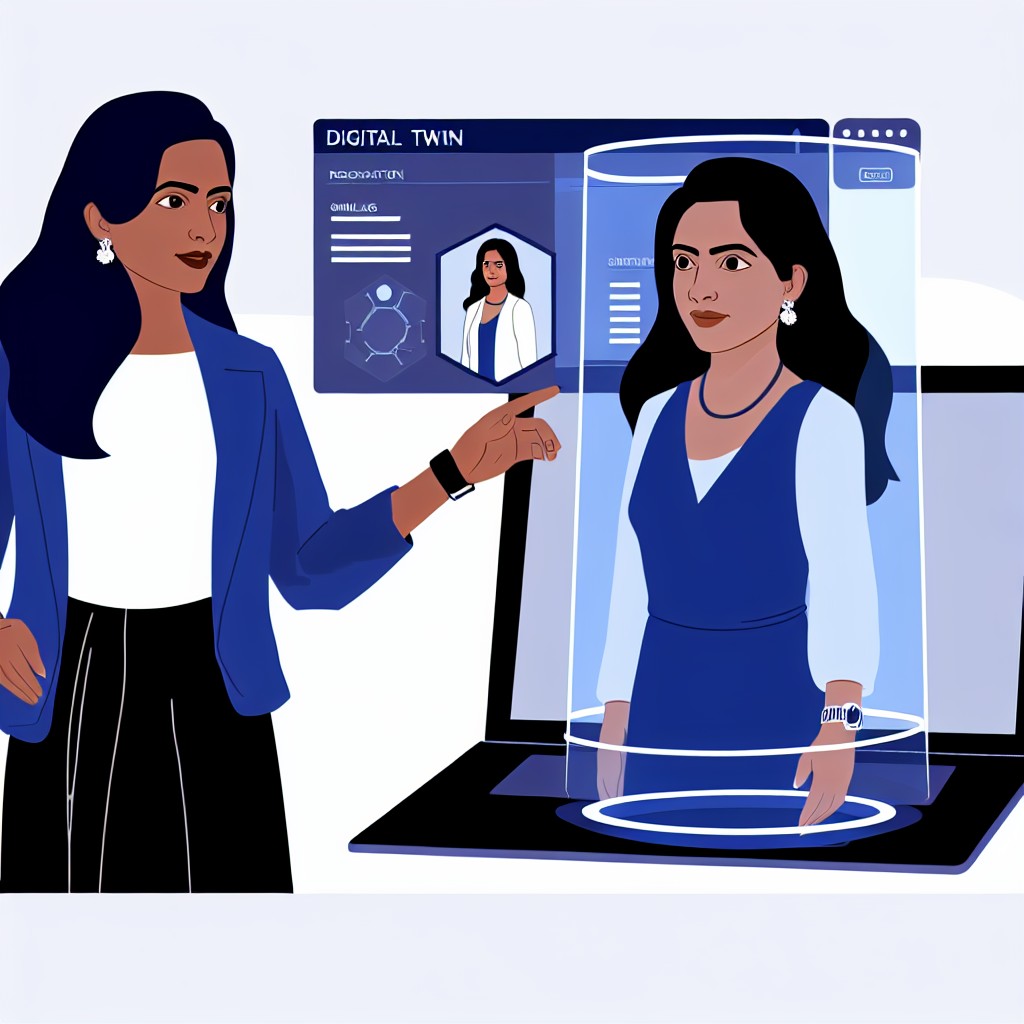
Case Studies of Startups Successfully Utilizing Digital Twins in Their Product Development
Innovative Wearables by LuminaTech
LuminaTech specializes in smart wearable devices designed for fitness enthusiasts.
They introduced digital twins to simulate user interactions before manufacturing.
This approach allowed rapid prototyping and minimized physical testing costs.
Moreover, LuminaTech used digital twins to optimize battery efficiency and sensor accuracy.
As a result, their product launches became faster and met higher quality standards.
EcoSolutions' Sustainable Packaging Development
EcoSolutions focuses on biodegradable packaging alternatives for consumer goods.
The startup leveraged digital twins to model material durability under various environmental conditions.
Consequently, EcoSolutions could test new materials virtually and reduce waste during trials.
Additionally, the digital twin models helped streamline the supply chain integration process.
This strategy led to significant reductions in development time and improved product reliability.
Aerocraft's Drone Design Enhancements
Aerocraft develops drones for commercial delivery services with an emphasis on endurance and safety.
They adopted digital twins to monitor and refine aerodynamic performance in real time.
Thus, Aerocraft achieved multiple iterative design improvements without costly physical builds.
Furthermore, the data from simulations informed predictive maintenance and reliability features.
The integration of digital twins propelled Aerocraft ahead in competitive drone markets.
Medivance's Personalized Medical Devices
Medivance creates customized medical implants tailored to patient anatomy.
Digital twins enabled virtual testing of implant fit and function pre-production.
Therefore, Medivance minimized surgical risks and enhanced patient outcomes effectively.
Additionally, simulations helped optimize device materials to endure physiological stresses.
These benefits accelerated regulatory approvals and boosted investor confidence.
Key Benefits Observed Across Startups
- Accelerated product development cycles through virtual prototyping.
- Reduced costs associated with physical testing and errors.
- Improved product quality by identifying design issues early.
- Enhanced collaboration between engineering, design, and manufacturing teams.
- Greater adaptability to market feedback via fast iteration capabilities.
Together, these advantages demonstrate how digital twins optimize startup innovation effectively.
Challenges of Implementing Digital Twins in Startup Environments
Limited Resources and Budget Constraints
Startups often face tight budgets.
Limited funds restrict investments in advanced digital twin technologies.
Costly hardware and software licenses strain financial resources in early stages.
Startups must prioritize features and choose scalable digital twin solutions.
Teams led by Mira Delgado at SynapseTech found success by selecting cloud-based twins.
Data Availability and Integration Difficulties
Digital twins rely on accurate, real-time data from physical systems.
Startups may lack sufficient data due to immature product prototypes.
Integrating various data sources requires robust infrastructure startups initially lack.
Velocity Robotics partnered with API providers to streamline data streams early.
Technical Expertise and Team Skillset
Developing digital twins demands skills in modeling, simulation, and data analysis.
Startups often lack these specialized talents during initial phases.
Hiring or training personnel is critical for successful implementation.
BrioSense Solutions invested in training programs led by experts like Mateo Ruiz.
Scalability and Flexibility Challenges
Digital twins must scale with product complexity and business growth.
Startups risk choosing rigid solutions that hinder future enhancements.
Selecting flexible architectures accommodating evolving needs is vital.
InnovateX Labs built modular digital twins enabling easy updates as products expanded.
Best Practices for Successful Digital Twin Integration
Start Small and Iterate Gradually
Begin with a minimal viable digital twin focusing on critical components.
This approach reduces initial complexity and uncovers valuable insights early.
Next, iterate frequently based on feedback and performance data.
Takara Dynamics used this method to refine prototypes efficiently.
Leverage Cloud-Based and Open-Source Tools
Cloud platforms offer cost-effective, scalable infrastructure fitting startup budgets.
Open-source software reduces licensing expenses and provides community support.
Combining these accelerates development and maintains flexibility.
GreenWave Automations utilized cloud-native twins paired with open-source analytics.
Engage Cross-Functional Teams
Involve engineers, data scientists, and product managers in planning and deployment.
This collaboration fosters holistic understanding and reduces risks.
Regular communication ensures alignment and swift issue resolution.
Ultima Tech’s cross-disciplinary team improved twin accuracy and usability.
Focus on Data Quality and Governance
Ensure data feeding digital twins is accurate, complete, and relevant.
Implement clear governance policies to maintain consistency and security.
Automate data validation processes to minimize errors proactively.
NovaPulse Systems prioritized data integrity, boosting predictive performance.
Partner with Experienced Vendors and Consultants
Collaborate with digital twin specialists to access knowledge and reduce trial-and-error.
External partners provide proven frameworks, tools, and best practices.
Such alliances speed up implementation and mitigate common pitfalls.
Quantum Industrial Solutions benefited from working with consultant Rahul Mehta’s team.
Future Trends: The Evolving Role of Digital Twins in Innovation and Product Lifecycle Management
Advancements Driving Digital Twin Capabilities
Digital twins increasingly integrate artificial intelligence and machine learning technologies.
These technologies enable smarter simulations and predictive analytics.
Consequently, startups can anticipate product performance issues before physical testing.
Moreover, IoT connectivity enhances real-time data feeding into digital twin models.
This continuous data flow allows for dynamic adjustments throughout development stages.
Transformation of Product Development Processes
Startups now leverage digital twins to accelerate design iterations.
This method reduces the time and cost of physical prototyping significantly.
Additionally, digital twins foster collaboration among remote teams and partners.
They provide a shared virtual environment that aligns cross-functional efforts effectively.
Therefore, startups experience streamlined workflows and faster time-to-market.
Integration with Product Lifecycle Management
Digital twins extend beyond development to support end-to-end product lifecycle management.
They continuously monitor product health and user interactions post-launch.
With this insight, companies like NexaTech optimize maintenance and upgrade schedules.
Furthermore, real-world usage data feeds back into next-generation product designs.
This feedback loop promotes innovation driven by firsthand user experience.
Emerging Roles in Innovation Strategies
Digital twins become strategic assets for startups aiming to disrupt markets.
They enable scenario testing under various conditions without physical risks.
For example, Lumina Robotics uses digital twins to simulate autonomous system responses.
Such simulations uncover new features and safety improvements early on.
As a result, innovation cycles shorten while product reliability improves markedly.
Challenges and Opportunities Ahead
Despite benefits, data security remains a priority in digital twin adoption.
Startups must implement robust encryption and access controls diligently.
Additionally, integrating diverse data sources requires scalable and flexible platforms.
However, overcoming these challenges unlocks significant competitive advantages.
Industry leaders like Velcor Systems demonstrate how mastering digital twins fosters market leadership.
Additional Resources
Real-world gen AI use cases from the world’s leading organizations …
What Is a Digital Twin? | NVIDIA Glossary
Before You Go…
Hey, thank you for reading this blog post to the end. I hope it was helpful. Let me tell you a little bit about Nicholas Idoko Technologies.
We help businesses and companies build an online presence by developing web, mobile, desktop, and blockchain applications.
We also help aspiring software developers and programmers learn the skills they need to have a successful career.
Take your first step to becoming a programming expert by joining our Learn To Code academy today!
Be sure to contact us if you need more information or have any questions! We are readily available.
We Design & Develop Websites, Android & iOS Apps
Looking to transform your digital presence? We specialize in creating stunning websites and powerful mobile apps for Android and iOS. Let us bring your vision to life with innovative, tailored solutions!
Get Started Today