
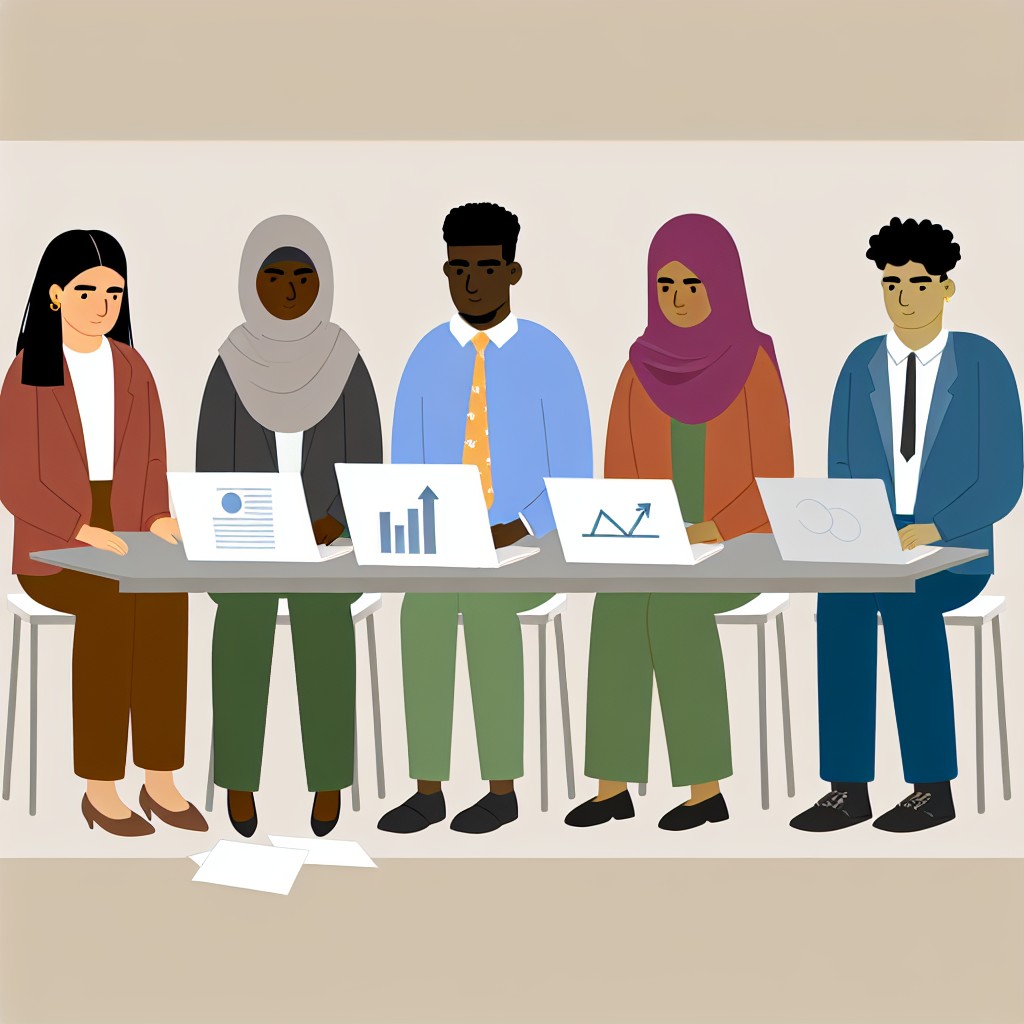

Introduction to Data-Driven Diversity
The Growing Importance of Diversity in Workplaces
Inclusive workplaces foster innovation and improve employee satisfaction.
Many companies now recognize diversity as a key to success.
However, achieving true inclusivity requires more than good intentions.
Data-driven approaches make inclusion efforts measurable and actionable.
They empower organizations to identify gaps and address biases effectively.
What Data-Driven Diversity Entails
Data-driven diversity uses analytics to inform diversity strategies.
It involves collecting and analyzing workforce demographics and behaviors.
Moreover, it evaluates hiring, retention, and promotion patterns within a company.
Tools such as dashboards and reports reveal areas needing improvement.
Consequently, leaders make evidence-based decisions to foster inclusion.
Benefits of Using Analytics for Diversity
Analytics helps companies set clear diversity goals based on real data.
It tracks progress over time, creating accountability and transparency.
Additionally, it uncovers hidden biases in recruitment and evaluation processes.
With these insights, organizations like LuminaTech and Solari Systems have improved diversity.
Ultimately, data-driven diversity strengthens company culture and business outcomes.
Key Metrics and Data Sources for Measuring Workplace Diversity and Inclusion
Demographic Data to Assess Representation
Collecting demographic data helps organizations understand workforce composition accurately.
This data includes age.
It includes gender.
It also includes ethnicity.
Disability status is another important category.
Finally, veteran status is tracked.
HR platforms like Workday and BambooHR often store this demographic information.
Furthermore, companies such as Lumina Analytics specialize in aggregating and analyzing diversity data.
With this data, employers can track representation gaps across departments and job levels.
Employee Engagement and Inclusion Surveys
Conducting regular engagement surveys helps capture employees’ feelings of inclusion.
These surveys ask about experiences with fairness.
They also explore belonging.
Respect at work is another focus of these surveys.
Survey tools like Qualtrics and Culture Amp provide robust platforms for gathering responses.
Moreover, anonymous feedback encourages honest insights that reveal inclusion challenges.
Tracking trends in survey results over time highlights progress.
It also reveals areas needing improvement.
Recruitment and Hiring Metrics
Recruitment data reveals whether hiring processes support diversity goals effectively.
It includes metrics on applicant demographics.
Interview rates are part of the data.
Selection ratios are also tracked.
Applicant tracking systems like Greenhouse and Lever offer detailed reporting features.
Analyzing hiring funnel stages helps identify biases or barriers in recruitment.
Consequently, companies can adjust sourcing strategies to attract a wider talent pool.
Retention and Turnover Rates
Retention rates indicate how well organizations retain diverse talent over time.
Turnover rates broken down by demographic groups highlight potential inclusion issues.
HR analytics platforms such as Visier and PeopleSoft provide insights on workforce stability.
High turnover among certain groups may signal workplace culture problems.
Development issues may also contribute to turnover.
Addressing these patterns promotes a more supportive and inclusive environment.
Pay Equity and Career Progression
Tracking compensation by demographic categories helps assess pay equity within a company.
Additionally, monitoring promotions shows how diversity influences career advancement.
PayScale and Syndio specialize in analyzing wage gaps and equity metrics.
Ensuring equal pay fosters trust among employees.
Equal opportunity promotes fairness in the workplace.
Furthermore, data-driven promotions support meritocracy.
They also build diverse leadership pipelines.
Benchmarking with Industry Data
Comparing diversity data with peers allows companies to measure relative progress.
Organizations can use reports from groups like McKinsey and Catalyst for benchmarking.
Industry-specific studies provide context on typical diversity levels.
They also provide insight into inclusion levels.
Moreover, benchmarking reveals best practices in workplace inclusivity.
It also highlights emerging trends.
Companies can set realistic goals aligned with broader market standards.
Leveraging Analytics Tools to Identify Diversity Gaps and Biases
Using Data to Uncover Diversity Gaps
Companies like Horizon Analytics use data to reveal hidden diversity gaps.
These tools collect data on employee demographics and hiring trends.
As a result, organizations can pinpoint underrepresented groups across departments.
For instance, NovaTech’s analytics revealed fewer women in leadership roles.
After identifying these gaps, firms can prioritize targeted inclusion efforts.
Detecting Biases Through Advanced Analytics
Modern analytics platforms detect unconscious bias in recruitment and promotions.
Moreover, algorithms analyze language in job descriptions to find biased terms.
Workplace surveys processed through sentiment analysis expose cultural or procedural biases.
At Meridian Global, analytics highlighted a bias favoring graduates from specific regions.
This awareness leads to policy changes that create fairer evaluation criteria.
Key Analytics Tools Enhancing Diversity Efforts
- Tableau offers customizable dashboards for demographic breakdowns.
- Workday People Analytics facilitates tracking diversity metrics over time.
- Textio analyzes job postings to promote inclusive language.
- Culture Amp helps aggregate feedback to spot bias in workplace culture.
Driving Continuous Improvement Using Analytics
Continuous monitoring enables companies to adapt their diversity strategies promptly.
For example, Novara Solutions sets quarterly targets based on analytics insights.
In addition, transparent reporting fosters accountability within leadership teams.
Ultimately, data-driven feedback loops support sustainable and inclusive growth.
Find Out More: Smart Workspaces: How IoT Sensors are Shaping Office Environments
Using Predictive Analytics to Forecast Diversity Trends and Outcomes
Role of Predictive Analytics in Diversity
Predictive analytics uses historical data to identify future diversity trends.
It enables companies like LuminaTech to plan inclusive initiatives proactively.
By analyzing workforce demographics, firms anticipate changes in representation.
Furthermore, predictive models help uncover barriers to diversity within organizations.
These insights empower leaders to make informed, data-driven diversity decisions.
Key Metrics Analyzed for Forecasting
Organizations track hiring rates across different demographic groups.
Retention rates and promotion frequencies also signal inclusion success or gaps.
Employee engagement scores reveal cultural acceptance and belonging levels.
Additionally, pay equity data highlights potential systemic biases in compensation.
Combining these metrics strengthens the accuracy of diversity outcome predictions.
Implementing Predictive Models in Human Resources
Human resources teams use machine learning algorithms to process diversity data.
For example, Velocity Financial integrated predictive tools to enhance recruitment diversity.
These models forecast which candidate pools will broaden workforce inclusiveness.
Likewise, they predict internal mobility trends to support equitable career growth.
As a result, HR can design targeted interventions that foster inclusivity.
Addressing Challenges and Ensuring Ethical Use
Predictive analytics must be carefully designed to avoid biased datasets.
Data scientist Elena Park advocates transparency in analytic methodologies.
Moreover, companies should engage diverse stakeholders in model development.
Regular audits ensure the predictions do not reinforce existing inequalities.
Ethical use of analytics builds trust and promotes sustainable inclusion efforts.
Benefits of Forecasting Diversity Outcomes
Forecasting allows proactive adjustment of diversity strategies before issues arise.
It improves resource allocation toward programs that yield measurable impact.
Additionally, predictive insights facilitate continuous monitoring of inclusion progress.
Companies like Avalon Media report higher employee satisfaction through data-informed diversity plans.
Ultimately, predictive analytics empowers organizations to create truly inclusive workplaces.
Explore Further: Employee Well-Being Apps: Leveraging Technology for Mental Health at Work
Integrating Employee Feedback and Sentiment Analysis for a Holistic View
Collecting Diverse Employee Feedback
Organizations gather employee feedback through various channels.
Surveys provide valuable insights.
Focus groups also offer useful information.
Suggestion boxes give employees a way to share ideas.
For example, Meridian Systems implemented quarterly pulse surveys successfully.
These surveys capture employees’ opinions on inclusion and workplace culture.
Additionally, anonymous platforms encourage honest and open responses.
In this way, companies understand employee experiences from multiple perspectives.
Applying Sentiment Analysis to Understand Employee Emotions
Sentiment analysis uses natural language processing to interpret text data.
Tech firms like Velora Analytics have leveraged it to gauge workforce morale.
This technique identifies positive, neutral, or negative tones in feedback.
Consequently, leaders can detect underlying emotions driving employee attitudes.
Furthermore, sentiment trends reveal areas needing immediate attention.
It empowers HR teams to address concerns proactively and effectively.
Combining Feedback with Sentiment for Deeper Insights
Integrating quantitative feedback and qualitative sentiment creates a fuller picture.
For instance, Falcon Enterprises merges survey results with sentiment scores.
This combined data highlights both what employees say and how they feel.
As a result, decision-makers uncover nuanced challenges in inclusion efforts.
Moreover, this approach supports data-driven strategies that resonate with staff.
Implementing Action Plans Based on Holistic Data
Leaders prioritize initiatives informed by combined feedback and sentiment analysis.
They tailor programs to enhance employee engagement and belonging.
For example, SolarWave Corporation revitalized its mentoring scheme after such analysis.
Additionally, ongoing measurement tracks improvements and adjusts strategies.
This continuous cycle fosters a truly inclusive and supportive workplace environment.
Gain More Insights: Digital Assistants in the Workplace: Increasing Productivity Through AI
Data-Driven Strategies for Recruitment and Talent Acquisition to Enhance Diversity
Leveraging Analytics to Identify Diverse Talent Pools
Companies use analytics to uncover underrepresented talent pools efficiently.
This approach broadens candidate sourcing beyond traditional networks.
For example, Evergreen Technologies expanded its talent pipeline using demographic insights.
Additionally, tools like Textio optimize job descriptions to attract diverse applicants.
Consequently, organizations reduce unconscious bias early in the recruitment funnel.
Using Data to Remove Bias from Job Postings and Screenings
Recruiters analyze hiring data to identify biased language in job postings.
Subsequently, they rewrite ads to appeal to a wider, more inclusive audience.
Moreover, AI-powered screening platforms help assess candidates based on skills objectively.
BrightWave Solutions implemented such AI tools to improve fairness in evaluations.
These methods ensure diverse candidates have equal opportunity at each recruitment stage.
Monitoring Recruitment Metrics to Drive Continuous Improvement
Companies track diversity metrics like application rates and interview demographics.
HR teams review this data regularly to spot trends and gaps clearly.
For instance, NovaHealth conducts quarterly analysis of hiring outcomes by demographic.
This transparency drives targeted initiatives that enhance inclusivity in hiring.
Therefore, data inspires evidence-based decisions for talent acquisition strategies.
Enabling Diverse Recruitment Channels through Data Insights
Organizations evaluate which sourcing channels yield the most diverse candidates.
Based on data, they allocate resources to partner with inclusive job boards and groups.
For example, Horizon Financial partners with WomenTech Network to diversify applicants.
This focused outreach builds stronger connections with varied talent communities.
Ultimately, data guides investments in channels that effectively boost workforce diversity.
Explore Further: Virtual Reality Meetings: Changing the Landscape of Remote Collaboration
Monitoring and Evaluating the Impact of Diversity Initiatives Through Continuous Data Tracking
Establishing Clear Metrics and Goals
Organizations must define clear metrics to measure diversity initiatives effectively.
Human resources teams at MapleTech Ltd. set specific inclusion goals last year.
They focus on metrics such as representation, retention, and employee sentiment.
These goals align with the overall mission to create an inclusive workplace culture.
Furthermore, clear metrics guide teams on what data to collect continuously.
Collecting and Analyzing Diversity Data Regularly
Continuous data tracking requires regular collection of updated diversity information.
The Diversity and Inclusion team at Horizon Financial monitors employee demographics quarterly.
They use surveys, HR records, and anonymous feedback to gather relevant data.
Additionally, the team applies analytic software to identify trends and patterns efficiently.
For instance, data analysis revealed retention challenges among mid-level female managers at Horizon.
Using Data Dashboards for Real-Time Monitoring
Data dashboards enable real-time visualization of diversity metrics.
TechNova Systems implemented a dashboard that tracks hiring rates and promotion equity.
This tool provides leaders instant access to progress reports and potential issues.
Moreover, dashboards facilitate transparency and accountability across departments.
By viewing these insights, managers can take immediate corrective action when needed.
Evaluating the Effectiveness of Diversity Initiatives
Regular evaluation helps determine if diversity strategies achieve intended outcomes.
At Solstice Media, Linda Chen leads quarterly reviews of inclusion programs’ impact.
They assess data against original benchmarks and employee feedback.
When results fall short, teams adjust initiatives to better meet workforce needs.
This ongoing process ensures continuous improvement and sustainable inclusion efforts.
Engaging Stakeholders Through Transparent Reporting
Sharing evaluation results with stakeholders builds trust and encourages collaboration.
Bright Horizon Consulting releases annual diversity impact reports to all employees.
These reports highlight successes and identify areas for further progress.
Transparent communication fosters a company-wide commitment to diversity goals.
Ultimately, ongoing data-driven discussions drive meaningful cultural change.
Challenges in Collecting Diversity Data
Data Accuracy and Completeness
Collecting accurate diversity data can prove difficult in many organizations.
Employees might hesitate to disclose sensitive demographic information.
Moreover, incomplete data can lead to misleading analytical results.
Therefore, companies like Meridian Technologies emphasize transparent communication about data use.
This transparency encourages honest reporting and improves data quality.
Complexity of Defining Diversity Categories
Defining and categorizing diversity requires careful consideration.
Different regions and cultures interpret identity categories differently.
For example, Eastwood Financial adapts its data collection to respect local customs.
Thus, standardized categories may not fit all workplace demographics.
Companies must design flexible frameworks to capture meaningful data.
Ethical Considerations in Using Diversity Data
Protecting Employee Privacy
Protecting employee privacy is paramount when handling diversity data.
Smithson & Blake Consulting implements strict data encryption protocols.
This approach prevents unauthorized access and safeguards personal information.
Additionally, anonymizing data helps reduce privacy risks during analysis.
Employees feel more secure when their identities are protected.
Avoiding Unintended Bias and Discrimination
Using diversity data requires vigilance to avoid reinforcing biases.
For instance, Harper Solutions regularly audits their analytics for fairness.
Failing to consider context can lead to discriminatory policies.
Hence, companies must use data responsibly to promote inclusion.
Insights should drive equitable opportunities rather than exclusion.
Transparency and Accountability
Transparency about how diversity data is used builds trust among employees.
GlobalWorks Inc. shares their data analysis findings openly with staff.
This openness encourages accountability in diversity initiatives.
Furthermore, regular updates keep employees informed about progress.
Consequently, transparent practices foster a culture of inclusion and respect.
Best Practices for Ethical Data Collection and Use
Obtain Informed Consent
Ensure employees understand why data collection occurs and how it will be used.
Vanguard Innovations provides clear consent forms before gathering information.
Informed consent promotes voluntary participation and ethical compliance.
Limit Data Access to Authorized Personnel
Restricting access reduces risks of misuse or accidental disclosure.
Companies such as National Bank Group require multi-level approvals for data access.
This control preserves confidentiality and builds stakeholder confidence.
Regularly Review Data Practices
Continuous evaluation helps update methods and address emerging concerns.
Elite Consulting conducts quarterly audits of their diversity data processes.
Such reviews ensure alignment with evolving privacy laws and ethical standards.
Case Studies Showcasing Successful Implementation of Analytics in Building Inclusive Workplaces
How Veridian Tech Used Analytics to Improve Hiring Diversity
Veridian Tech leveraged data analytics to identify gaps in their hiring process.
They tracked applicant demographics to measure diversity at each recruitment stage.
This approach revealed unconscious biases in their candidate screening procedures.
Consequently, Veridian implemented blind resume reviews to reduce bias.
They also used predictive analytics to find sources of diverse talent pools.
Within one year, Veridian increased underrepresented minority hires by 40%.
Moreover, their employee retention rates improved significantly after these changes.
This data-driven method helped Veridian foster a more inclusive company culture.
Inclusion Insights at Lumina Financial Services
Lumina Financial Services utilized sentiment analysis to evaluate employee engagement.
They collected anonymous feedback from diverse employee groups regularly.
This process identified areas where inclusion efforts were lacking.
For example, women and minority employees reported feeling less supported.
Lumina then tailored mentorship programs based on these insights.
Additionally, they used analytics to track progress over time.
As a result, workplace satisfaction scores for marginalized groups rose by 30%.
The company continues to refine inclusion strategies guided by real-time data.
Data-Driven Culture Shift at Archway Manufacturing
Archway Manufacturing applied workforce analytics to evaluate promotion equity.
Data highlighted disparities in promotion rates across different demographics.
The leadership acted by revising their promotion criteria to ensure fairness.
They introduced transparent career pathing tools accessible to all employees.
Furthermore, Archway monitored employee development activities using data dashboards.
This enabled early identification of employees needing additional support.
Subsequently, promotion rates for women and minorities increased by 25% in two years.
Archway’s analytic-driven culture change enhanced both fairness and morale.
The Role of Analytics in Empowering Diversity at Horizon Health
Horizon Health used analytics to track diversity in leadership roles.
The company mapped demographic data against leadership pipeline metrics.
This helped them spot leadership gaps related to gender and ethnicity.
Horizon then designed targeted leadership development workshops.
They also established sponsorship programs backed by data-driven impact reports.
With continuous data monitoring, Horizon made adjustments for maximum effect.
Consequently, the proportion of diverse leaders grew steadily year over year.
This empowered Horizon to build an inclusive and equitable leadership team.
Best Practices Emerging from Analytical Inclusion Efforts
- Collect comprehensive and accurate diversity data regularly.
- Use analytics to identify bias and gap areas actively.
- Design targeted interventions based on data insights.
- Monitor progress with clear, measurable inclusion metrics.
- Iterate and adjust programs using real-time analytics feedback.
- Engage leadership with data to build accountability.
These case studies illustrate that analytics drives meaningful inclusion progress.
Companies embracing data foster workplaces where everyone can thrive.
Future Outlook on Emerging Technologies and Innovations in Diversity Analytics
Advancements in Artificial Intelligence and Machine Learning
Artificial intelligence significantly improves diversity analytics by uncovering hidden patterns.
Machine learning algorithms enable more accurate predictions of workplace inclusion outcomes.
These technologies reduce human bias in evaluating employee data.
Many firms, like Innovatech Solutions, integrate AI tools to enhance their diversity strategies.
Enhanced Data Collection and Integration
Emerging tools allow organizations to collect richer demographic and sentiment data.
Integration of data from various sources creates a comprehensive view of workforce diversity.
This integration supports informed decision-making and targets specific areas for improvement.
For example, Horizon Analytics combines employee feedback with HR records for better insights.
Real-Time Diversity Monitoring and Reporting
Innovations support real-time dashboards to track inclusion metrics continuously.
Companies can respond promptly to emerging diversity challenges or successes.
This immediacy facilitates agile adjustments in policies and training programs.
At Global Horizon Inc., leadership uses live reports to foster transparency and accountability.
Natural Language Processing to Understand Employee Experience
Natural language processing analyzes employee communication for inclusion indicators.
This technology identifies sentiment trends that surveys may overlook.
Consequently, organizations capture authentic employee voices and address concerns proactively.
TalentBridge utilizes NLP to gauge team morale and cultural alignment effectively.
Innovations in Predictive Analytics for Talent Management
Predictive models forecast the impact of diversity initiatives on retention and performance.
These insights enable tailored interventions to support underrepresented groups.
Such foresight helps retain talent and build inclusive leadership pipelines.
At Meridian Consulting, analysts develop predictive tools to enhance workforce diversity planning.
Ethical Considerations and Transparency in Diversity Analytics
New frameworks emphasize ethical use and transparency of employee data.
Organizations adopt strict guidelines to protect privacy while improving inclusivity.
This ethical focus builds employee trust and strengthens diversity efforts.
For instance, BrightPath Solutions champions transparent analytics practices company-wide.
Collaboration Across Industries to Advance Diversity Technologies
Companies partner with research institutions to innovate diversity measurement methods.
Cross-sector collaboration accelerates development of best practices and tools.
Such alliances foster shared commitment to equity in the workplace.
The Diversity Tech Consortium brings together leaders like NovaVista Systems and Elevate Partners.
Additional Resources
How to Hire More Diverse Talent Using Workforce Analytics | Visier
Diversity, Equity, Inclusion and Belonging At Work: A 2025 Guide …
Before You Go…
Hey, thank you for reading this blog post to the end. I hope it was helpful. Let me tell you a little bit about Nicholas Idoko Technologies.
We help businesses and companies build an online presence by developing web, mobile, desktop, and blockchain applications.
We also help aspiring software developers and programmers learn the skills they need to have a successful career.
Take your first step to becoming a programming expert by joining our Learn To Code academy today!
Be sure to contact us if you need more information or have any questions! We are readily available.
We Design & Develop Websites, Android & iOS Apps
Looking to transform your digital presence? We specialize in creating stunning websites and powerful mobile apps for Android and iOS. Let us bring your vision to life with innovative, tailored solutions!
Get Started Today