
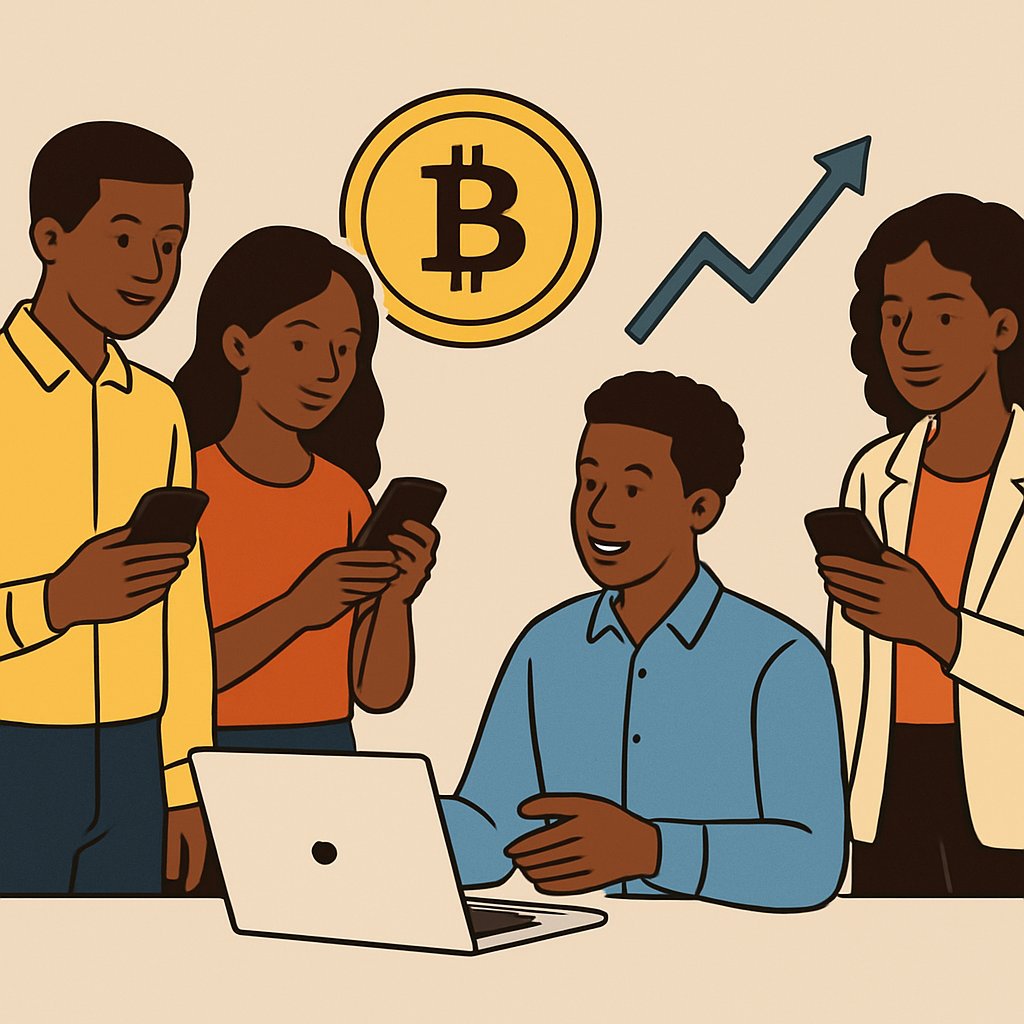

Economic Drivers: Currency Instability and Inflation
This section examines currency instability and inflation.
People often seek alternative stores of value during instability.
It also explains motives for peer to peer crypto trading.
Currency Instability and Its Effects
Currency instability affects everyday transactions.
Therefore, people seek alternatives to hold value.
Moreover, frequent exchange rate changes create uncertainty for budgeting.
As a result, users look for flexible ways to manage value privately.
Inflation and Purchasing Power
Inflation erodes purchasing power over time.
Consequently, saving in local currency can reduce real value.
Thus, users consider assets that can preserve value.
Additionally, flexible options allow faster responses to changing prices.
Why Peer to Peer Crypto Trading Appeals
P2P crypto trading enables direct exchanges between individuals.
Therefore, users can negotiate terms that fit their needs.
Moreover, peer trading can adjust to local demand and supply conditions.
Consequently, traders can move value without fixed institutional constraints.
- Access to diverse counterparties can improve liquidity options.
- Flexible pricing lets users react quickly to market changes.
- Control over settlement methods supports varied preservation strategies.
Practical Considerations for Users
Users should weigh potential risks and benefits before trading.
Additionally, they should plan for unpredictable economic changes.
Moreover, adaptable strategies can help maintain value over longer periods.
Financial Inclusion and Access Challenges
This section examines barriers to banking and accessible alternatives.
It highlights practical benefits for unbanked and underbanked users.
Also, the section outlines considerations for safe use.
Barriers to Traditional Banking
Many people face obstacles when using traditional bank services.
For example, some people live far from bank branches.
Banks often require formal identification and paperwork.
Account fees and minimum balances can limit access.
Limited branch hours can conflict with typical work schedules.
Peer-to-Peer Trading as an Accessible Alternative
Peer-to-peer trading connects users directly without relying on traditional banks.
Users can trade using mobile devices and internet connections.
P2P platforms often allow diverse payment arrangements between users.
As a result, people gain more options for sending and receiving funds.
Practical Benefits for Unbanked and Underbanked Users
Peer-to-peer trading reduces entry barriers for users without bank accounts.
Users can start trading with minimal initial setup.
Transactions between peers can occur outside normal banking hours.
Considerations for Safe Use
Users should verify counterparties before completing trades.
Communicate clearly during transactions.
Maintaining records of agreements helps resolve disputes.
Users should be aware of platform terms and practices.
Local Payment Rails and Fiat On/Off Ramps
Local payment rails connect crypto platforms with local currency systems.
They enable users to convert value between crypto and local money.
They expand payment choices available to users.
Build The Software Your Business Needs To Grow
The next stage of your business will need better systems, smarter automation, and stronger digital tools. We help businesses turn ideas into websites, apps, and software platforms built for growth, revenue, and long-term scale.
Build For GrowthWhy Multiple Local Methods Matter
Multiple local payment methods increase flexibility for buyers and sellers.
Consequently, traders can select channels that match their daily routines.
Furthermore, diverse rails reduce dependency on a single payment option.
Common Payment Rails Supported
Bank transfers offer direct movement between accounts.
Mobile money enables transfers using mobile wallets and short codes.
Card payments provide an onramp and an offramp for users.
- Bank transfers offer direct movement between accounts
- Mobile money enables transfers using mobile wallets and short codes
- Card payments provide another route for onramps and offramps
- Cash deposits allow in-person settlement where digital access is limited
- E-wallets consolidate balances for fast trades and settlements
Benefits for Peer-to-Peer Trading
Support for many rails increases matching opportunities between counterparties.
Additionally, traders can prioritize speed, cost, or convenience.
Moreover, multiple options help overcome temporary outages in rails.
How Fiat On and Off Ramps Enhance Trust and Liquidity
Clear fiat pathways let users convert between crypto and local currency efficiently.
Therefore, traders find liquidity across different payment methods.
Consequently, platforms can facilitate smoother settlement processes for users.
Regulatory Uncertainty and Control
Regulatory changes create unpredictability for users.
Consequently, users seek environments where they retain control over funds.
Furthermore, unclear enforcement reduces confidence in centralized platforms.
Reasons Users Move Toward Decentralized P2P
- Decentralized P2P gives users direct control over trades.
- Also, peer arrangements often adapt faster than formal platforms.
- Moreover, users can limit reliance on third-party gatekeepers.
- Additionally, P2P can offer more private transaction pathways.
Common User Responses and Practices
- Many users adopt self-custody and manage keys themselves.
- Others prioritize escrow arrangements to reduce counterparty risk.
- Some traders diversify peer networks to maintain access to liquidity.
- Therefore, users emphasize clear communication and reputation building.
Implications for Market Behavior
Consequently, decentralized P2P can foster resilient trading ecosystems.
Meanwhile, shifting rules encourage innovation in peer governance models.
Finally, market participants may prioritize flexibility over centralized assurances.
Gain More Insights: How A Bill Payment App Creates Value For Nigerians
Trust and Negotiation
This section discusses trust and negotiation in peer to peer trades.
It covers escrow, reputation systems, and direct price negotiation.
These elements work together to reduce risk and enable flexible trades.
Escrow Mechanisms
Escrow services hold funds until both parties confirm trade completion.
They reduce counterparty risk in peer to peer trades.
An independent pause allows time for handling disputes.
Reputation Systems
Reputation systems record past interactions and observable outcomes.
As a result, traders can assess counterparties quickly and confidently.
Repeat positive behavior strengthens a user’s trustworthiness score.
Reputations do not eliminate all fraud risks or misunderstandings.
Direct Price Negotiation
Direct negotiation lets counterparties agree on trade price and terms directly.
Negotiation accommodates local pricing dynamics and individual preferences.
Bargaining allows flexible settlement timelines and payment arrangements.
It can speed the process when external payment delays occur.
Interplay Between Escrow Reputation and Negotiation
Escrow, reputation, and negotiation complement each other in practical trades.
Traders can tailor protections to match trade value and trust level.
Combining high reputation with escrow improves confidence for new counterparties.
Mobile-first UX and Onboarding
Together, these mobile-first features streamline onboarding and improve the trading experience.
Compact forms that minimize typing.
Progressive verification to delay complex steps.
Low-friction App Experience
Mobile-first design reduces steps for users.
Build The Software Your Business Needs To Grow
The next stage of your business will need better systems, smarter automation, and stronger digital tools. We help businesses turn ideas into websites, apps, and software platforms built for growth, revenue, and long-term scale.
Build For GrowthConsequently, users complete actions with fewer taps.
Designers focus on compact forms and clear calls to action.
Moreover, low data usage supports users with limited connectivity.
Streamlined Lightweight KYC
Lightweight KYC reduces onboarding friction for many users.
Additionally, platforms limit information requests to essential items only.
Therefore, verification completes faster while preserving necessary safeguards.
Faster Settlement Compared with Centralized Exchanges
P2P trading can enable faster settlement than centralized platforms.
Consequently, users receive confirmations and trade updates more quickly.
Moreover, quicker settlement supports time-sensitive trades and better cash flow management.
Key Mobile Onboarding Elements
- Real time status updates during trades.
- Low bandwidth modes for weak connections.
- Clear success and error messages for guidance.
Uncover the Details: Why A Bill Payments App Makes Sense In Nigeria Today
Risk management practices: dispute resolution, escrow enforcement and community-driven safety in P2P markets
This section covers dispute resolution and escrow enforcement.
It also outlines community-driven safety measures and reporting steps.
Readers will find guidance on responsibilities and transparency.
Purpose of dispute resolution
Dispute resolution protects users from transaction breakdowns and misunderstandings.
It preserves market confidence and supports continuity.
Some platforms use escrow and reputation systems to build trust.
Reporting and escalation process
Users submit reports through the platform reporting channel.
Reports should include transaction details and supporting evidence.
A reviewer or automated system initially triages incoming reports.
- User submits a report through the platform’s reporting channel.
- The report should include transaction details and supporting evidence.
- A designated reviewer or automated system initially triages the report.
- The platform requests clarifications or additional proof when needed.
- If unresolved, the case escalates to a human mediator or arbitration panel.
Principles of escrow enforcement
Escrow holds funds until agreed release conditions occur.
Rule-based release criteria reduce arbitrary fund movements.
Logs record each release action for transparency.
Platforms may allow appeals against release decisions.
Community-driven safety measures
Community members flag suspicious offers and behaviors.
Experienced users can volunteer to mentor newcomers.
Community guidelines set acceptable conduct and dispute etiquette.
Feedback loops help refine safety rules over time.
- Flag suspicious listings for moderator review.
- Share transaction proofs when prompting disputes.
- Offer mediation if both parties accept community assistance.
- Participate in safety discussions to improve platform norms.
User responsibilities and practical steps
Users should keep clear records of communications and receipts.
They should verify counterpart details before initiating payment.
Use the platform dispute channels first when resolving issues.
Transparency and accountability
Transparency in policies helps users understand enforcement mechanics.
Visible case histories reinforce accountability and decision clarity.
Clear policies make enforcement actions more predictable for users.
Product and Market Opportunities
This section outlines product and market opportunities for peer to peer trading platforms.
It summarizes platform features, merchant tools, user services, and developer experience.
Also, it highlights operational capabilities and support considerations for scaling.
Platform and Technical Features
Developers should build modular APIs for flexible peer discovery and matching.
Additionally, provide dynamic pricing engines that vendors can configure.
Moreover, privacy preserving messaging enhances user control over communications.
Furthermore, offline first architecture supports intermittent connectivity and batch sync.
Build The Software Your Business Needs To Grow
The next stage of your business will need better systems, smarter automation, and stronger digital tools. We help businesses turn ideas into websites, apps, and software platforms built for growth, revenue, and long-term scale.
Build For GrowthAlso, low data modes reduce bandwidth consumption for constrained users.
Lastly, robust encryption and key management protect transaction metadata.
Merchant and Liquidity Tools
Offer APIs that aggregate liquidity from multiple peer sources.
Furthermore, settlement netting reduces the number of on chain transactions required.
Also, provide real time accounting dashboards to help businesses track positions and flows.
Additionally, merchant SDKs simplify integration into existing platforms.
User-facing Services
Provide multilingual interfaces and localized content across platforms.
Moreover, interactive in app education helps users learn trading mechanics safely.
Also, loyalty and referral programs can incentivize repeat trading behavior.
Furthermore, customizable notification settings let users manage information flow.
Developer Experience and Ecosystem
Create comprehensive SDKs and clear API documentation for faster integration.
Additionally, maintain sandbox environments for safe testing and experimentation.
Offer partner programs that foster resellers and market makers in the ecosystem.
Moreover, an API marketplace can showcase complementary third party services.
Operational and Support Capabilities
Scale localized customer support with multilingual agents and regional hours.
Also, build analytics tools to surface market trends and platform health metrics.
Finally, design modular pricing and fee controls so business models can adapt.
Additional Resources
Google search results for Why Nigerian Users Prefer Flexible Crypto P2P Trading Insights
Bing search results for Why Nigerian Users Prefer Flexible Crypto P2P Trading Insights
Before You Go…
Hey, thank you for reading this blog post to the end. I hope it was helpful. Let me tell you a little bit about Nicholas Idoko Technologies.
We help ambitious businesses build the digital systems they need to grow, compete, and scale — including web platforms, mobile apps, desktop software, and blockchain solutions designed around real business goals.
We also help aspiring software developers and programmers learn the skills they need to have a successful career.
Take your first step to becoming a programming expert by joining our Learn To Code academy today!
Be sure to contact us if you need more information or have any questions! We are readily available.