


Rapid Increase in Internet Penetration and Smartphone Usage
Internet access has significantly expanded in Nigeria over recent years.
The rise of fiber-optic networks and improved infrastructure supports this growth.
Consequently, more Nigerians can access online services than ever before.
Expansion of Internet Access Across Nigeria
Many rural and urban areas now enjoy affordable and reliable connections.
Companies like Spectranet and Smile Communications have played key roles in widening coverage.
However, ongoing investments in infrastructure promise further improvements.
Smartphone Adoption Accelerates Digital Connectivity
Smartphone usage has surged, becoming the primary internet device for millions.
Brands such as Tecno, Infinix, and Samsung offer affordable smartphones tailored for local needs.
These devices enable users to browse, shop, and communicate with ease on the go.
For instance, Lagos residents frequently use smartphones for social media and mobile banking.
Impact on E-commerce Growth
The growth in internet and smartphone usage directly fuels e-commerce expansion.
More consumers feel comfortable shopping online through platforms like Jumia and Konga.
Additionally, mobile payment systems such as Paga and Flutterwave facilitate seamless transactions.
Retailers and sellers leverage this environment to reach wider audiences efficiently.
Challenges and Future Prospects for Digital Infrastructure
Despite progress, challenges such as inconsistent power supply still affect connectivity.
Private and public sectors collaborate to expand 4G and prepare for 5G networks.
Industry leaders like Ola Digital suggest that continued growth will boost economic opportunities.
Ultimately, Nigeria’s digital transformation supports sustained e-commerce platform success.
Rising Middle Class with Greater Disposable Income
Nigeria’s economy has steadily expanded in recent years.
This growth increased household incomes across urban and suburban areas.
As a result more individuals enjoy higher disposable income levels.
Economic Growth Fuels Consumer Spending
Consequently consumers have greater purchasing power than before.
Businesses like Lagos-based retailer Emeka Mart have noticed rising online sales.
Greater disposable income drives demand for various goods online.
Changing Lifestyle and Consumer Preferences
The growing middle class seeks convenience and quality in purchases.
Consequently they increasingly turn to e-commerce for shopping needs.
For example busy professionals like Adaobi Okafor prefer digital platforms over stores.
Moreover e-commerce platforms offer diverse product selections to match tastes.
Impact on E-commerce Platform Growth
Consequently platforms such as NaijaShop and KanoExpress expand their offerings.
For instance Abuja resident Chukwuemeka Musa frequently purchases electronics online.
Therefore e-commerce platforms capitalize on the middle class’s evolving buying habits.
Factors Supporting Continued Expansion
Several factors support continued expansion of online commerce.
Government initiatives promote digital payment systems.
Growing trust in online transactions has improved due to better security.
Urbanization drives demand for fast and reliable delivery.
- Entrepreneurs creating localized platforms tailored to Nigerian consumers
- Growing trust in online transactions due to better security
Convenience and Accessibility of Online Shopping
Online shopping expands consumer options across urban and rural areas.
Moreover, platforms streamline purchases and delivery for many users.
The following sections describe browsing, selection, savings, access, mobile design, and payment options.
Ease of Browsing and Purchasing
Users can browse products at any time using online stores.
Shoppers compare prices and read reviews before purchasing.
Build The Software Your Business Needs To Grow
The next stage of your business will need better systems, smarter automation, and stronger digital tools. We help businesses turn ideas into websites, apps, and software platforms built for growth, revenue, and long-term scale.
Build For GrowthIn addition, checkout flows reduce steps and speed transactions.
For example, Jumia and Konga simplify buying steps for millions.
Broad Product Selection
E-commerce platforms list many product categories in one place.
Hence, customers can find items that local markets lack.
Amina, a Lagos resident, shops online regularly for variety.
Time and Cost Savings
Shopping online removes the need to travel to stores.
Thus, users save time and reduce transportation costs.
Also, promotions and discounts increase affordability for buyers.
Busy professionals like Emeka value the efficiency provided.
Accessibility to Remote and Underserved Areas
E-commerce bridges gaps between urban centers and rural communities.
Consequently, people in remote areas receive products at home.
Platforms such as PayPorte and Jiji provide accessible nationwide options.
Therefore, rural customers gain access to goods they could not easily find.
User-Friendly Interfaces and Mobile Compatibility
Most Nigerian e-commerce websites optimize platforms for mobile devices.
Mobile apps provide intuitive designs for seamless navigation.
Users benefit from quick, convenient purchases on their smartphones.
Chinedu often uses his phone to make quick purchases.
Secure and Diverse Payment Options
E-commerce platforms offer multiple payment methods for convenience.
Options include card payments, mobile money, and cash on delivery.
Secure payment gateways increase customer trust in the platforms.
Hafsat, for example, feels confident completing transactions online.
Find Out More: Why Nigerian Customers Prefer Easy Online Shopping
Expansion of Reliable Payment Gateways and Mobile Money Solutions
Payment gateways and mobile money solutions expand across Nigeria.
They improve access to secure online transactions.
This expansion supports wider participation in e-commerce activities.
Improved Accessibility to Financial Services
Payment gateways have become more accessible to Nigerian consumers.
They offer convenient ways to complete transactions online securely.
Moreover, mobile money solutions reach people without traditional bank accounts.
Companies like Paystack and Flutterwave lead the way in seamless payments.
As a result, more users participate in e-commerce activities every day.
Integration with Local Mobile Operators
Telecom companies integrate their services with mobile money platforms efficiently.
For instance, MTN and Airtel offer easy-to-use wallets for digital payments.
This integration simplifies the checking out process on many e-commerce websites.
Also, it lowers the entry barrier for small businesses to accept payments.
Consequently, e-commerce platforms expand their reach across urban and rural areas.
Security Enhancements and Trust Building
Payment providers invest heavily in improving transaction security measures.
Tokenization and encryption technologies protect customers’ sensitive data.
These improvements foster greater trust among shoppers and sellers alike.
Furthermore, anti-fraud systems detect and prevent suspicious activities promptly.
This dual focus on security and convenience accelerates online shopping adoption.
Build The Software Your Business Needs To Grow
The next stage of your business will need better systems, smarter automation, and stronger digital tools. We help businesses turn ideas into websites, apps, and software platforms built for growth, revenue, and long-term scale.
Build For GrowthFlexible Payment Options Encourage Consumer Spending
E-commerce platforms offer multiple payment methods to suit diverse preferences.
Options include card payments, bank transfers, USSD codes, and mobile wallets.
Some services also support installment payments to ease affordability.
This flexibility encourages higher order volumes and repeat purchases.
Therefore, businesses experience better sales growth and customer retention.
Role of Government and Regulatory Support
The Central Bank of Nigeria supports mobile payment innovation through policies.
Recent regulations encourage competition and enhance interoperability across platforms.
The government also promotes digital financial inclusion nationwide.
Such efforts help develop infrastructure that benefits merchants and consumers.
In turn, the growing payment ecosystem strengthens the entire e-commerce landscape.
Explore Further: Why A Dating Platform Can Become Big In Nigeria
Impact of Improved Logistics and Delivery Infrastructure
Improved logistics accelerate delivery across Nigeria.
Companies invest in technology to speed order fulfillment.
These changes increase customer trust in online shopping.
Enhancing Efficiency in Order Fulfillment
Improved logistics systems accelerate order processing times across Nigeria.
Delivery companies like Konga Logistics invest in technology integration.
Consequently, customers receive their products faster than before.
Reliable tracking systems provide transparency during the delivery journey.
Therefore, shoppers gain more confidence when buying online.
Expanding Reach to Rural and Underserved Areas
New transport routes connect rural communities to urban hubs.
This expansion lets e-commerce firms such as Jumia serve distant regions.
Last-mile solutions like motorcycle couriers improve accessibility significantly.
Moreover, partnerships with local businesses ease product distribution.
As a result, more Nigerians can access digital commerce services.
Advancing Infrastructure Investment and Innovation
Private firms and government agencies collaborate to upgrade road networks.
Improved warehousing reduces product handling times and errors.
Additionally, cold chain logistics enable delivery of perishable goods nationwide.
Startups like GoDelivery introduce app-based delivery management for efficiency.
These innovations lower operational costs and expand services.
Benefits to Consumers and Sellers
- Consumers enjoy faster and more reliable product deliveries.
- Sellers reach wider markets without extra physical stores.
- Reduced delivery delays improve customer satisfaction and retention.
- Lower shipping costs encourage more frequent online purchases.
- Improved logistics enable seamless returns and exchanges.
Explore Further: What Users Want From A Dating Platform In Nigeria
Government Policies Supporting Digital Economy Growth
The Nigerian government actively creates regulations to boost the digital economy.
Moreover, the government allocates funds to expand internet access nationwide.
Nigeria’s policies encourage widespread adoption of digital financial services.
Enabling Regulatory Framework
It simplifies business registration to make it easier for e-commerce startups to launch.
Furthermore, data protection laws like the Data Protection Regulation enhance consumer confidence.
These policies ensure secure online transactions and foster trust among buyers and sellers.
Investment in Digital Infrastructure
This effort includes upgrading broadband networks to reach rural and underserved areas.
Moreover, initiatives like the National Broadband Plan aim to increase connectivity.
Improved internet speeds support seamless e-commerce activities across Nigeria.
Promoting Financial Inclusion
The Central Bank of Nigeria promotes mobile banking and payment solutions.
Build The Software Your Business Needs To Grow
The next stage of your business will need better systems, smarter automation, and stronger digital tools. We help businesses turn ideas into websites, apps, and software platforms built for growth, revenue, and long-term scale.
Build For GrowthThese measures lower the barrier to online transactions for millions.
Also, government partnerships with fintech firms expand digital wallets and payment platforms.
Supporting Skills Development and Innovation
The government invests in digital literacy programs across the country.
It partners with organizations to train entrepreneurs on e-commerce tools and technologies.
Additionally, tech hubs and innovation centers receive funding to nurture startups.
Delve into the Subject: Why A Dating Platform Can Thrive In Nigeria Today
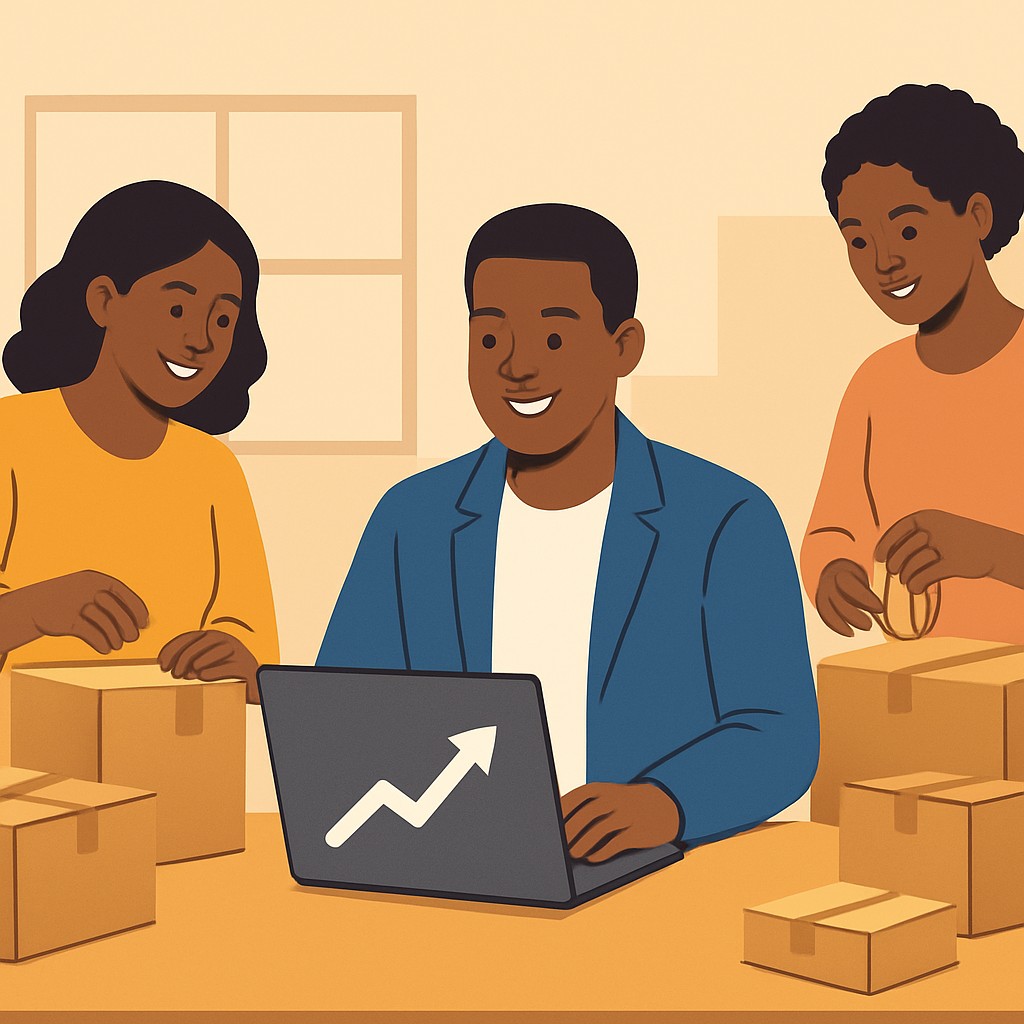
Effect of COVID-19 Pandemic Accelerating Digital Adoption
The COVID-19 pandemic accelerated digital adoption across Nigeria.
It prompted shifts in consumer and business online activity.
Consequently, e-commerce and digital selling expanded rapidly.
Rapid Shift To Online Shopping
The pandemic forced many Nigerians to stay indoors.
Consequently, consumers turned to online platforms for everyday purchases.
Major platforms like Jumia and Konga saw user registrations surge.
Improved Internet Infrastructure and Accessibility
Internet service providers expanded coverage during the pandemic.
They improved connectivity in urban and semi-urban areas.
Therefore, more Nigerians gained access to reliable internet connections.
This accessibility made engaging with e-commerce platforms easier and faster.
Additionally, affordable smartphones helped many join the digital economy.
Increased Trust In Digital Payments
Health concerns promoted contactless payment methods across Nigeria.
People preferred mobile money and card payments over cash transactions.
Companies like Paystack and Flutterwave facilitated seamless payment experiences.
As a result, consumer trust in online payments grew significantly.
Changing Consumer Behavior And Expectations
Consumers became more comfortable browsing and ordering products online.
Now, many customers expect quick deliveries and reliable customer service.
Businesses responded by enhancing logistics and expanding delivery networks.
Consequently, this response created a positive feedback loop for e-commerce.
Furthermore, social media marketing influenced consumer preferences and buying choices.
Empowering Small Businesses Through Digital Platforms
Many small businesses pivoted to online sales during COVID-19 lockdowns.
Platforms like PayPorte and Jiji enabled entrepreneurs to reach wider markets.
These tools helped micro and small enterprises survive economic challenges.
Therefore, digital adoption expanded beyond consumers to include sellers.
Additionally, community initiatives trained business owners on e-commerce best practices.
Growing Trust and Security Measures in E-commerce Transactions
E-commerce platforms in Nigeria emphasize secure transactions to build user trust.
This emphasis helps reduce consumer hesitation about sharing sensitive details online.
Consequently, companies focus on protecting payment and personal data across platforms.
Building Consumer Confidence Through Enhanced Security
E-commerce platforms prioritize secure online transactions to build consumer trust.
Companies like Paystack and Flutterwave implement advanced encryption to protect payment data.
Moreover, routine security audits detect and fix vulnerabilities promptly.
As a result, customers feel safer sharing information when they purchase online.
Regulatory Frameworks Supporting Secure Transactions
The Nigerian government enforces regulations that safeguard e-commerce activities.
Organizations such as the Nigerian Communications Commission (NCC) promote cybersecurity standards.
Build The Software Your Business Needs To Grow
The next stage of your business will need better systems, smarter automation, and stronger digital tools. We help businesses turn ideas into websites, apps, and software platforms built for growth, revenue, and long-term scale.
Build For GrowthAdditionally, the Central Bank of Nigeria issues strict guidelines for digital payments.
These rules require financial institutions and platforms to comply with security protocols.
Consequently, consumers gain better protection against fraud and scams.
Multi-layered Security Features Adopted by Platforms
Retailers integrate multiple security layers to enhance transactional safety.
For instance, two-factor authentication (2FA) verifies user identities during logins and payments.
Furthermore, real-time fraud detection systems monitor unusual buying patterns.
These technologies help prevent unauthorized access and reduce chargeback incidents.
Transparency and Consumer Education Initiatives
E-commerce companies invest in educating customers about secure online practices.
Platforms like Jumia Nigeria publish guidelines on identifying phishing and malware threats.
Also, they provide updates about privacy policy changes and data handling.
Ultimately, transparency encourages users to adopt safer shopping habits.
Collaboration Between Stakeholders to Improve Security
Various stakeholders collaborate to strengthen Nigeria’s e-commerce security landscape.
Payment providers, retailers, and cybersecurity firms share intelligence on emerging threats.
Joint efforts enable swift responses to new hacking techniques and scams.
Besides, partnerships with global security organizations bring best practices to local platforms.
Such cooperation helps ensure continuous resilience and trust in the e-commerce sector.
Diverse Product Offerings Catering to Local and International Markets
Nigerian e-commerce platforms list local and international products.
They support artisans and small-scale manufacturers across Nigeria.
Platforms often promote indigenous brands to preserve culture and grow the economy.
Wide Range of Local Products
Local offerings include traditional textiles, packaged food items, and handmade crafts.
These products reflect regional culture and artisanal techniques.
Platforms such as Jumia and Konga actively showcase indigenous brands.
Access to International Brands
Customers can buy popular global brands on many Nigerian e-commerce sites.
Brands from Europe, Asia, and America appear across product categories.
For example, cosmetics from L’Oreal and electronics from Samsung appear often.
Customization and Localized Marketing
E-commerce companies tailor product selections to regional customer preferences.
They analyze shopping data to identify trends and buying patterns.
Fashion retailers stock styles favored in cities like Lagos and Abuja.
Marketers run targeted campaigns during local festivals and holidays.
Benefits of Diverse Offerings
Diverse product ranges increase competition among sellers.
Competition often leads sellers to improve product quality and service.
Expanded offerings give consumers more choices at competitive prices.
- Encourages competition among sellers, enhancing product quality.
- Provides consumers with more choices at competitive prices.
- Drives growth in multiple sectors including agriculture and manufacturing.
- Facilitates cross-border trade and international business partnerships.
Impact on the Nigerian Economy
Diverse e-commerce offerings stimulate entrepreneurship and product innovation.
They create new job opportunities in logistics, marketing, and information technology.
International sales also generate foreign exchange for the national economy.
Platforms like PayPorte and V-connect help bridge buyers and sellers efficiently.
This dynamic ecosystem contributes to growth in Nigeria’s digital economy.
Role of Social Media and Digital Marketing in Driving E-commerce Awareness
This section examines how social media and digital marketing increase e-commerce awareness.
It highlights channels, strategies, and content that attract online shoppers.
The following sections describe platforms, marketing tactics, and customer engagement methods.
Build The Software Your Business Needs To Grow
The next stage of your business will need better systems, smarter automation, and stronger digital tools. We help businesses turn ideas into websites, apps, and software platforms built for growth, revenue, and long-term scale.
Build For GrowthSocial Media as a Catalyst for E-commerce Growth
Social media platforms play a crucial role in increasing e-commerce visibility.
Platforms like Instagram, Facebook, and Twitter connect sellers with potential buyers instantly.
In Nigeria, influencers such as Ada Nwachukwu leverage social media to showcase products.
These influencers create engaging content that attracts large followings.
Consequently, their endorsements boost trust and prompt purchases from followers.
Moreover, social media allows brands like LagosVibe to run targeted advertising campaigns.
Such campaigns focus on specific demographics, increasing engagement and conversion rates.
Digital Marketing Strategies Enhancing Consumer Awareness
Digital marketing combines technologies and strategies to promote online businesses.
Effective strategies include search engine optimization, email marketing, and paid ads.
Companies like KolaTech optimize their websites to appear higher on Google searches.
This optimization drives organic traffic to their e-commerce stores.
Email marketing campaigns by brands like NaijaStyle keep customers informed about new products.
These emails often include exclusive offers, encouraging repeated purchases.
Paid ads on platforms such as Google and Facebook deliver immediate visibility for sellers.
Impact of User-Generated Content and Reviews
User-generated content significantly influences potential buyers’ purchasing decisions.
Customers in Nigeria often share product reviews and unboxing videos on social media.
For example, fashion retailer EkoFashion encourages reviews to build social proof.
This social proof reassures undecided consumers about product quality and reliability.
Brands actively encourage satisfied customers to leave positive feedback online.
Additionally, responsive customer service via social media adds to brand credibility.
Integration of Social Media and E-commerce Platforms
Many Nigerian e-commerce platforms integrate directly with social media channels.
This integration enables seamless shopping without leaving the social media app.
For instance, Jiji.ng allows users to browse and purchase items via Facebook Marketplace.
Such convenience removes barriers and accelerates the buying process.
Furthermore, live sales and product demonstrations on platforms like Instagram enhance engagement.
Live streaming with vendors answering questions in real-time builds consumer confidence.
- Increases immediacy of purchase decision
- Creates authentic brand experiences
- Encourages interactive communication
Additional Resources
Google search results for Why E-commerce Platforms Keep Growing In Nigeria Insights
Bing search results for Why E-commerce Platforms Keep Growing In Nigeria Insights
Before You Go…
Hey, thank you for reading this blog post to the end. I hope it was helpful. Let me tell you a little bit about Nicholas Idoko Technologies.
We help ambitious businesses build the digital systems they need to grow, compete, and scale — including web platforms, mobile apps, desktop software, and blockchain solutions designed around real business goals.
We also help aspiring software developers and programmers learn the skills they need to have a successful career.
Take your first step to becoming a programming expert by joining our Learn To Code academy today!
Be sure to contact us if you need more information or have any questions! We are readily available.