


Introduction to SMS and OTP Systems
Purpose of SMS and OTP Systems
SMS and OTP systems enhance digital security for users and businesses.
They provide an extra layer of verification during user authentication.
These systems help prevent unauthorized account access effectively.
Moreover, they improve user trust and reduce fraud risks in online platforms.
Companies like Sterling Cyber Solutions adopt OTP to secure customer accounts efficiently.
Common Applications of SMS and OTP Systems
Financial institutions often use OTPs for transaction authentication and identity verification.
E-commerce platforms require OTPs to confirm purchases and account changes.
Social media networks employ SMS verification for new sign-ups and password resets.
Healthcare providers utilize SMS notifications for appointment reminders and sensitive data access.
Additionally, services like SecurePay integrate OTPs to protect mobile payments.
Interaction Between SMS and OTP Systems
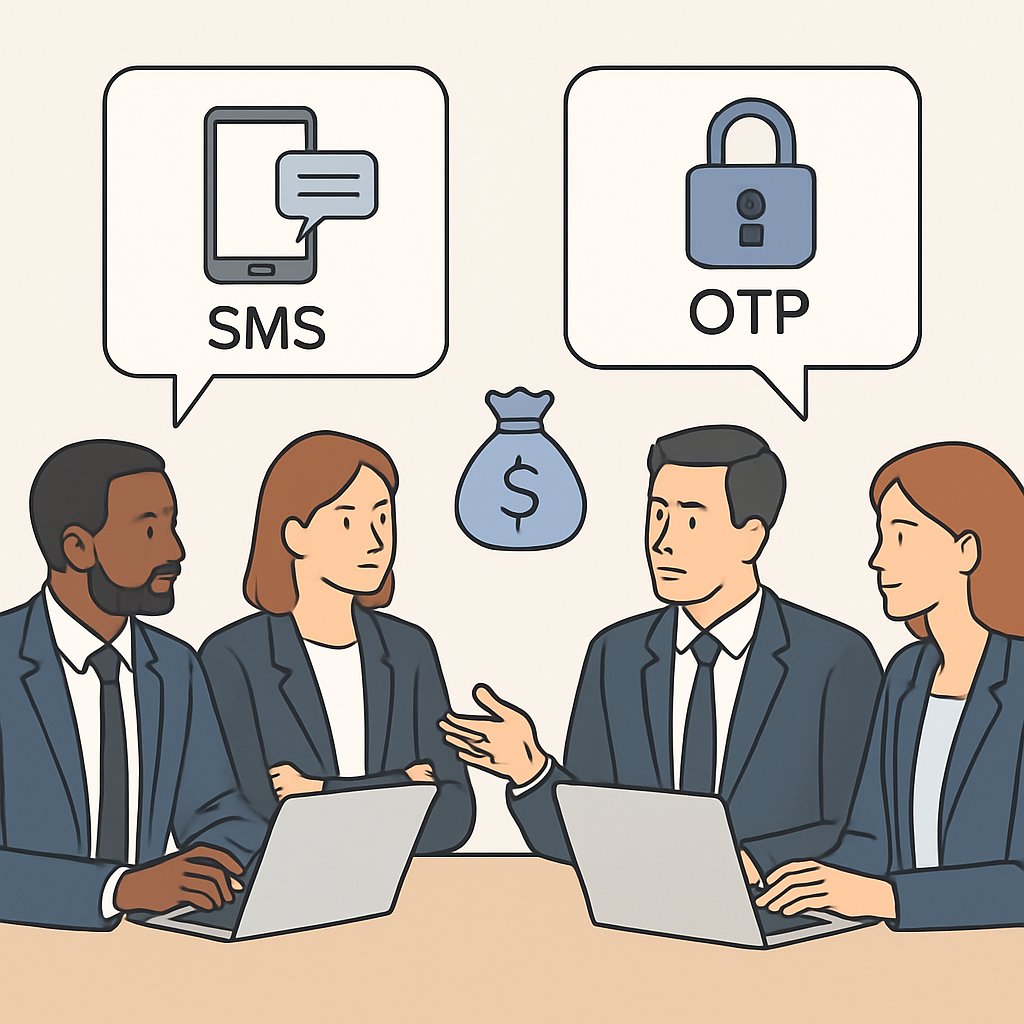
OTP systems generate a unique code for each login or transaction attempt.
Next, the system sends this code to the user’s registered mobile number via SMS.
The user must enter the OTP within a limited timeframe to complete authentication.
This two-step verification method significantly reduces security breaches.
Furthermore, SMS acts as a reliable delivery channel for time-sensitive OTP codes.
Technical Overview of SMS Delivery Mechanisms in OTP Systems
Fundamentals of SMS Transmission
OTP systems rely on SMS messages to deliver secure codes to users.
They use cellular networks that transmit messages through Short Message Service Centers.
The SMSC acts as an intermediary between the sending application and the recipient’s phone.
Messages travel over signaling channels separate from voice communications.
Consequently, the network prioritizes message delivery efficiently and steadily.
Role of SMS Gateway Providers
Companies like Telesend and CellWave provide SMS gateway services to OTP systems.
They serve as the bridge between application servers and mobile network operators.
Gateways handle message formatting, routing, and delivery tracking.
This service simplifies integration and enables global message dispatching.
However, the choice of provider affects cost, speed, and reliability.
Delivery Process and Network Handoffs
When a user requests an OTP, the application sends the code to the gateway.
The gateway forwards the message to the destination mobile operator.
The operator routes the message to the recipient’s device using the Home Location Register.
If the recipient is roaming, messages pass through additional operator networks.
Therefore, message delivery time depends on multiple network handoffs.
Factors Influencing SMS Delivery Reliability
SMS delivery can face delays due to network congestion or signal weakness.
Message ordering may occasionally get disrupted during peak traffic.
Moreover, some carriers block messages perceived as spam or fraud.
Device settings like blocking unknown senders can hinder OTP receipt.
OTP systems often implement retries to mitigate delivery issues.
Security Challenges in OTP SMS Delivery
SMS messages travel in plain text, which poses interception risks.
Attackers might exploit SS7 vulnerabilities to intercept OTP codes.
To enhance security, many systems combine SMS OTPs with device fingerprinting.
Alternatively, apps like AuthoSecure use encrypted push notifications.
Despite risks, SMS remains widely used due to its simplicity and universality.
Build The Software Your Business Needs To Grow
The next stage of your business will need better systems, smarter automation, and stronger digital tools. We help businesses turn ideas into websites, apps, and software platforms built for growth, revenue, and long-term scale.
Build For GrowthFactors Affecting the Reliability of SMS-Based OTP Delivery
Network Infrastructure and Coverage
Network strength directly impacts the delivery speed of OTP messages.
Some rural areas lack consistent cellular coverage.
Users in these regions often experience delays or failures.
Telecom providers like Evergreen Mobile and StellarTel continuously upgrade their networks.
Infrastructure limitations still challenge consistent message delivery worldwide.
Carrier Interoperability and Routing
Different carriers handle SMS messages using varied routing protocols.
This variation can cause delays or message loss during transit.
Cross-carrier interoperability issues sometimes block OTP delivery.
As a result, companies like BlueWave Communications invest in optimized routing solutions.
They collaborate closely with carriers to minimize delivery failures and latency.
Mobile Device Compatibility
Not all mobile devices support every SMS format or protocol.
Older devices may fail to display OTP messages correctly.
Apps like SecurePass collaborate with manufacturers to test device compatibility.
This effort ensures smoother OTP receipt on a wide range of phones.
Device diversity remains a challenge in global OTP systems.
Message Content and Formatting
Message length influences whether an OTP sends as one or multiple SMS parts.
Long messages may split, increasing failure risks.
Unsupported characters or symbols can cause message display errors.
Companies such as Verisoft recommend concise, standardized OTP formats.
This practice enhances message clarity and delivery success rates.
Regulatory and Carrier Restrictions
Some countries enforce strict rules on SMS content and frequency.
Carriers may block messages flagged as spam or promotional.
OTP systems must comply with regional regulations to avoid filtering.
Global security firm SentinelAuth adapts message strategies to match local laws.
This approach reduces message filtering or blocking by carriers.
User Behavior and Environmental Factors
Users sometimes disable notifications or block unknown numbers.
Such behaviors impede timely OTP receipt.
Environmental issues like signal interference also affect message delivery.
Service provider SecureWave advises educating users on best practices.
This guidance helps improve overall OTP delivery reliability.
You Might Also Like: Building MVPs That US Investors Actually Fund
Cost Components Involved in Implementing SMS and OTP Systems
Infrastructure and Setup Costs
Setting up SMS and OTP systems requires investment in technical infrastructure.
Companies like Sentinel Secure Solutions invest in server hardware and software licenses.
Integrating with existing applications involves developer time and expertise.
Cloud-based services may reduce initial hardware costs but add ongoing fees.
Organizations must evaluate whether to build in-house or outsource these systems.
Operational and Maintenance Expenses
After deployment, continuous operation requires resources and technical support.
Maintenance includes software updates, security patches, and system monitoring.
Providers like AuthentaGuard Services charge monthly fees for maintenance.
Handling user issues and troubleshooting requires customer support teams.
Build The Software Your Business Needs To Grow
The next stage of your business will need better systems, smarter automation, and stronger digital tools. We help businesses turn ideas into websites, apps, and software platforms built for growth, revenue, and long-term scale.
Build For GrowthOperational expenses accumulate with usage growth and system complexity.
SMS Message and Delivery Charges
Sending OTPs consumes telecommunication resources, causing per-message fees.
Telecom companies like Nexus Communications bill on a per-SMS or volume basis.
Costs depend on region, carrier agreements, and message priority levels.
High transaction volumes significantly increase the messaging budget.
Businesses seek competitive SMS gateways to optimize costs effectively.
Security and Compliance Investments
Secure OTP systems require investment in encryption and fraud detection technologies.
Compliance with GDPR, PCI DSS, and other regulations mandates additional controls.
Consultants such as Vanguard Security Advisors help with audits and risk assessments.
Non-compliance can bring costly penalties and damage organizational reputation.
Budgeting for security enhancements is crucial for long-term system reliability.
Scalability and Performance Considerations
Systems must scale efficiently as user bases grow to handle increasing demand.
Expanding server capacity and bandwidth raises infrastructure and hosting costs.
Cloud providers like Apex Cloud Solutions offer scalable pricing models.
Performance bottlenecks increase customer dissatisfaction and churn rates.
Investing in scalable architecture balances reliability with cost management.
Gain More Insights: Real-Time Features: WebSockets vs Polling vs SSE
Comparison of SMS Reliability Across Different Network Providers and Regions
Factors Influencing SMS Reliability
SMS reliability depends on network infrastructure quality.
Strong coverage areas generally offer consistent message delivery.
Weak signals often cause message delays or failures.
Network congestion also plays a significant role in reliability.
SMS delays increase during peak usage times.
Moreover, mobile technology type affects SMS transmission speed.
Reliability Among Major Network Providers
Verizon Wireless maintains high SMS delivery reliability in urban areas.
AT&T shows strong performance but has occasional delays in rural zones.
T-Mobile leverages advanced 5G networks to improve message speed.
- Verizon prioritizes message routing during high traffic periods.
- AT&T offers fallback options to enhance delivery success.
- T-Mobile integrates network slicing to optimize SMS throughput.
Regional Differences Affecting SMS Systems
Developed regions benefit from robust telecommunication infrastructures.
Sub-Saharan Africa faces challenges due to limited network coverage.
Densely populated Southeast Asian cities often suffer from network congestion.
Regulatory policies influence SMS services across different countries.
India enforces strict rules on bulk messaging to curb spam.
European providers adopt stringent encryption standards to enhance message security.
SMS Performance in North America and Asia
In North America, SMS systems achieve over 98% delivery rates on average.
Providers like Rogers Communications in Canada show similar reliability to U.S. networks.
Asia experiences more variability in SMS performance.
Singapore’s networks offer near-perfect SMS uptime.
Rural areas in Indonesia report frequent message delays.
Companies such as SoftBank invest heavily in network upgrades in Japan.
The goal is to reduce SMS failures significantly.
Discover More: Data Migration Playbook for Moving Fast and Safely
Build The Software Your Business Needs To Grow
The next stage of your business will need better systems, smarter automation, and stronger digital tools. We help businesses turn ideas into websites, apps, and software platforms built for growth, revenue, and long-term scale.
Build For GrowthBalancing Reliability and Operational Costs
Importance of Reliability in SMS & OTP Systems
Reliable SMS and OTP systems ensure secure user authentication.
High reliability improves user trust and reduces failed verifications.
It also helps prevent unauthorized access and potential fraud.
Therefore, firms like MeridianPay prioritize consistent message delivery.
Cost Factors Impacting System Reliability
Investing in multiple SMS gateways enhances message delivery rates.
This approach increases operational expenses significantly.
Similarly, premium routes boost speed but come with higher fees.
In addition, maintaining redundant infrastructure demands ongoing support.
Strategies to Optimize Reliability Without Excessive Costs
Hybrid routing uses both high-quality and budget SMS providers strategically.
For instance, NexusCom employs fallback systems for critical OTPs.
Load balancing across vendors reduces delays and avoids overcharges.
Moreover, real-time monitoring detects delivery failures instantly for fixes.
Trade-offs in Enhancing Security Measures
Adding encryption and multi-factor authentication improves security.
However, these enhancements increase processing time and infrastructure needs.
Consequently, companies like SentinelSecure carefully evaluate cost-benefit ratios.
They strive to maintain smooth user experiences while strengthening defenses.
Effective Cost Management Practices for SMS & OTP Systems
- Regular analysis of SMS usage patterns identifies unnecessary expenses.
- Negotiating volume discounts with providers lowers per-message costs.
- Automating OTP expiration and resend policies reduces redundant traffic.
- Implementing user segmentation allows targeted delivery prioritization.
By employing these tactics, firms can sustain secure authentication economically.
Ultimately, balancing business goals with technical capabilities drives success.
Uncover the Details: Monitoring & Alerts: Catch Failures Before Customers Do
Alternatives to SMS OTPs
Push Notifications
Push notifications provide a direct authentication method via mobile apps.
They deliver real-time prompts for users to approve login attempts.
For instance, Finotech Bank uses push notifications to enhance user security.
These notifications reduce reliance on cellular networks, improving reliability.
Moreover, they lower costs compared to traditional SMS-based OTPs.
Users must have the app installed to receive these notifications.
Therefore, widespread adoption depends on app availability and user engagement.
Authenticator Apps
Authenticator apps generate time-based one-time passwords locally on devices.
Examples include Google Authenticator, Authy, and Microsoft Authenticator.
These apps do not require an internet connection to function.
Companies like DataLink Solutions prefer authenticators for their strong security features.
Authenticator apps eliminate SIM swap and SMS interception risks.
However, initial setup complexity may deter some users.
Additionally, users must securely back up authentication data to avoid lockouts.
Biometric Authentication
Biometric authentication uses unique physical traits to verify identity.
Common methods include fingerprint scanning, facial recognition, and voice recognition.
Tech giants such as MetaSecure employ biometrics to streamline user access.
This approach enhances convenience while strengthening security.
Biometrics reduce dependency on mobile networks or third-party apps.
Nonetheless, privacy concerns and implementation costs present challenges.
Organizations must comply with data protection regulations when using biometrics.
Build The Software Your Business Needs To Grow
The next stage of your business will need better systems, smarter automation, and stronger digital tools. We help businesses turn ideas into websites, apps, and software platforms built for growth, revenue, and long-term scale.
Build For GrowthComparison of Authentication Alternatives
Each alternative offers different benefits over SMS OTP systems.
Push notifications balance ease of use and cost efficiency well.
Authenticator apps prioritize security but require user effort during setup.
Biometrics provide seamless access but involve higher infrastructure investment.
Businesses like GlobalPay Solutions evaluate these trade-offs carefully.
Choosing the right method depends on user base, budget, and security goals.
Security Implications of Unreliable OTP Delivery Methods
Risks of Delayed OTPs on User Authentication
Unreliable OTP delivery leads to delays that frustrate users.
As a result, users might attempt multiple requests and increase system load.
Delayed OTPs can cause login timeouts that force users to retry.
These retries raise the risk of attackers intercepting or guessing OTPs.
Therefore, ensuring reliability maintains a secure authentication flow.
Susceptibility to Man-in-the-Middle Attacks
Unreliable SMS channels offer chances for interception by malicious actors.
Attackers exploit delays to capture OTPs and compromise accounts.
Spoofing SMS messages becomes easier when delivery is inconsistent.
This vulnerability significantly threatens sensitive data and user privacy.
Companies like Reliant Security prioritize end-to-end encryption for OTP delivery.
Impact on User Behavior and Security Practices
Unreliable OTP arrival leads users to adopt insecure workarounds.
For instance, users may share codes via less secure email or messaging apps.
Such actions weaken the intended security model unintentionally.
Dissatisfied users might disable two-factor authentication altogether.
Thus, OTP reliability directly affects the overall security posture.
Strategies to Reduce Risks from Unreliable OTP Delivery
Implementing backup authentication methods boosts security during OTP failures.
These alternatives include app-based authenticators and biometric verification.
Real-time monitoring helps identify unusual delivery patterns and attacks.
Organizations such as Sentinel Cyber adopt these strategies to protect accounts.
Consequently, these measures lower risks from unreliable OTP transmissions.
Recommendations for Organizations Employing OTP Systems
First, evaluate SMS providers for network reliability and security compliance.
Next, inform users about potential delays and safe OTP handling practices.
Then, regularly update authentication protocols to counter emerging threats.
Finally, invest in multi-layered security methods beyond SMS-based OTPs.
These steps strengthen defenses against OTP delivery-related security breaches.
Strategies to Optimize Cost While Maintaining Acceptable Reliability
Selecting the Right SMS Provider
Choosing an SMS provider with competitive pricing is crucial for cost optimization.
Providers like GlobalWave Telecom and SwiftMessage offer scalable plans for any business size.
Evaluate the provider’s delivery rates to ensure messages consistently reach recipients.
Consider providers offering intelligent routing to reduce costs without compromising delivery quality.
Implementing Adaptive OTP Delivery Methods
Use adaptive delivery strategies based on user behavior and geographic location to optimize costs.
Send OTPs via SMS in areas with high mobile phone penetration for reliability.
Alternatively, use email or push notifications where SMS expenses are too high.
This strategy maintains security and reduces costs simultaneously.
Optimizing Message Content and Frequency
Keep OTP messages brief to reduce the number of SMS segments and lower expenses.
Build The Software Your Business Needs To Grow
The next stage of your business will need better systems, smarter automation, and stronger digital tools. We help businesses turn ideas into websites, apps, and software platforms built for growth, revenue, and long-term scale.
Build For GrowthSend OTPs only when necessary to prevent spamming users and incurring wasted costs.
Batch multiple OTP requests during peak times to avoid repeated charges efficiently.
Additionally, limit resend attempts and add cool-down timers to discourage misuse and abuse.
Leveraging Failover and Redundancy Techniques
Use multiple SMS gateways to improve message delivery success and system reliability.
Failover mechanisms automatically switch to backup gateways if the primary provider fails.
This increases reliability without causing significant cost increases for the business.
Providers like RapidText Solutions and CloudReach Communications offer APIs with failover support.
Monitoring and Analyzing Delivery Metrics
Regularly track delivery rates, latency, and failure reasons to improve overall performance.
Analytics platforms help identify underperforming routes or providers for cost-saving changes.
Platforms such as SignalMetrics Pro and SMSInsight provide actionable insights for businesses.
Consequently, companies can fine-tune their systems to maintain reliability within budget.
Using Smart Throttling and Load Balancing to Enhance Performance
Implement throttling controls to manage traffic spikes during high-demand periods effectively.
This method prevents network congestion and reduces the number of failed message deliveries.
Load balancing distributes message traffic evenly across multiple SMS providers and gateways.
These techniques balance cost considerations and system performance efficiently.
Emerging Authentication Methods
Biometric Authentication
Biometric technologies evolve rapidly in authentication systems.
Firms like NexaSecure integrate fingerprint and facial recognition.
This trend reduces reliance on SMS-based OTPs.
It also boosts security significantly.
However, challenges around privacy remain significant.
Data protection issues continue to present concerns.
Moreover, biometric methods offer faster user experiences.
Users find these methods more convenient.
Push Notification Authentication
Push notifications offer an alternative to OTPs via SMS.
Startups like VerifiTech promote push notifications to reduce fraud risks.
These notifications confirm logins through secure apps.
This method replaces sending authentication codes.
Therefore, many organizations shift to push authentication.
This reduces costs and improves reliability.
Integration of Artificial Intelligence in Security
Artificial intelligence shapes future authentication systems.
Security firms such as CipherGuard deploy AI to detect suspicious logins.
AI dynamically adjusts authentication requirements based on risk.
This approach reduces unnecessary OTP generation.
It also enhances user trust.
Furthermore, predictive analytics improve MFA workflows’ efficiency.
Blockchain’s Role in Authentication
Blockchain technology offers decentralized user identity verification.
Companies like IdentityChain explore blockchain to eliminate single points of failure.
This approach enhances transparency substantially.
It reduces the risk of SIM swapping attacks.
Consequently, blockchain-based authentication lowers SMS system dependency.
Build The Software Your Business Needs To Grow
The next stage of your business will need better systems, smarter automation, and stronger digital tools. We help businesses turn ideas into websites, apps, and software platforms built for growth, revenue, and long-term scale.
Build For GrowthOrganizations research these methods to improve security and scalability.
Implications of Regulatory Changes on Authentication
Regulations increasingly influence SMS and OTP systems.
Data privacy laws require providers like SecureLink to use stronger encryption.
These laws also demand user consent protocols.
Governments encourage modern authentication adoption to fight fraud.
Companies must balance compliance costs and technology investments.
Staying ahead of regulatory shifts remains critical for sustainability.
Improving User Experience with Adaptive Authentication
Future systems highlight personalized adaptive authentication techniques.
Financial firms like Horizon Trust use real-time risk scoring.
They decide authentication steps based on these scores.
This minimizes friction by prompting OTPs only as needed.
It enhances security without frustrating legitimate users.
Improved satisfaction drives adoption beyond SMS OTP methods.
Additional Resources
AWS Well-Architected Framework
RCS vs WhatsApp: Key Differences for Business Messaging – LinkedIn
Before You Go…
Hey, thank you for reading this blog post to the end. I hope it was helpful. Let me tell you a little bit about Nicholas Idoko Technologies.
We help businesses and companies build an online presence by developing web, mobile, desktop, and blockchain applications.
We also help aspiring software developers and programmers learn the skills they need to have a successful career.
Take your first step to becoming a programming expert by joining our Learn To Code academy today!
Be sure to contact us if you need more information or have any questions! We are readily available.