
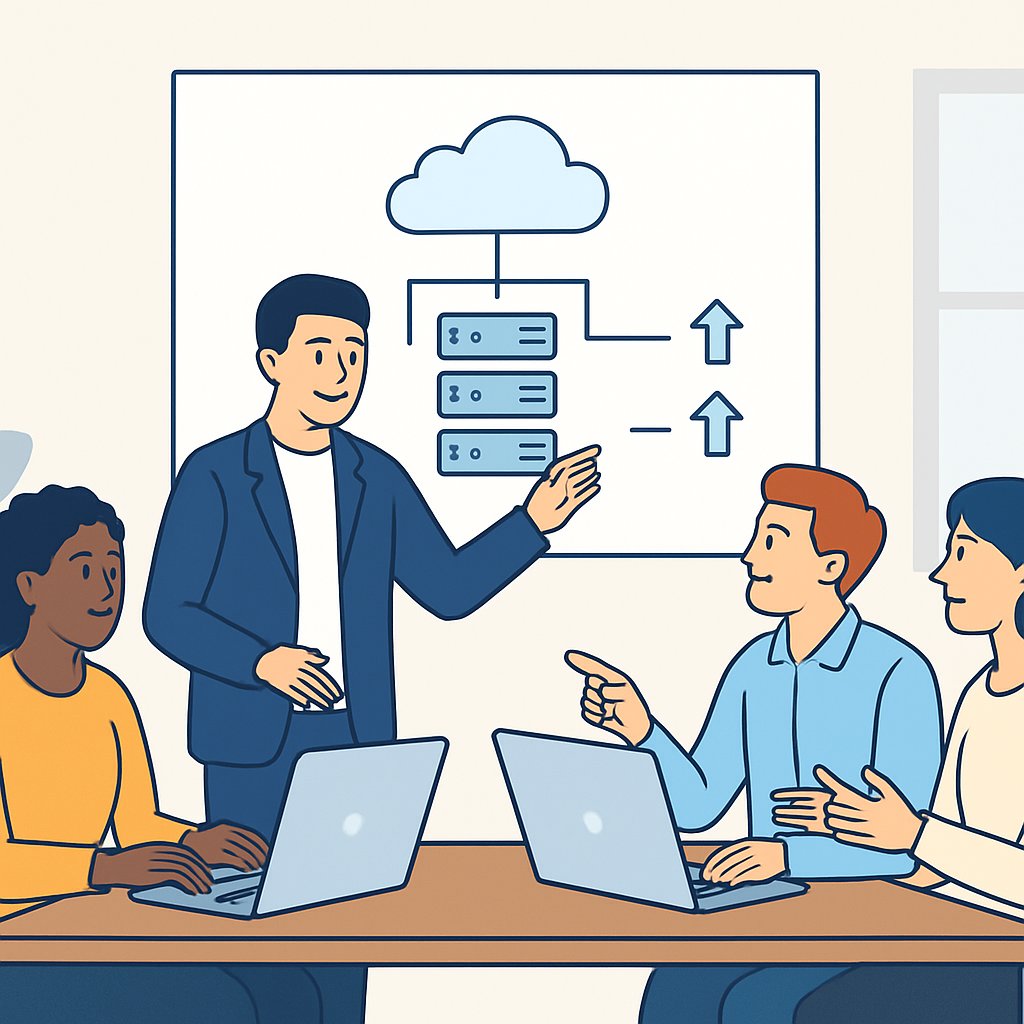

Introduction to Multi-Tenant SaaS Architecture
Defining Multi-Tenant SaaS Architecture
Multi-tenant SaaS architecture allows multiple customers to share a single software instance.
Each tenant accesses the software while keeping their data isolated and secure.
This design optimizes resource use and reduces operational costs significantly.
Importance of Multi-Tenant Architecture
Businesses increasingly adopt SaaS solutions for flexibility and scalability.
Multi-tenancy enhances these benefits by efficiently managing users within a central system.
It also accelerates software updates, benefiting all tenants simultaneously.
Role of Multi-Tenant SaaS in Modern Businesses
Companies like Avantia Systems rely on multi-tenant SaaS for seamless collaboration.
Startups and enterprises both leverage multi-tenancy to scale their services rapidly.
This approach supports growing user bases without requiring complex infrastructure changes.
Key Advantages for Service Providers and Customers
Service providers save on maintenance and infrastructure costs.
Customers enjoy quicker access to new features and improved performance.
Furthermore, multi-tenant architecture fosters innovation through shared development efforts.
Key Characteristics of Multi-Tenant SaaS Systems
Shared Infrastructure with Tenant Isolation
Multi-tenant SaaS systems use shared infrastructure for multiple customers.
However, they ensure strong tenant isolation to protect data privacy.
Each company’s data remains segregated and secure.
This approach reduces hardware and operational costs.
Scalability and Flexibility
These systems scale seamlessly to accommodate growing user bases.
They adapt dynamically to changing workloads and resource demands.
Businesses experience consistent performance regardless of growth.
Additionally, they provide flexibility to onboard new tenants quickly.
Customization and Configurability
Although tenants share core software, customization options are vital.
Tenants can configure interfaces, workflows, and business rules.
This configurability addresses diverse client needs without deploying separate instances.
Consequently, multi-tenant SaaS supports varied industries and processes effectively.
Centralized Management and Maintenance
Software updates occur centrally for all tenants at once.
This reduces downtime and ensures consistent feature availability.
Support teams monitor system health using unified dashboards.
Security patches apply promptly to mitigate vulnerabilities.
Cost Efficiency and Resource Optimization
Sharing computing resources lowers costs for both providers and customers.
This model enables vendors like BlueSky Technologies to serve small businesses affordably.
Resource pooling reduces redundant infrastructure investments.
Companies experience optimized expenses without sacrificing quality.
Robust Security Controls
Strong authentication mechanisms verify tenant and user identities.
Role-based access control restricts unauthorized operations within tenants.
Data encryption protects sensitive information during transit and at rest.
Continuous auditing identifies potential security threats early.
Efficient Resource Allocation and Performance Monitoring
Systems dynamically allocate CPU, memory, and storage based on tenant needs.
Companies like Nexara Software monitor performance metrics in real-time.
Proactive resource adjustments prevent service degradation.
This ensures a consistently high-quality experience for all customers.
Build The Software Your Business Needs To Grow
The next stage of your business will need better systems, smarter automation, and stronger digital tools. We help businesses turn ideas into websites, apps, and software platforms built for growth, revenue, and long-term scale.
Build For GrowthTypes of Multi-Tenancy Models
Shared Database Model
The shared database model stores multiple tenants’ data within a single database.
Each tenant’s information typically resides in shared tables distinguished by unique tenant identifiers.
This model maximizes resource utilization by minimizing infrastructure requirements.
Consequently, it reduces operational costs for providers like Nimbus Solutions.
However, data isolation requires careful design to avoid unintended access between tenants.
Furthermore, scaling might be challenging under heavy and diverse tenant workloads.
Developers at BrightSky Systems often choose this model for applications with similar feature sets.
It also enables faster iteration and deployment of updates across tenants.
Isolated Database Model
The isolated database model provides each tenant with a dedicated database instance.
This setup ensures strict data separation, increasing security and compliance.
Providers like Horizon Cloud Specialists prefer this model for sensitive customer data.
Additionally, isolated instances allow customized configurations tailored to individual tenant needs.
However, this model demands higher infrastructure costs and maintenance efforts.
Performance tuning becomes easier since databases operate independently without resource contention.
Moreover, isolating faults prevents cascading failures across tenants.
For example, Cascade Innovations selected this model to support healthcare clients with privacy concerns.
Comparing Shared and Isolated Database Models
Choosing between shared and isolated databases depends on business priorities and application requirements.
Shared models favor cost efficiency and rapid deployment.
Isolated models prioritize security, customization, and fault tolerance.
Both models require robust access control mechanisms to protect tenant data.
Scalability also differs; shared requires database sharding, while isolated benefits from horizontal scaling.
Teams at ValorTech often evaluate tenant count, data sensitivity, and compliance needs before deciding.
Ultimately, the right model balances performance, security, and operational complexity.
Explore Further: Designing Notification Systems Users Don’t Mute
Design Considerations for Data Isolation and Security
Ensuring Tenant Data Isolation
Data isolation is critical for protecting each tenant’s information.
System architects must design solutions to prevent data leakage across tenants.
Logical separation within databases helps maintain strict data boundaries.
Multi-tenant databases can use separate schemas or tables for each tenant.
Using separate databases offers stronger isolation but adds operational complexity.
Additionally, developers must validate tenant context during every data transaction.
Access controls should rigorously enforce tenant-specific data visibility.
Implementing Robust Access Controls
Access control mechanisms form the backbone of SaaS security.
Role-based access control (RBAC) effectively restricts user permissions.
Tenant administrators manage roles within their respective environments.
Authentication must include multi-factor methods for enhanced security.
Moreover, session management policies protect against unauthorized access.
Continuous auditing enables detection and response to suspicious activities promptly.
Data Encryption Strategies
Encrypting data at rest protects tenant information from physical breaches.
Industry standards like AES-256 provide strong encryption algorithms.
Encrypting data in transit also prevents interception during communication.
Build The Software Your Business Needs To Grow
The next stage of your business will need better systems, smarter automation, and stronger digital tools. We help businesses turn ideas into websites, apps, and software platforms built for growth, revenue, and long-term scale.
Build For GrowthTLS protocols ensure secure connections between clients and servers.
Key management requires secure storage and regular rotation of encryption keys.
Developers should integrate encryption seamlessly without impacting application performance.
Monitoring and Incident Response Approaches
Continuous monitoring identifies potential security threats in real-time.
Logging user actions creates an audit trail for forensic analysis.
Alerts must notify administrators immediately upon detecting anomalies.
Incident response plans prepare teams to act swiftly during breaches.
Regular security drills improve readiness and reduce response time.
Collaborating with security experts strengthens overall protection measures.
Delve into the Subject: Writing Requirements That Developers Can Build From
Scalability Challenges and Solutions in Multi-Tenant Environments
Understanding Scalability Challenges
Multi-tenant SaaS platforms often face unique scalability challenges.
Each tenant consumes shared resources differently.
This behavior causes unpredictable loads on the system.
Consequently, resource contention becomes a critical issue.
Data isolation requirements complicate scaling strategies further.
Latency can increase as more tenants join the platform.
Scaling must maintain performance without compromising security.
Resource Allocation and Isolation
Efficient resource allocation mitigates contention in shared environments.
For example, PineTech uses container orchestration to isolate tenant workloads.
This method ensures fair CPU distribution across tenants.
It also guarantees equitable memory allocation between tenants.
This strategy minimizes the risk of noisy neighbor effects.
Data isolation is enforced using tenant-specific encryption and access controls.
By doing so, companies like ClearSight Analytics maintain strict data privacy.
Elastic Scaling Strategies
Elastic scaling adjusts resources dynamically based on tenant demand.
CloudVista applies autoscaling to expand or reduce instances automatically.
This approach handles sudden traffic spikes without service disruption.
Load balancing distributes requests evenly across available resources.
Caching mechanisms improve response times under heavy load.
For example, Nimbus Data Cloud employs edge caching to reduce latency globally.
Database Scalability Techniques
Databases in multi-tenant SaaS must scale horizontally to support growth.
Multi-sharding partitions data by tenant or customer segments.
Atlas Financial uses sharding to isolate financial data and improve performance.
Another option involves multi-model databases that handle diverse data types.
This flexibility supports tenant-specific requirements effectively.
Regular indexing and query optimization enhance database scalability.
Monitoring and Proactive Performance Management
Continuous monitoring detects performance bottlenecks early.
Vertex Solutions employs real-time analytics dashboards to track resource usage.
Alerts notify engineers of abnormal spikes or latency increases.
Proactive tuning prevents downtime and ensures a smooth user experience.
Build The Software Your Business Needs To Grow
The next stage of your business will need better systems, smarter automation, and stronger digital tools. We help businesses turn ideas into websites, apps, and software platforms built for growth, revenue, and long-term scale.
Build For GrowthIntegrating AI-driven predictive models anticipates scaling needs.
This approach reduces manual interventions and improves uptime.
Balancing Cost and Scalability in Multi-Tenant SaaS
Scaling resources incurs operational costs that require optimization.
LaunchPoint Cloud balances auto-scaling and reserved resources to control expenses.
They prioritize critical components for scaling while limiting non-essential ones.
Leveraging serverless architectures minimizes idle resource waste effectively.
This balance ensures scalability without exceeding budget limits.
Clear cost monitoring empowers finance teams to plan for growth efficiently.
Explore Further: Change Requests: Pricing and Process That Feel Fair
Tenant Customization
Personalizing User Experience
Tenant customization allows each client to tailor their interface and settings.
This flexibility improves user satisfaction and engagement extensively.
Developers should offer configurable themes, layouts, and language options.
GreenWave Analytics lets customers define dashboards uniquely.
Consequently, users feel empowered and more productive using the platform.
Isolating Tenant Data and Settings
Proper segmentation of tenant data keeps customization secure and independent.
This separation prevents conflicts between different client configurations.
Engineers employ database schemas or separate tables per tenant to maintain isolation.
Secure customization also protects privacy and regulatory compliance requirements.
Tenant-specific features run without interfering with others’ workflows.
Feature Management Strategies
Feature Flags for Controlled Rollouts
Feature flags enable gradual release of new features to select tenants.
This practice minimizes risks by testing in production with limited exposure.
SmartServe Technologies uses feature flags to pilot tools selectively before full launch.
Flags allow quick rollback if unexpected issues occur.
Teams improve stability and gather tenant feedback efficiently.
Configurable Feature Sets
Offering configurable feature sets lets tenants enable or disable capabilities.
Companies like NovaCloud provide tiered plans with distinct functionality bundles.
This approach caters to diverse client needs and budgets effectively.
Admins can toggle features such as reporting, integrations, or alerts flexibly.
Tenants receive a tailored experience aligned with their business goals.
Monitoring and Analytics for Feature Usage
Tracking which features tenants use informs ongoing product decisions.
Analytics highlight popular features and those needing improvement or removal.
InsightSoft Inc. uses usage data to optimize shining features and phase out redundancies.
Analytics help support teams assist tenants based on actual usage patterns.
Data-driven feature management promotes sustained value delivery.
Delve into the Subject: Custom Software vs SaaS: A US Founder’s Decision Guide

Performance Optimization Techniques for Multi-Tenant SaaS
Efficient Resource Allocation
Proper resource allocation enhances system responsiveness in multi-tenant SaaS platforms.
Implementing dynamic resource scaling adjusts capacity based on tenant demand.
Prioritizing critical workloads ensures smooth operation for all users.
Companies like Skytech Solutions utilize container orchestration to optimize resource distribution efficiently.
Database Optimization Strategies
Database performance directly impacts the overall user experience.
Build The Software Your Business Needs To Grow
The next stage of your business will need better systems, smarter automation, and stronger digital tools. We help businesses turn ideas into websites, apps, and software platforms built for growth, revenue, and long-term scale.
Build For GrowthPartitioning tenant data reduces query load and improves response times.
Additionally, indexing key fields accelerates data retrieval processes.
Using query caching mechanisms, such as Redis, further lowers database stress.
BlueWave Software employs multi-tenant indexing to maintain performance during peak loads.
Leveraging Caching for Speed
Caching frequently accessed data decreases latency significantly.
Both in-memory caches and distributed caching solutions serve different purposes effectively.
Memcached and Redis are popular choices to implement robust caching strategies.
Moreover, edge caching via CDNs reduces load on central servers.
OptiServe SaaS platform improved their average load times by implementing layered caching techniques.
Load Balancing Across Tenants
Load balancing distributes traffic evenly among servers.
This approach prevents any single server from becoming a bottleneck.
Software like HAProxy and NGINX offer reliable load balancing for SaaS applications.
Elastic load balancing dynamically adjusts to changing tenant workloads.
These methods ensure availability and consistent performance under heavy traffic.
Optimizing Application Code
Clean and efficient code reduces processing time and resource consumption.
Profiling applications helps identify bottlenecks and inefficient logic.
Adopting asynchronous programming models enhances concurrency handling.
Tools such as New Relic assist SaaS developers in monitoring and improving code performance.
Vertex Innovations revamped their APIs to decrease latency by 30 percent through code optimization.
Network Optimization for Tenant Isolation
Isolating tenant traffic minimizes interference and improves security.
Virtual network segmentation and software-defined networking help maintain isolation.
Using optimized routing protocols reduces data travel time and avoids congestion.
This approach enhances fault tolerance in multi-tenant environments as well.
CloudSphere Technologies leverages network optimization to guarantee consistent SLA fulfillment.
Continuous Monitoring and Performance Tuning
Regular monitoring identifies issues before they impact users significantly.
Implementing real-time dashboards allows teams to track system health constantly.
Automated alerts and anomaly detection speed up response times.
Periodic performance audits help tune configurations for optimal results.
Proactive maintenance keeps multi-tenant SaaS platforms scalable and reliable.
Monitoring Strategies for Multi-Tenant SaaS
Importance of Real-Time Monitoring
Real-time monitoring helps detect issues before customers notice them.
This improves overall system reliability and user satisfaction.
Implementing comprehensive monitoring tools is essential for success.
Key Metrics to Track
Track application performance metrics like response time and error rates.
Additionally, monitor tenant-specific usage patterns to identify anomalies.
Infrastructure health metrics, such as CPU and memory usage, are vital.
Tools and Technologies
Tools like Datadog, New Relic, and Grafana provide excellent monitoring solutions.
These platforms support multi-tenant environments effectively.
Moreover, custom dashboards help visualize tenant-specific data clearly.
Logging Practices for Multi-Tenant Environments
Centralized Logging Systems
Centralized logging simplifies troubleshooting across multiple tenants.
It consolidates logs into one secure location for easy access.
Build The Software Your Business Needs To Grow
The next stage of your business will need better systems, smarter automation, and stronger digital tools. We help businesses turn ideas into websites, apps, and software platforms built for growth, revenue, and long-term scale.
Build For GrowthFor example, Elasticsearch with Kibana provides powerful search and visualization.
Ensuring Data Isolation in Logs
Tag logs with tenant identifiers to maintain clear data separation.
This practice prevents data leakage between tenants.
Otherwise, tenant privacy and compliance may be compromised.
Log Retention and Compliance
Establish log retention policies based on regulatory requirements.
For instance, financial software may require extended log storage periods.
Regularly archive and securely delete old logs to manage storage efficiently.
Maintenance Best Practices
Scheduled Maintenance Windows
Set predictable maintenance windows to minimize tenant disruption.
Communicate these windows clearly to all clients in advance.
Provision rollback plans to quickly revert if issues arise.
Automated Updates and Patches
Automate software updates to reduce manual intervention and human errors.
Continually patch security vulnerabilities swiftly across all tenant instances.
This approach improves system security and stability noticeably.
Performance Optimization
Regularly review and optimize database queries that impact tenant workloads.
Implement caching strategies to reduce system latency effectively.
Analyze resource allocation to prevent bottlenecks during peak times.
Team Collaboration and Responsibilities
Role Definitions for Monitoring and Maintenance
Assign clear roles for monitoring, incident response, and maintenance tasks.
For example, Lucas Romero leads the Infrastructure Monitoring Team at CloudMatrix Solutions.
Defined responsibilities streamline communication and accelerate issue resolution.
Knowledge Sharing Practices
Maintain detailed documentation including runbooks and troubleshooting guides.
Host regular internal trainings to keep team members updated on best practices.
This culture improves operational efficiency and reduces downtime risks.
Designing a Smooth Tenant Onboarding Process
Start by creating a clear onboarding flow for new tenants.
Make the process intuitive and user-friendly to encourage sign-ups.
Provide guided steps that help tenants complete their profiles.
Collect essential information such as company details and user roles.
Validate tenant data to maintain system integrity and security.
Send welcome emails to introduce tenants to your platform effectively.
Offer easy access to support during the onboarding stage.
Automating Subscription Plans and Billing
Integrate a flexible subscription management system for different plans.
Ensure the system supports upgrades, downgrades, and cancellations smoothly.
Automate billing to reduce manual errors and ensure timely payments.
Use secure payment gateways like Stripe or PayPal for transactions.
Provide detailed invoices and billing histories accessible to tenants.
Ensure compliance with regional tax laws and regulations during billing.
Send automated reminders before subscription renewals and expirations.
Managing Tenant Access and Permissions Efficiently
Assign roles and permissions based on tenant requirements and hierarchy.
Limit access to sensitive data to maintain security.
Use role-based access control to simplify permission management.
Regularly review and update permissions as tenants evolve usage.
Build The Software Your Business Needs To Grow
The next stage of your business will need better systems, smarter automation, and stronger digital tools. We help businesses turn ideas into websites, apps, and software platforms built for growth, revenue, and long-term scale.
Build For GrowthProvide tenants control over their user management within the platform.
Monitoring Subscription Metrics and Tenant Health
Track subscription engagement metrics to understand tenant behavior.
Monitor payment status closely to detect and fix billing issues.
Analyze trial conversions and churn rates to improve retention.
Use dashboards that display tenant status and subscription lifecycle stages.
Gather tenant feedback to enhance onboarding and subscription processes.
Ensuring Scalability and Reliability in Subscription Management
Build your subscription system to handle growth and more tenant load.
Leverage cloud services for scalable infrastructure and high availability.
Implement failover mechanisms to maintain uptime during outages.
Regularly update your system to include the latest security features.
Test subscription workflows to identify and fix performance bottlenecks.
Common Pitfalls and Methods to Prevent Them in Multi-Tenant SaaS Design
Tenant Data Isolation Must Not Be Ignored
One frequent mistake is neglecting proper tenant data isolation.
Mixing data between tenants can create serious security risks.
Therefore, implement strict logical or physical separation measures.
For example, Rachel from Pinnacle Software uses schema-based isolation effectively.
This strategy ensures data from different tenants stays segmented.
Additionally, verify access controls to prevent unauthorized data exposure.
Addressing Scalability Challenges in Multi-Tenant SaaS Applications
Many underestimate the difficulties involved in scaling multi-tenant SaaS apps.
Without proper planning, performance bottlenecks will appear as users grow.
Hence, architect your system with scalability considerations from the start.
Implement load balancing and horizontal scaling techniques strategically.
For instance, Carlos at Zenith Cloud adopted microservices to scale efficiently.
Also, monitor resource usage continuously to predict capacity demands ahead.
Providing Customizable Tenant Experiences
Another common pitfall is delivering a one-size-fits-all user interface.
Tenants often require customization to fit their branding and workflows.
Consequently, offer configurable themes and feature toggles to tenants.
Olivia at Wavefront Solutions improved retention by enabling UI personalization.
Moreover, provide APIs that allow tenants to integrate with their existing systems.
Implementing Effective Performance Monitoring Practices
Ignoring performance monitoring causes service degradation to go unnoticed.
Regularly track tenant-specific metrics to catch issues early.
Marcus from QuantumTech deployed dashboards to monitor SLA compliance.
This approach enables rapid responses to performance anomalies.
Besides, use alerting systems to notify teams of critical incidents promptly.
Security Best Practices in Multi-Tenant Architecture
Security remains imperative when building multi-tenant systems.
Apply role-based access control and encryption throughout the entire system.
Emma at SecureLayer learned early security audits prevented costly breaches.
Furthermore, conduct regular penetration tests and vulnerability scans.
Train development teams on secure coding to reduce risk exposure further.
Optimizing Tenant Onboarding and Offboarding Processes
Many providers overlook the complexity of onboarding and offboarding tenants.
Develop automated workflows to provision and deprovision tenant resources on time.
Build The Software Your Business Needs To Grow
The next stage of your business will need better systems, smarter automation, and stronger digital tools. We help businesses turn ideas into websites, apps, and software platforms built for growth, revenue, and long-term scale.
Build For GrowthEthan at Vertex Solutions lowered churn by streamlining these operations.
Also, maintain clear policies for data retention and deletion to meet regulations.
Approaches to Multi-Tenancy Cost Optimization
Using dedicated hardware for each tenant causes resource wastage.
Optimize resource sharing to cut operating costs without losing isolation.
Sophia from Nebula Systems employs container orchestration to balance cost and performance.
Perform regular cost evaluations to uncover inefficiencies and improve budgeting.
Effective Practices to Enhance Multi-Tenant SaaS Success
- Ensure strict tenant data isolation and implement access control.
- Design systems with scalability and performance monitoring in mind.
- Support customization to improve tenant satisfaction and retention.
- Prioritize robust security measures and conduct regular audits.
- Automate onboarding and offboarding to boost operational efficiency.
- Continuously optimize costs through resource sharing and detailed analysis.
Additional Resources
Multi-Tenant Architecture Strategies with AgentCore – LinkedIn
Any tips for developing a Multi-Tenant SaaS Web Application? – Reddit
Before You Go…
Hey, thank you for reading this blog post to the end. I hope it was helpful. Let me tell you a little bit about Nicholas Idoko Technologies.
We help businesses and companies build an online presence by developing web, mobile, desktop, and blockchain applications.
We also help aspiring software developers and programmers learn the skills they need to have a successful career.
Take your first step to becoming a programming expert by joining our Learn To Code academy today!
Be sure to contact us if you need more information or have any questions! We are readily available.